
🚨Trade Alert 19: One Exit, One Trim, Two Top-Ups and One New Position!
Rebalancing the portfolio by further cutting large cap exposure and reallocating to small-caps.

“There is something wrong in the market.”
Ask investors how they feel about the current situation of the market, and most of them would say that.
If you ask them to open up a bit, they would probably say something similar to this: “It feels like everything is okay, but the market isn’t going up nonetheless.”
This is what many people feel now, and it’s actually what’s happening in the market:
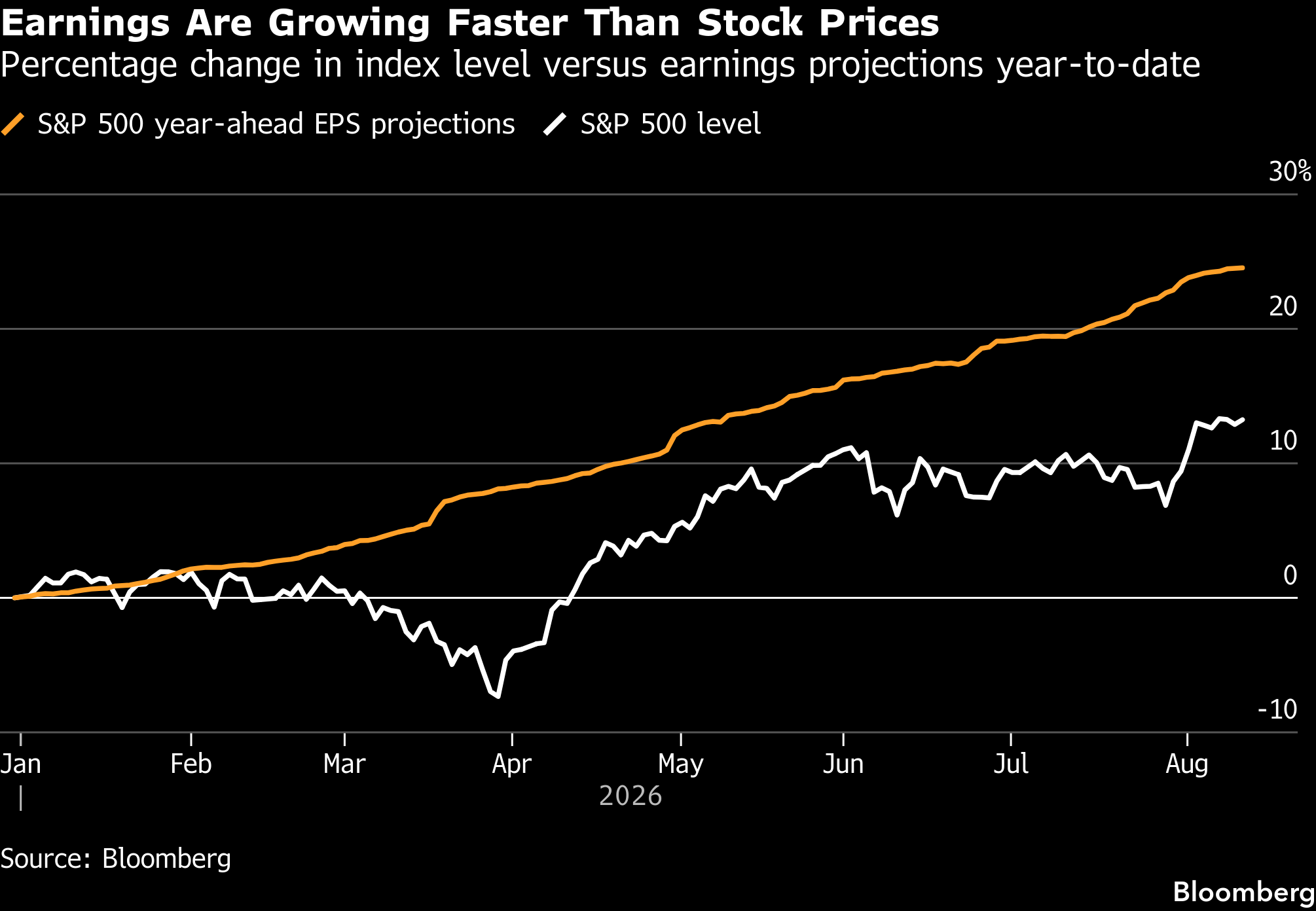
Earnings are growing faster than stock prices, so when people look at their holdings, they see that everything is going well, but upside price action is somehow not good enough.
Why is it?
Well, let’s reason for a minute about what we need for stock prices to decisively go up.
We know that stock prices can go both ways for any reason, but we also know that over time, the price chart looks like a continuum of variations around the intrinsic value line, where intrinsic value exerts some kind of gravitational pull.
When the price is below intrinsic value, it pulls prices down, and vice versa.
The key point is that the upside pull gets exponentially stronger when the stock price is lower than the intrinsic value plus the consensus margin of safety investors demand.
Let’s say intrinsic value is $100 and the desired margin of safety is 20%; this means that upside pull will be exponentially stronger when the price is below $80. While it’s between $ 80 and $ 100, the pull exists, but it’s not as strong, so stocks may not make big enough moves.
The current problem in the market is that prices look increasingly fair when adjusted for the demanded margin of safety.
The market is now trading at almost 21x forward earnings, while the 25-year average is 16x. However, it may look justified because we are getting blowout earnings growth:
S&P earnings have grown by 31% this year on a YoY basis, the fastest growth rate in 20 years excluding the recoveries from the crashes:
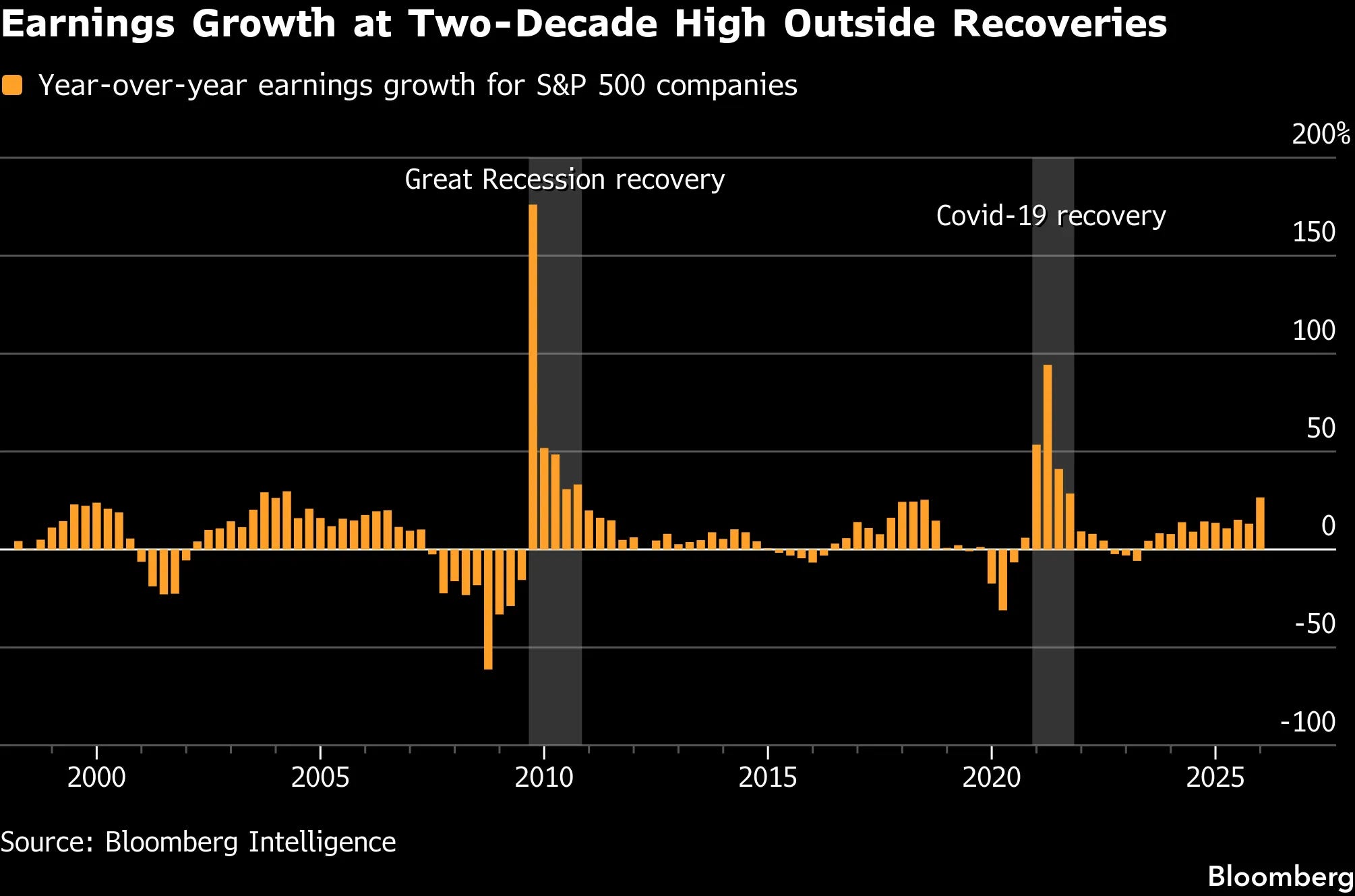
This is good news, but it’s also bad news as it’s very unlikely to surpass this level of growth next year. Plus, we know that AI will turn into a systemic risk from a systemic tailwind if we see any slowdown in total AI revenue growth or compute demand.
Thus, the market is unwilling to attach a higher earnings multiple for the next year, so we are seeing this choppiness while everything seems to go well.
So, what’s the way out?
We can’t manage the market’s sentiment or expectations, but we can decide where to fish. If the fish in the current pond is getting scarce, the best, easiest, and cheapest strategy is changing the pond. Replacing the bait, buying better equipment, going earlier, and staying late will do very little compared to fishing in a better pond.
That’s what we have been doing since the beginning of this year.
We have moved over 20% of the portfolio into global small-caps, where our average return has been 35% YTD against 12% for the S&P 500.
We’ll be advancing this shift even further with today’s trades, where I’ll:
Exit one position.
Trim one position.
Open one new position.
Increase two existing positions.
This way, we’ll have reallocated the capital from what has already driven performance and the upside is now limited, to fresh opportunities with higher potential for alpha generation. At the same time, we’ll also have diversified away even further from the systemic choppiness and the risk in the US markets.
I’ll explain the trades below and add the link to the portfolio spreadsheet at the end of the write-up. I’ll be updating it after I execute the trades.
So, let’s get started.
📊 Here are the exact trades I am making:
As always, let’s start with the exit.