

75%…
This could be a ratio in a recipe, a discount on a certain product, or even an appreciation in the value of an asset.
It could be anything.
However, you would never guess it would be a loss in valuation of one of the biggest and brightest companies in the world. This was Meta in 2022.
The stock peaked in November 2021 at $382 per share and declined to $90 per share within a year. It was trading at 11x earnings. Not forward.
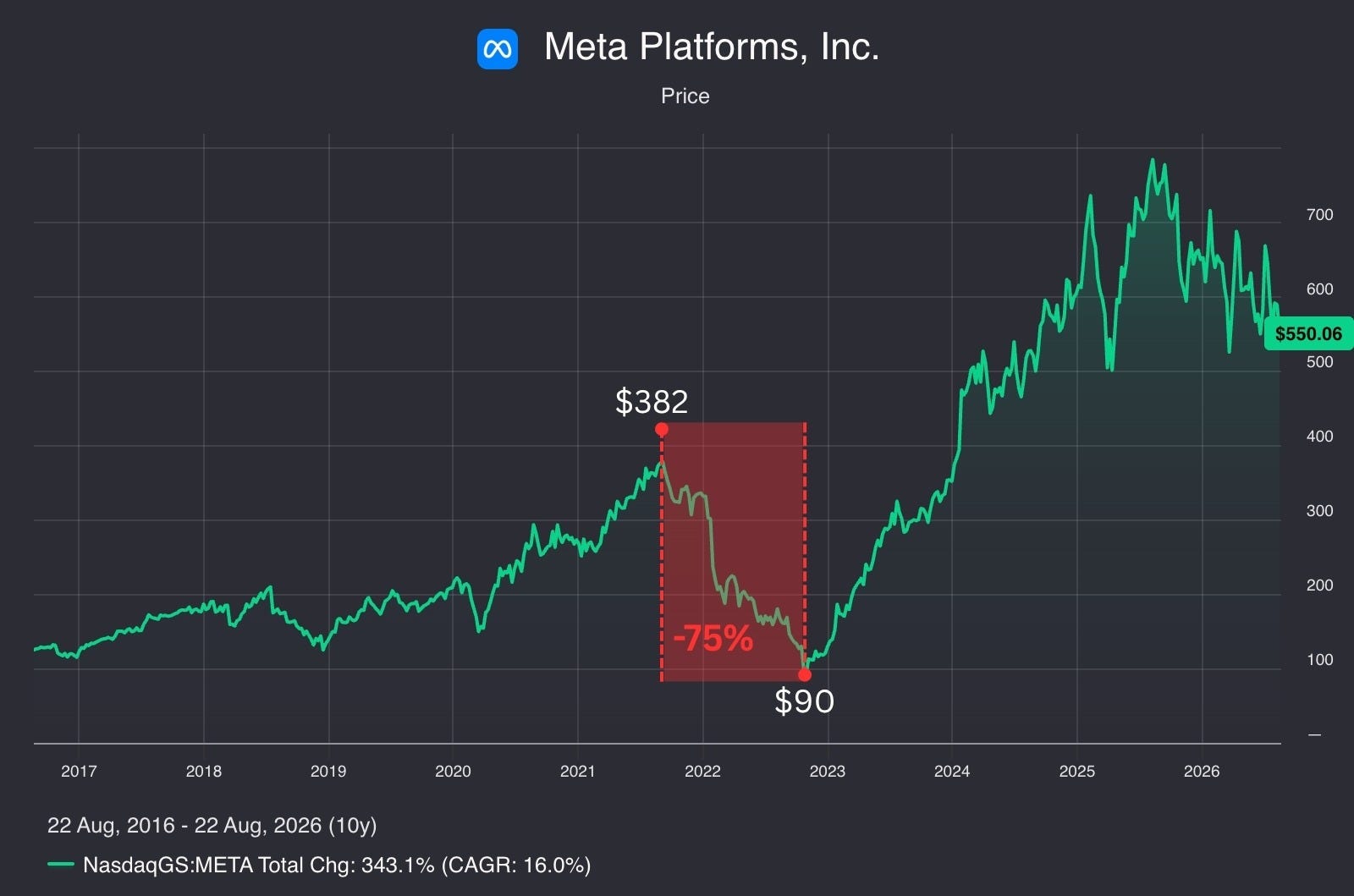
Normally, when you see this decisive market action, it tends to be correct.
You likely look at a collapsing business with rapidly deteriorating fundamentals. It would still be a very fast decline. Even a restaurant in New York, which is recignized recognized as the worst possible business anyone can enter, usually takes longer than a year to collapse.
In the case of Meta, there were several bad signals:
It had reported the first-ever decline in daily user count.
Apple’s privacy policy changes were hitting ad revenue.
It was overspending on the metaverse with no ROI.
Result? People freaked out.
Everybody believed that the drop in user count was a signal that Meta had saturated its markets, and that the only way would be down. People said its shift to the metaverse proved that it no longer believed in the core business, but there wasn’t any ROI on the metaverse either. Everything looked bad.
However, there was an alternative way to see things:
Drop in user count could be the result of excessive growth in Covid.
Apple’s restrictions were an engineering problem Meta could solve.
Metaverse capex could be cut with no harm to the terminal value.
Actually, if you put in the effort, went beyond the headlines, and evaluated the business independently, you would see that the latter perspective was closer to reality, and you would see it as a generational opportunity to buy one of the greatest businesses that existed.
You didn’t even need to scoop up the bottom.
Even if you bought in chunks from the first decline all the way down to the dip, you could do very.
This is exactly what I did.
Bought the stock gradually after the initial decline all the way down to $95 per share. My average settled at $165.
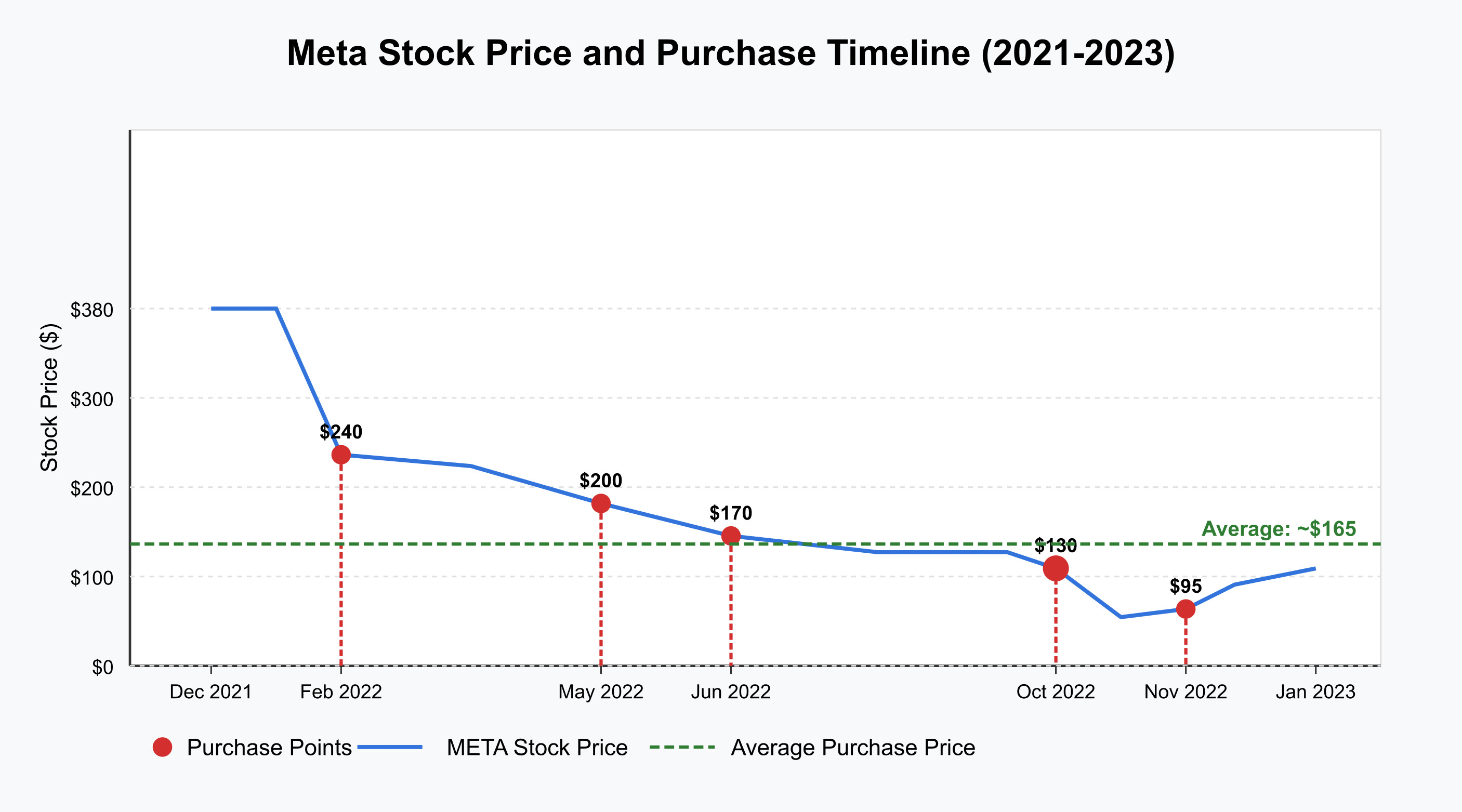
The stock is currently at $550 per share. My purchases generated a 36% annualized return. That’s what happens if you can buy exceptional companies at great prices.
They don’t just trade at a great price out of the blue. There is always something that concerns people and leads them to sell shares. You should look deeply, assess whether it’s justified or not, and act accordingly. And note that these opportunities come rarely.
Currently, we may be getting such an opportunity for Meta again.
Many things concern the investors:
Plummeting cash flows due to AI capex.
Uncertainty about ROI on AI capex.
Lawsuits targeting its core business.
Result? The stock is down by almost 30% over the past year and now underperforming the S&P 500 by 20% over the past 5 years.
The question is a simple one, but hard to answer: Is all this noise smoking a rock-solid business, or is substantial shareholder value at risk of permanent loss?
We are embarking on this task today.
Let’s dive.
1. 🏭 Understanding The Business
2. 🏰 Competitive Analysis
3. 🚨Why It’s Down: Key Risks
4. 📝 Investment Thesis
5. 📊 Fundamental Analysis
6. 📈 Valuation
7. 🏁 Conclusion
🏭 Understanding The Business
I always say that most people don’t really understand the businesses they deal with.
Understanding the business doesn’t mean understanding how it makes money now. It means getting yourself into its dynamics, foundations, what made it better and distinguished it from similar ones.
It’s easy to say Meta is a social network. It doesn’t give you much.
To really understand Meta, you have to understand what preceded it, what it changed in the existing model, and how it evolved over the years.
At first, there was “sixdegrees.”
It is recognized as the first social media platform in the modern sense. It featured all the primitives of the modern social media model: Profile pages, friend lists, connection mapping, public feed, internal messaging, etc.
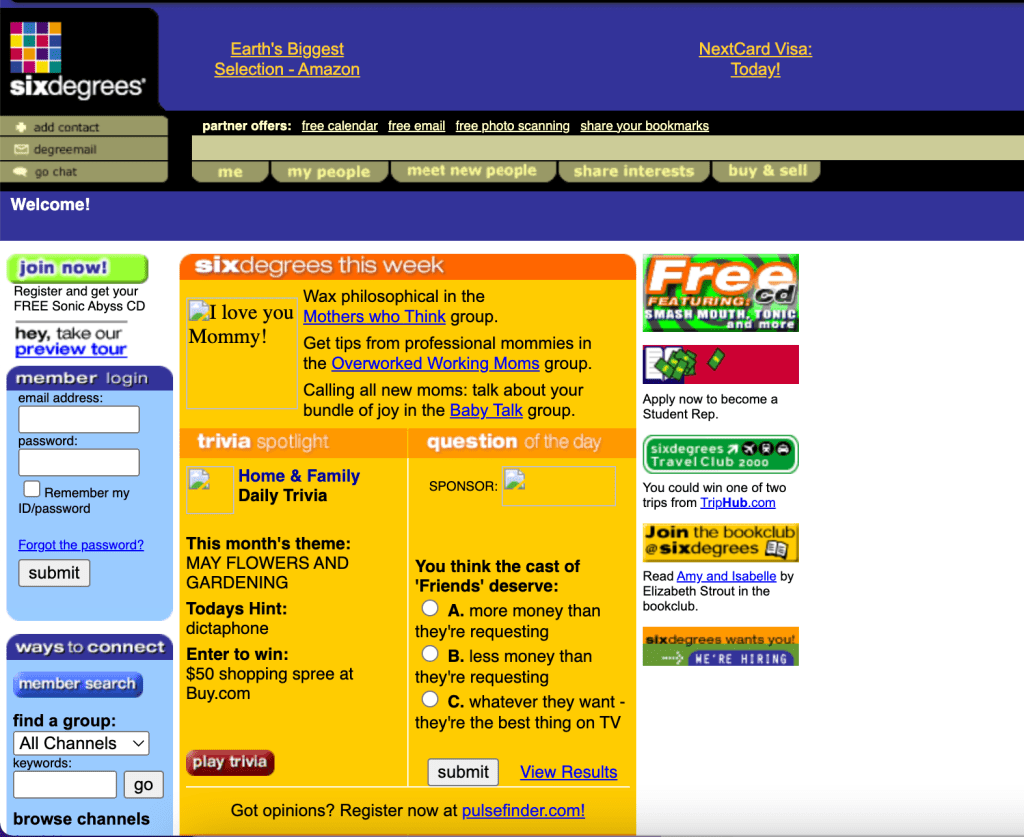
It was a genius idea, but it had to shut down in 2000.
It shut down because there is a little difference between being wrong and being too early. Sixdegrees wasn’t wrong in the idea, but it was too early. The internet infrastructure and personal computer network were not developed enough.
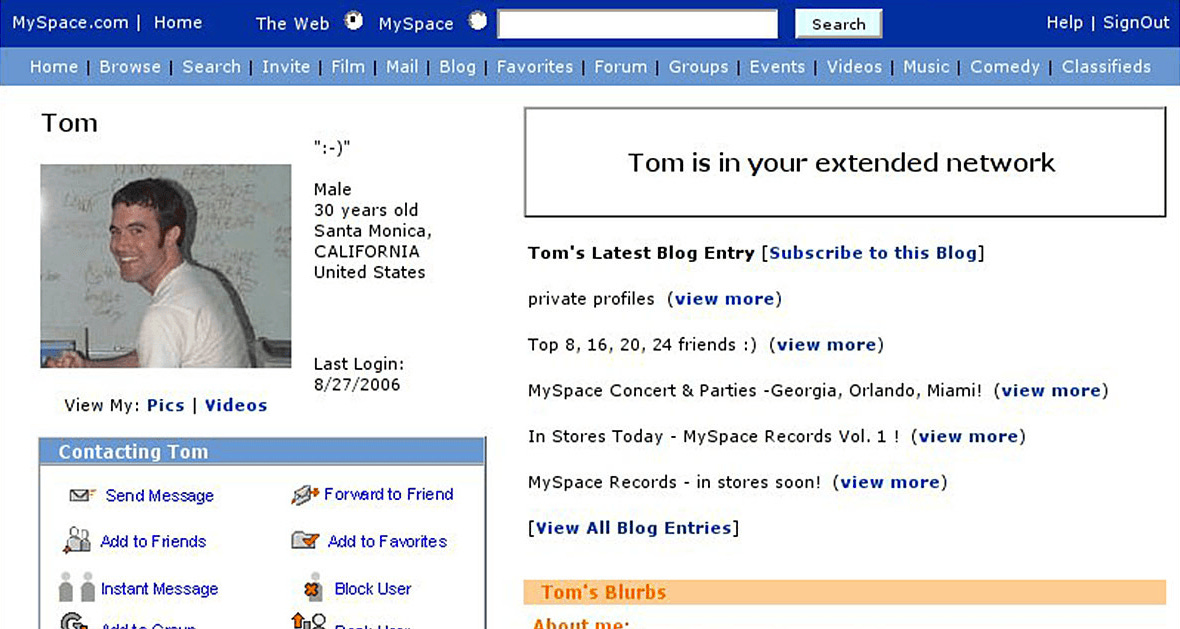
Then came Friendster in 2002 and MySpace in 2003.
They built on the foundations of sixdegrees with some extras.
Friendster centered connections and dating through shared interests; it required real-name profiles and banned fake/celebrity pages. MySpace was the rebellious brother. It allowed pseudonyms, profile page customization through HTML and CSS, and focused on connections based on music and pop culture.
Friendster and MySpace weren’t marginally better or worse ideas from each other.
They lost and won by execution.
Friendster’s infrastructure was broken. Pages sometimes took minutes to load. MySpace was faster, so it eventually ended up winning more users, which brought even more users. Classic network effects.
Then came Facebook.
When it was launched in 2004, MySpace had already more than 1 million users.
Facebook did something different: It focused on local networks.
MySpace was a generalist platform. Facebook started at Harvard and expanded to other college campuses over time. This kept its network local.
Local networks have one key advantage over broad networks: They are more robust.
People are more passionate about what their close acquaintances do rather than what people far away do. This bumps up activity rates and average time spent.
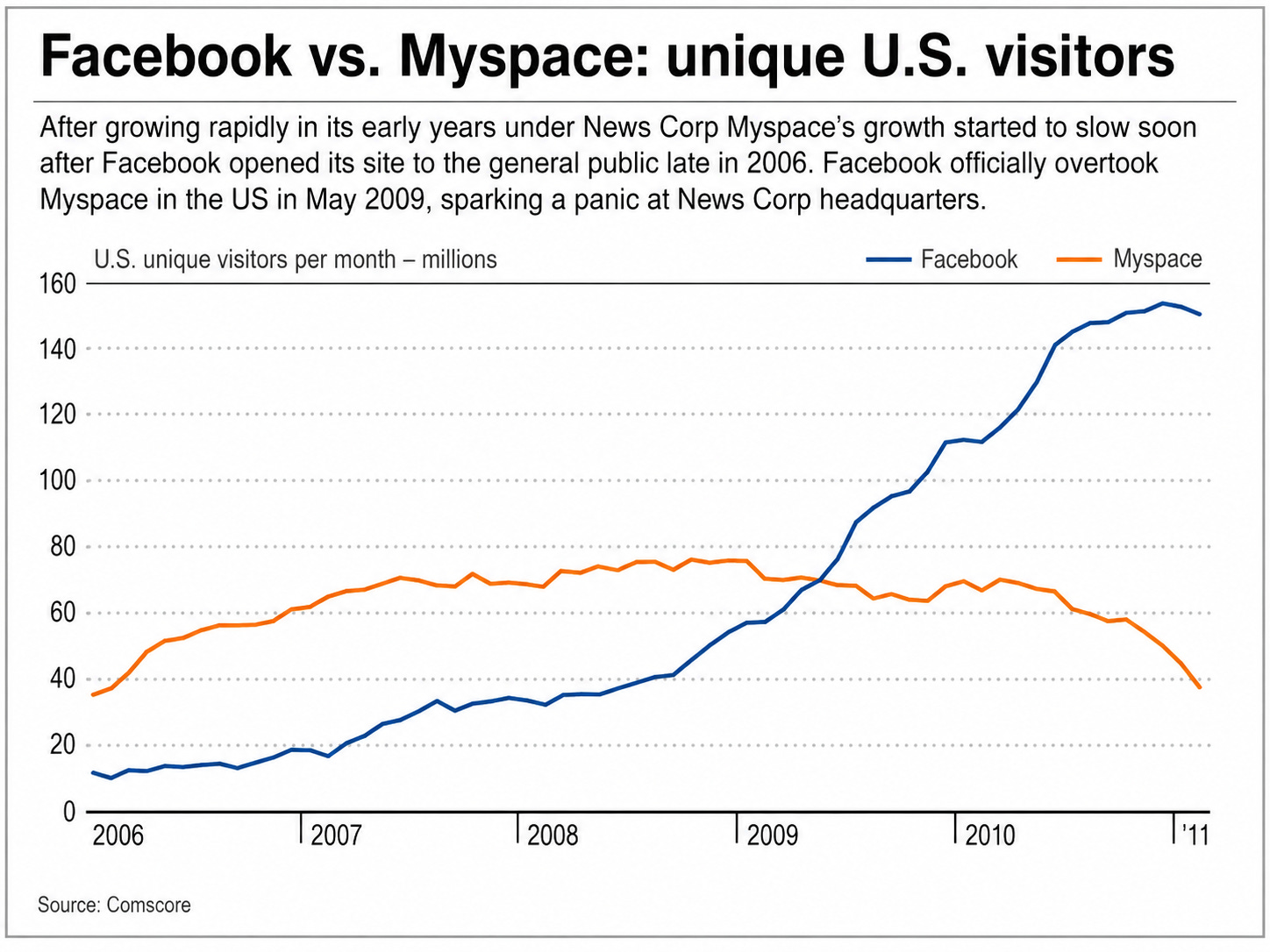
The fact that MySpace became the world’s most visited site in 2006 and Facebook was still able to dethrone it is proof of this. MySpace was a larger network, but Facebook was more robust. And when two networks compete, the more robust one usually wins, as a better share of users stick with it due to a higher share of close acquaintances.
A robust network was one element of Facebook’s victory. The other one was design.
Facebook created a more robust network, but it was a limited network as it initially included only university students. Facebook had to open its network to the public to take on MySpace. And the question was, why would the public pick Facebook?
This is where design became relevant.
People like simplicity and dislike complexity and chaos. What are the most common car colors in the world? Black and white. They are the simplest. Same with clothes.
MySpace was full of customization as it allowed it. Facebook, on the other hand, was simple and had a monotonous design imposed on all users. This limited its capabilities but made it very easy to use.
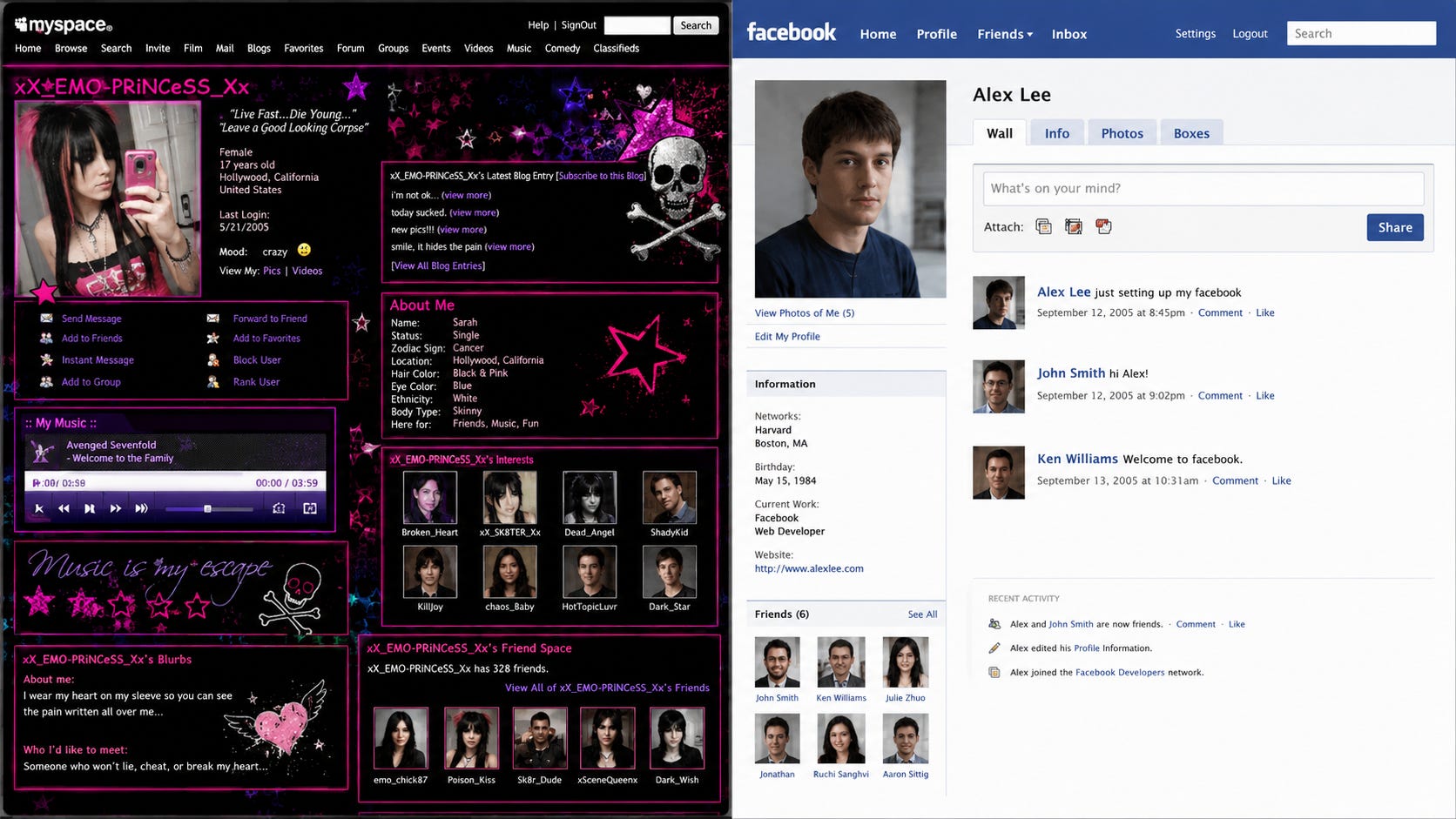
Its core, robust network stuck and attracted acquaintances from other platforms. When they tried the platform, they were captured by the simplicity and stayed.
More robust network and design.
These two were the elements that made Facebook competitive in the space, but what made it big was its leveraging an earlier insight: the power of activity rates.
As their robust network was able to live and be competitive with much bigger networks, the Facebook team understood the power of activity rates. They redesigned the platform to maximize activity rates, which they thought would attract more users.
It launched News Feed in 2006, which allowed people to see activity from their connections in real time. That created an urge to constantly check the feed.
Another innovation was opening up its codebase to developers via APIs. This allowed developers to create apps like games directly within the platform, which further increased the time spent on the platform.
Result? Facebook dominated after it opened its platform to the public in 2006:
Zuckerberg drew a crucial lesson from Facebook’s success: Incumbents are never safe.
His taking on MySpace proved that somebody else could take on Facebook. This is regardless of resources and capability, as MySpace had more of both. Virality could be a result of coincidental decisions, and once it was in motion, stopping it was very hard.
As competitors’ decisions couldn’t be controlled, Facebook was also open to threats.
This drove the business decisions of Facebook later on.
When a serious competitor emerged, instead of competing, Meta bought them.
It acquired Instagram in 2012 and WhatsApp in 2014, which effectively turned Facebook into an interconnected ecosystem of social media networks.
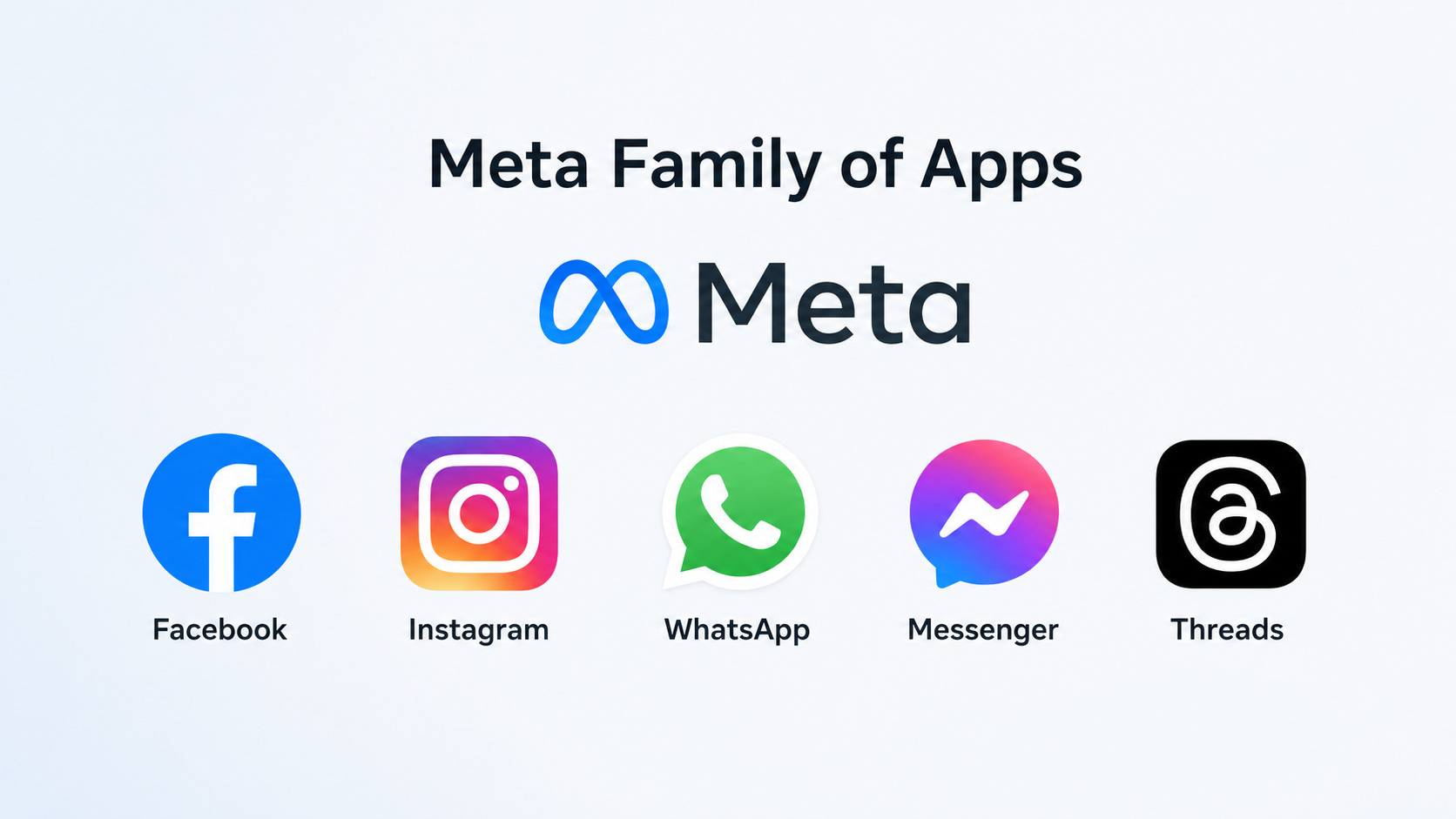
This wasn’t just important for survival; it was also important for monetization.
Facebook started monetization through ads with targeting in 2007. Ads existed before that but mostly like banners and without developed targeting.
The better the targeting, the more ROI it generates for advertisers, and in turn they end up spending even more on ads. Controlling multiple platforms with different media focus allowed Meta to build incredibly valuable personality mapping.
The same people behave differently on different platforms. Early Facebook had a text focus, Instagram is focused on pictures, and WhatsApp on short-form text messages. Gathering data for the same person across multiple platforms draws a more complete picture of that personality than collecting data from just a single platform.
Expanding into multiple platforms also allowed Meta to multiply opportunities for targeting, creating one of the largest ad networks the world has ever seen.
This is what Meta is right now: a giant network of users and advertisers.
And networks create network effects that make it extremely hard to disrupt the incumbents:
Users attract users. → Direct network effects
More users attract more advertisers → Indirect network effects
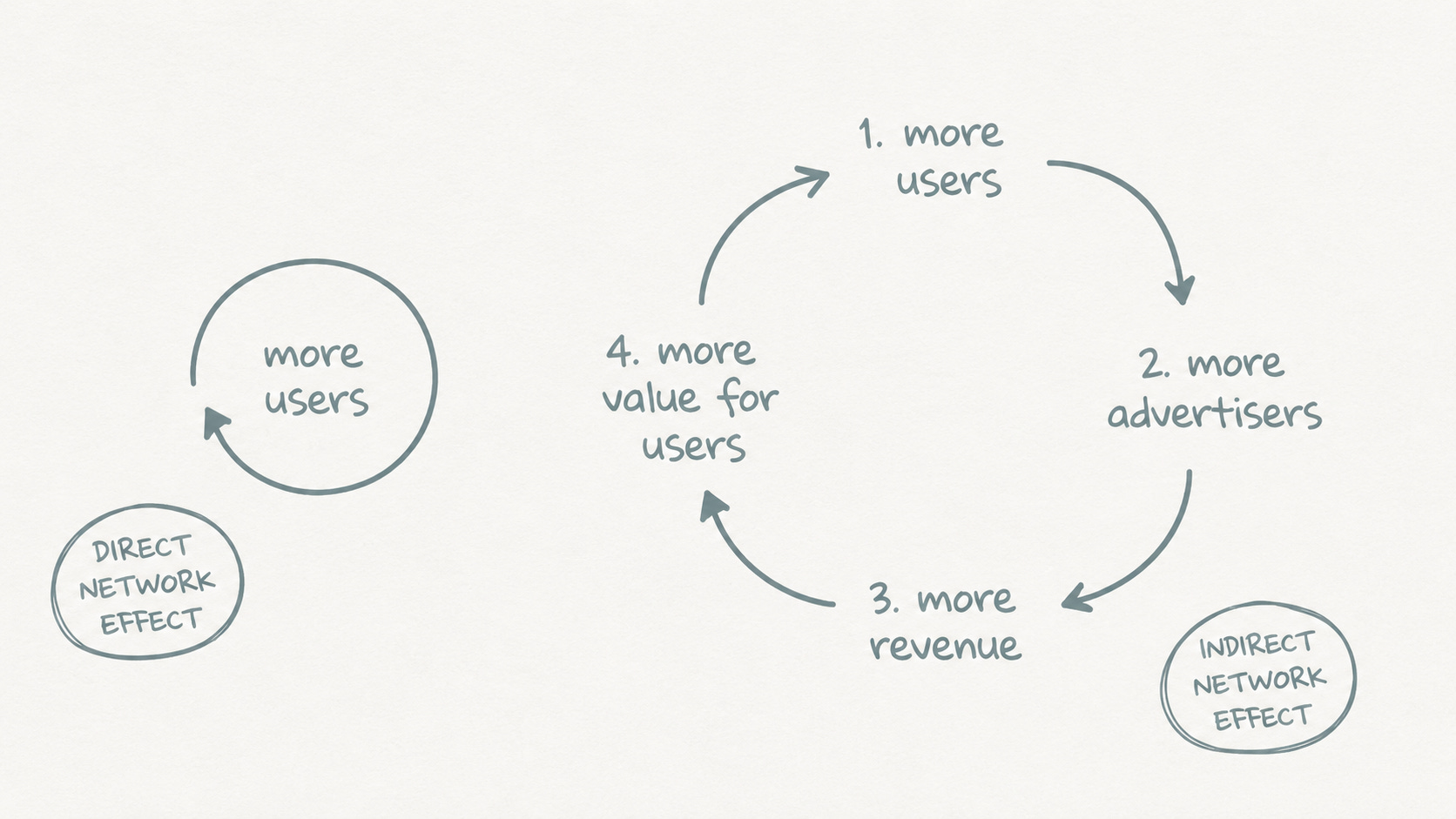
This means more revenue for Meta, allowing it to create more value for users, which also attracts more users and reinforces the cycle.
Network effects are incredibly valuable and strong; however, they aren’t the only thing that makes it incredibly hard to disrupt Meta. Everybody knows and talks about network effects, but there is hardly any talk about how Meta has become a launch pad for new businesses. That’s another moat around Meta aside from the network effects.
To comprehend the real strength of Meta, we have to understand both.
Let’s dig.
🏰 Competitive Analysis
“Networks are very hard to disrupt.”
We often say this, but it’s actually not outright correct. What is very hard to disrupt is a certain type of network: one that has reached the tipping point.
What the hell is a “tipping point?”
There are many different definitions. Some sources define it in relation to the growth curve of the network. A tipping point is where secular growth accelerates in momentum and turns to a J-curve, or hockey stick type of growth.
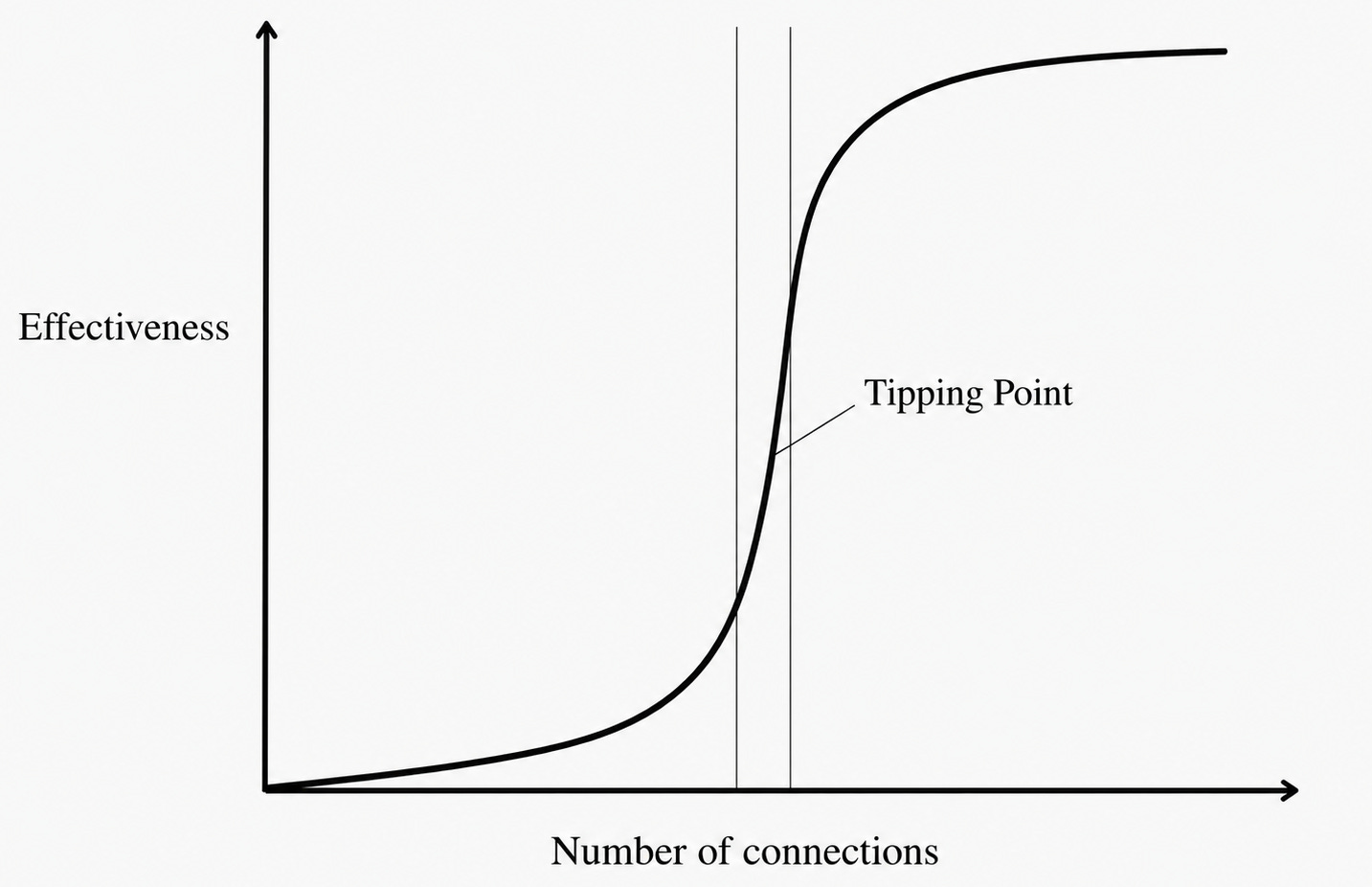
This happens for a reason.
When a network reaches a certain size and density of connections, it’s more advantageous for every non-user to join that network instead of the alternatives.
Think about it.
If you were to join a social media platform, you would join where most of your friends already are. When a network reaches a certain size, this becomes the case for the majority of people, so the growth of the network explodes.
Thus, it becomes harder for alternatives to compete, reinforcing the position of the incumbent network that has reached the tipping point.
Naturally, beyond the tipping point, incentives for existing users to leave the incumbent platform collapse. The way to take a piece of the pie here is changing the type of media that the platform focuses on.
People don’t tend to multi-home for similar social media platforms, but we tend to accept different platforms for different media. This is why, over generations, new social media platforms that have succeeded have always focused on a new type of media.
Early Facebook was focused on text, and Twitter focused on short text. YouTube focused on long-form video, Instagram focused on pictures, TikTok focused on short-form video, etc.
Each type of media creates its own category winner that is almost impossible to disrupt, and Meta has three of them.
Facebook, Instagram, and WhatsApp are individually beyond the tipping point, which makes them almost impossible to disrupt in their own fields. Meta owns them in an interconnected digital ecosystem, with shared infrastructure and capabilities. This makes each one even stronger than they would be alone.
One network like this would already result in a strong moat, and Meta has three.
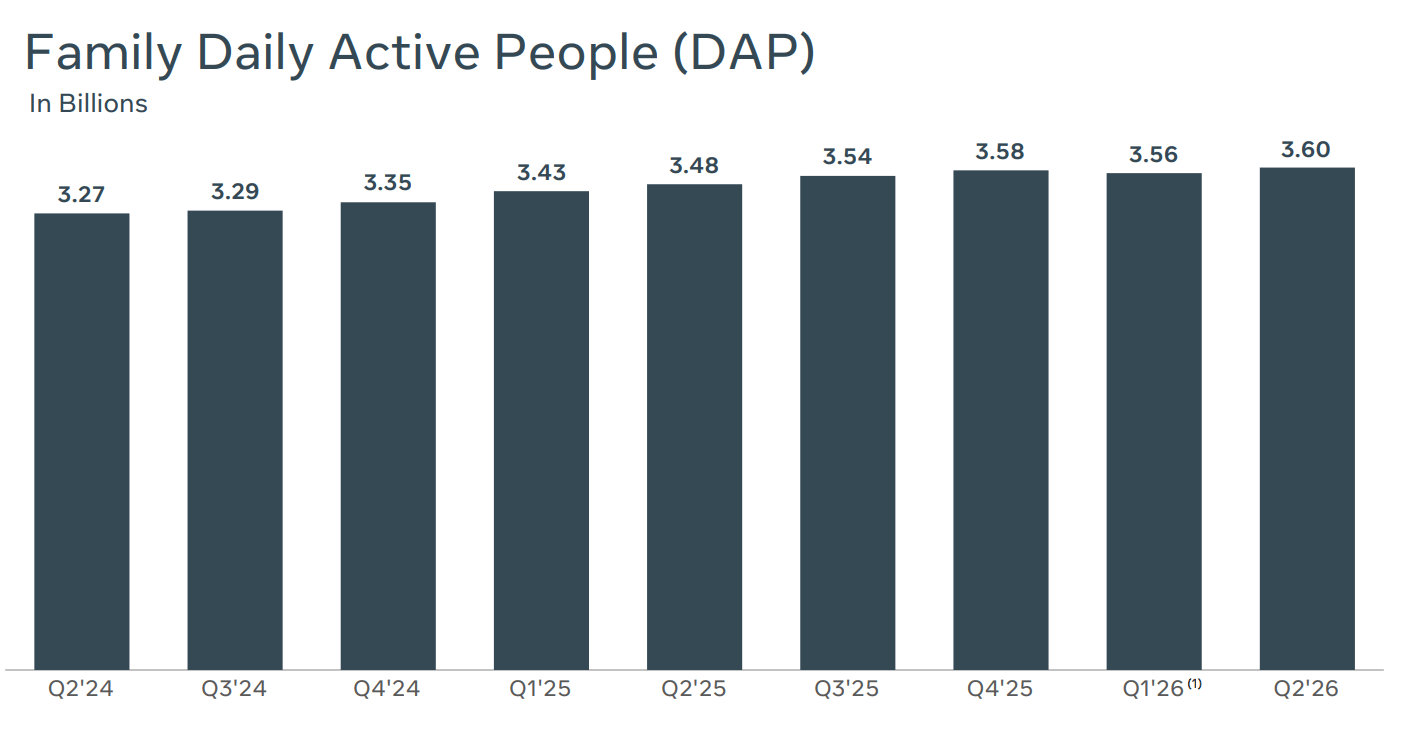
This works out to 3.6 billion daily active users who are locked in three types of media:
This “lock-in” effect is elevated for some types of users, those who could be called power-users or the so-called influencers.
As they derive power from their follower base on a platform, switching means risking that power, so they almost never ditch their core platforms. This reinforces the connection of their followers to the platform as well.
Thanks to technology, this connection between influencers, followers, and the platform has evolved from just an emotional one to a transactional one.
And this is exactly what most people ignore.
As creating brands and selling online got easier and easier, more and more influencer brands emerged. An influencer’s follower base is her customers, which further strengthens the lock-in effect, as a platform shift risks revenue.
These influencer brands, after they grow, become Meta’s customers paying for ads, resulting in a cycle where the platform actually creates its own revenue.
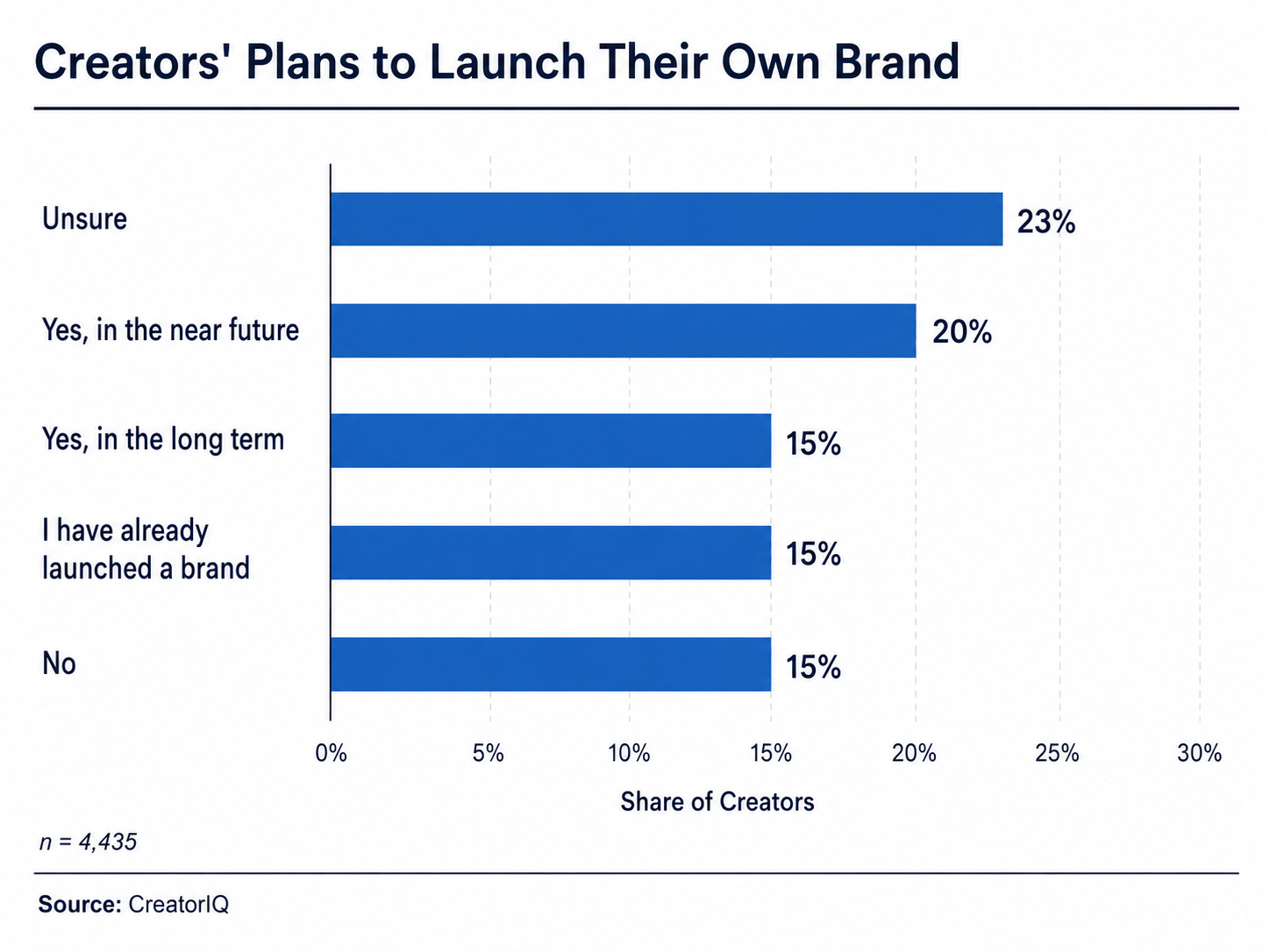
Currently, Facebook and Instagram are two of the most common launchpads for lifestyle brands. The fact that 50% of influencers have already launched or are planning to launch their own brands proves this:
For these brands, Meta platforms are the life channel, which naturally results in a very strong lock-in effect.
These two are why it’s almost impossible to disrupt Meta.
It has three platforms beyond the tipping point where network effects create all the incentives for potential users to join. When a user joins, he is locked in as no alternative comes close to the network density.
These networks have also transformed from pure emotional connections to transactional connections, which locks in power users even more strongly, reinforcing the network robustness.
In short, we are looking at a business, a system, that’s almost impossible to disrupt.
If this is the case, why has the stock been dropping lately?
🚨 Why It’s Down: Key Risks
Two particular concerns are weighing on the stock right now.
1️⃣ Skyrocketing AI Capex
Meta is spending on AI, and it’s spending a lot.
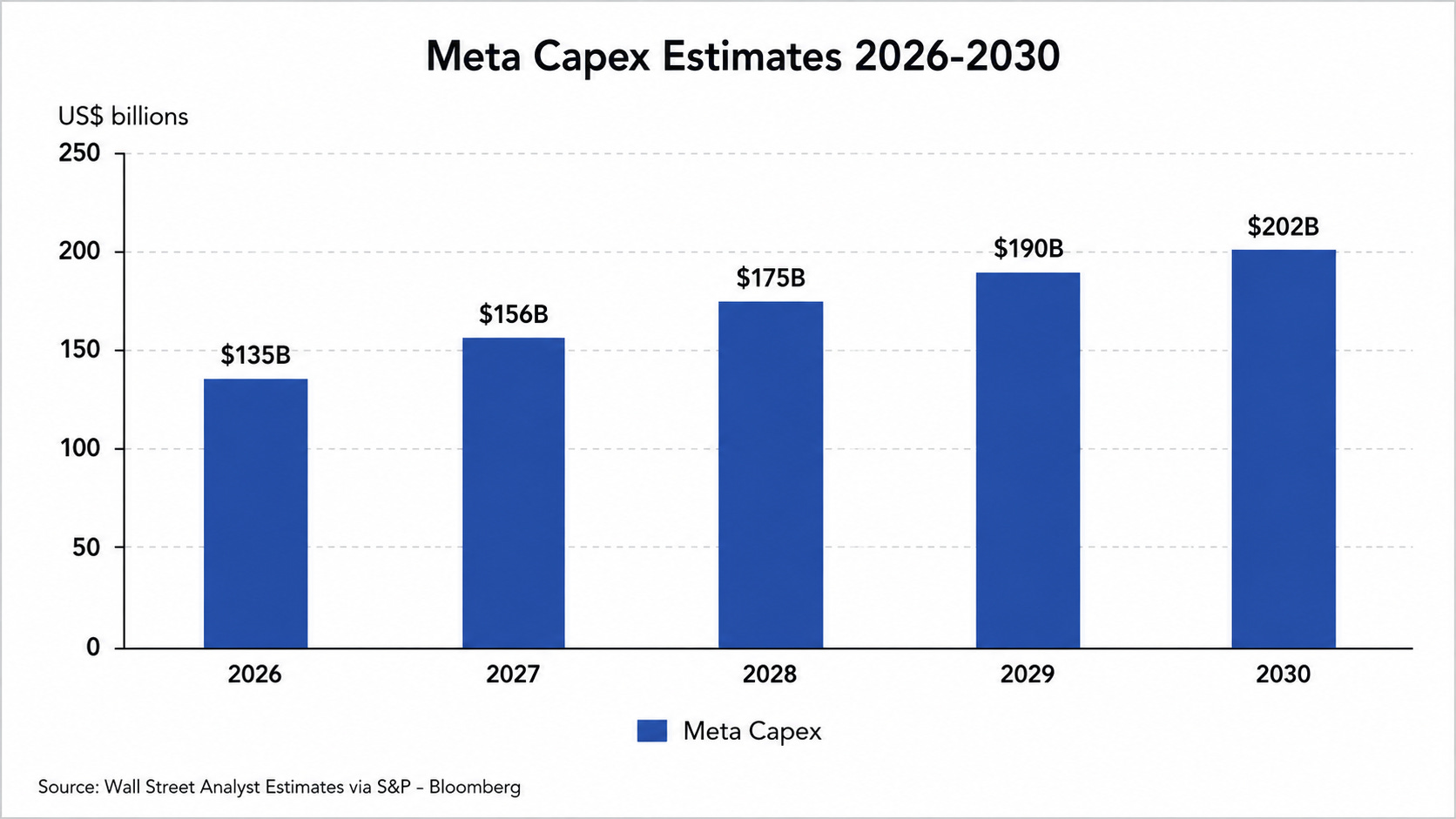
Its capex jumped from just $28 billion in 2023 to $72 billion last year, and it’s expected to finish this year somewhere between $130-$145 billion.
That’s already a 6-7x capex growth in just 3 years. And it doesn’t even end there. Its capex is expected to jump to $202 billion by 2030:
Normally, when a company spends this heavily, you would look at its history of capital allocation, see the numbers, and if they are satisfactory, you give them the benefit of the doubt, as it’s very hard to estimate ROI on capex by third parties.
Meta has an exceptional track record here as its median ROIC over the past 10 years is 34%. This is almost 3x what an average American company generates on its capital.
The problem is that the market still remembers how Meta burned billions of dollars in 2020-2022 on the Metaverse without any trace of profitability whatsoever. Naturally, it’s afraid that the same may happen again. This is exacerbated by the general skepticism about the ROI on AI capex, even for big cloud businesses.
I don’t think that’s a valid concern for the current capex cycle.
Meta is indeed spending, but how is it spending? Take a look at Meta’s estimated compute capacity by function through 2030:
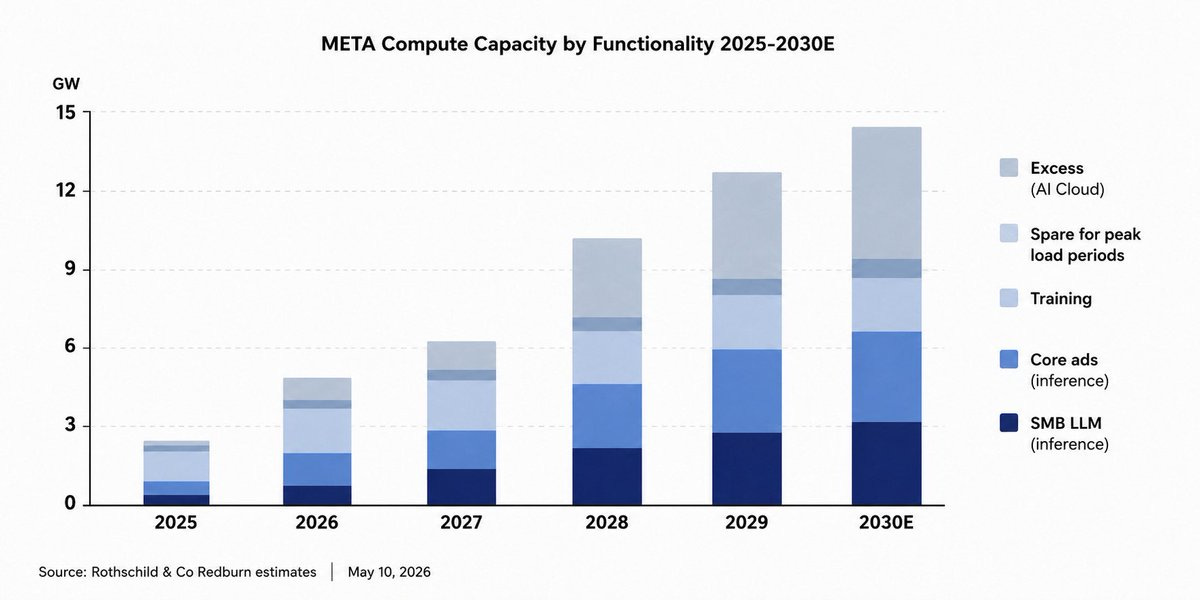
Meta uses AI in its core business in three main ways:
Inference load of generative AI tools for small businesses (SMBs).
Ad ranking and distribution models.
Training of these models.
These are essential for Meta. It also needs to set aside some spare capacity to adequately supply in peak demand periods.
The capacity beyond these four functions is real excess for innovation.
Last year, Meta had almost no real excess. This year it may end up with around 20% excess capacity. If Meta spends as expected, this could lead to almost 40% excess capacity in 2030.
Now, there is a nuance here.
Meta brings compute online primarily in two ways:
Contracts with neoclouds.
Internal deployment of data centers.
Contracts with neoclouds are generally on a pay-or-take basis, meaning you have to pay for the contract anyway, regardless of whether you use the capacity or not. Once committed, Meta has little flexibility here.
However, internal deployment is more flexible. It can delay or completely cancel internal development plans. This gives it flexibility with capital allocation.
In the worst-case scenario, Meta can end up paying for the neo-cloud capacity it committed to and for the internal deployments it already put in motion. However, this is unlikely to exceed Meta’s internal consumption in the long term, as total 2028 capacity is expected to be almost equal to its internal consumption in 2030.
And Meta is already generating solid ROI on AI capacity used for the core business. Improvements to ad ranking have boosted clicks by 8.7% and conversions by 14.7%, driving even more ad spending. Automated tools also cut lead generation cost by 14%.
So, in the worst-case scenario, Meta can move the compute it needs to pay anyway to internal consumption and delay/cancel building excess for AI cloud and other AI-related businesses.
The problem with Metaverse was that already committed capital did nothing literally.
Here, Meta already sees ROI on the already committed capital, and it has flexibility for the capital it plans to deploy beyond where it’s already generating ROI.
So, the magnitude of buildout is intimidating. However, it’s less risky than it looks, as committed capital already generates some ROI and the rest is flexible.
2️⃣ Legal Headwinds
29 US states filed a collective lawsuit against Meta in 2023, claiming that it deliberately maximized the addictiveness of its products despite knowing that it was harming young users.
Meta could face up to $1.2 trillion of damages in this case.
Now, I won’t get into the details, arguments, or counterarguments, etc as it would be a write-up on its own.
However, there are some misconceptions about this case that we need to understand.
First, states aren’t actually seeking $1.2 trillion.
It is essentially the mathematical maximum obtained by taking statutory per-violation penalties and multiplying them across enormous numbers of alleged violations. This is what Meta itself inferred, and it’s a strategy to affect public opinion by making the number look implausible.
What the States actually seek is $200 billion.
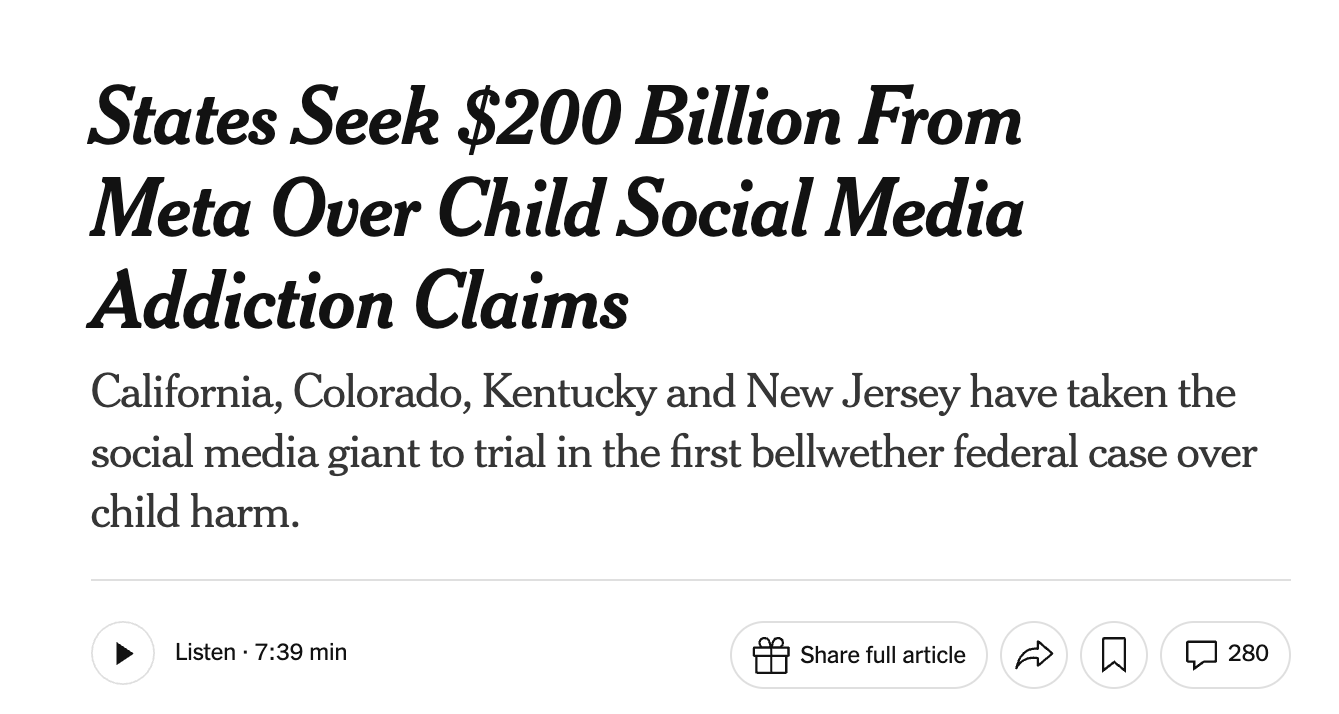
Second, as a lawyer, I can say that the general practice of the US courts facing enormous statutory maxima has generally been to award substantially less than the theoretical maximum.
We recently saw this with Anthropic and Meta lawsuits.
Writers sued Anthropic for illegally downloading their books from online libraries. The headline was that Anthropic could face an existential threat as willful infringement claims could theoretically reach up to $150,000 per infringed work.
Given that infringement was estimated for around 500,000 works, this could lead to more than $50 billion in damages.
The court finalized a settlement for $1.5 billion in total, or $3,000 per infringed work.
This is 1/50, or 2% of the statutory maximum.
A recent case against Meta in New Mexico shows a similar pattern.
In two cases, the state of New Mexico claimed that:
Facebook and Instagram facilitated grooming, solicitation, trafficking, and distribution of child sexual abuse material.
Meta's age controls were inadequate, and its algorithms and platform design exposed minors to predators and harmful and addictive material.
Meta also caused a public nuisance as a result of the above actions.
The state sought $5.7 billion in total, and the court awarded $942M, roughly ~16–17% of the monetary amount sought.
Applying these yardsticks, it is plausible to assume that even if Meta loses in this case, the total damage will likely be around 2% of the statutory maximum or 20% of the damages sought.
This puts us between $24 billion and $40 billion, which is 1/3 to 2/3 of Meta’s annual net income.
This is still substantial, of course, but it’s not a number that would substantially detract from the terminal value of the business or permanently harm its fundamentals.
In short, these are real risks; however, their potential harms are way too exaggerated.
Meta has substantial flexibility with the part of the AI capex where ROI is a question. The rest is for its own use, and it’s already generating ROI there. It exerts less control over the legal risks; however, the outcome is almost guaranteed to be not as bad as the headlines suggest.
As we now have a grasp on the key risks, let’s now turn to what optionality we have.
📝 Investment Thesis
Meta currently has three major opportunities ahead.
1️⃣ AI optionality is real.
As I explained above, Meta has an opportunity, not an obligation, to build substantial excess compute capacity.
If it sees no ROI on this, it could cancel future internal deployments, shift to committed capacity for internal consumption, and end up with no material loss.
But what if demand for AI compute stays strong, and Meta monetizes its excess compute? This is a substantial opportunity.
Look at the current rates:
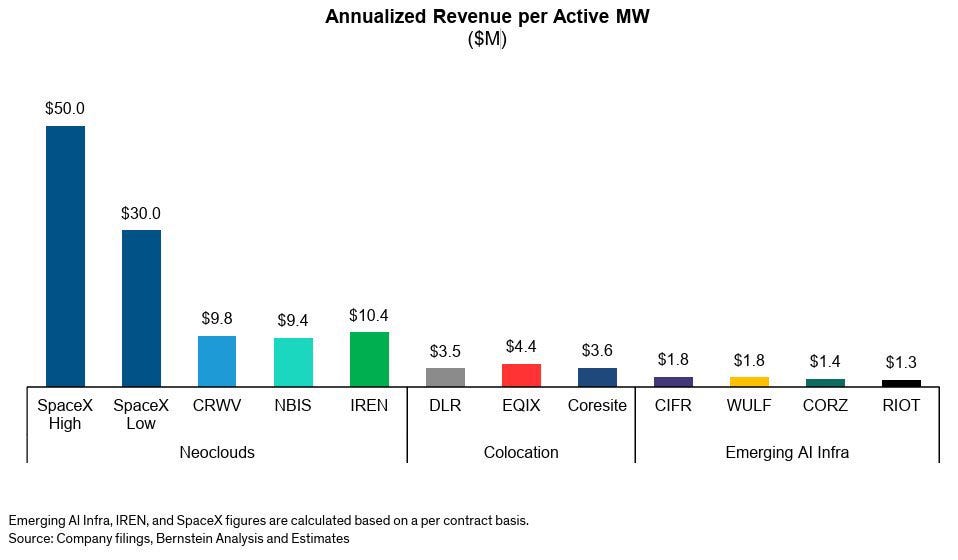
Standard Neocloud rates are around $10 billion per GW, while SpaceX charges as high as $50 billion per GW.
Meta is projected to end up with roughly 5 GW excess capacity in 2030, as we mentioned above. Even if we assume a blended contract price of $20 billion per GW, AI cloud can drive $100 billion incremental revenue and $20-$30 billion net income, assuming just 20-30% net margins.
This is incredible potential, as its TTM net income currently stands at $68 billion.
2️⃣ Google Search’s decline is an opportunity for Meta.
Though some people don’t want to admit it, search is declining.
Traffic to websites from search has declined more than 20% just over the past year:
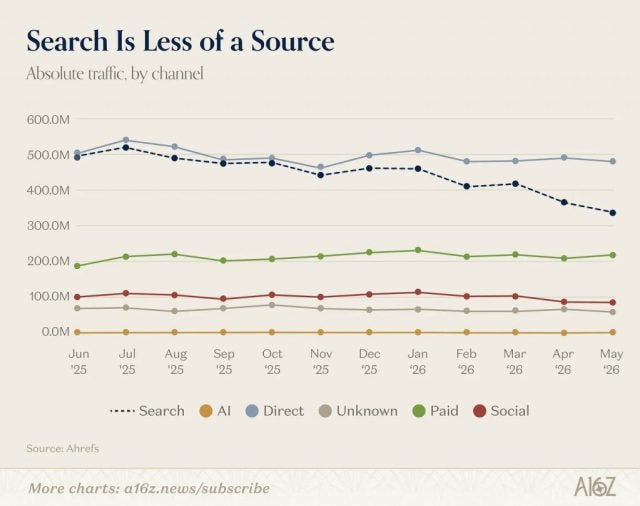
Shares of searches that generated no clicks jumped from 50% in 2020 to 68% now.
This means that Google’s revenue opportunity in search is shrinking every day, and we are just in the early innings. It’s only been 4 years into AI.
Meta, on the other hand, doesn’t suffer from the same problem, as AI doesn’t materially affect social media. If anything, it benefits from AI in the form of better efficiency and effectiveness of its tools.
As a result, I believe more and more of the advertisers will shift ad spend from Google to Meta. Estimates already reflect this, as Meta ad revenue is expected to surpass that of Google as early as this year:
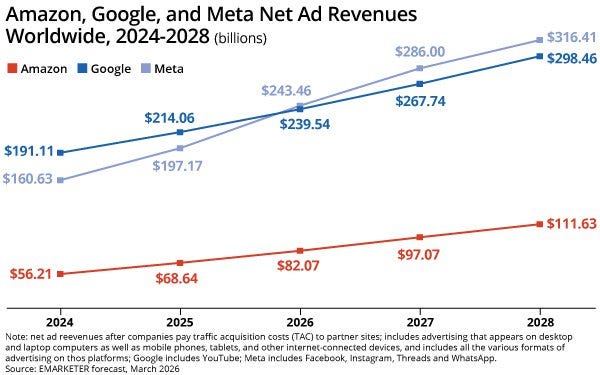
This will only accelerate as AI develops.
And Google won’t be the only victim. Open internet ad spend will also decline substantially as AI bots freely surf on the open internet, which could lead to a waste of ad dollars. Thus, more dollars will shift from the open internet to walled gardens, and the biggest walled garden in the town is currently Meta.
3️⃣ AI will drive substantial margin expansion.
Traditionally, the highest cost of platforms like Meta has been generating code and developers. This is now converging to 0 thanks to AI.
Thus, I believe platforms like Meta can be run with a fraction of their current workforces. As a result, we can see a secular decline in Meta’s workforce.
We are already seeing the signs of this as Meta eliminated 6,000 of the open positions and is cutting 10% of its global workforce this year.
Plus, the broader data also validates the AI margin expansion thesis:
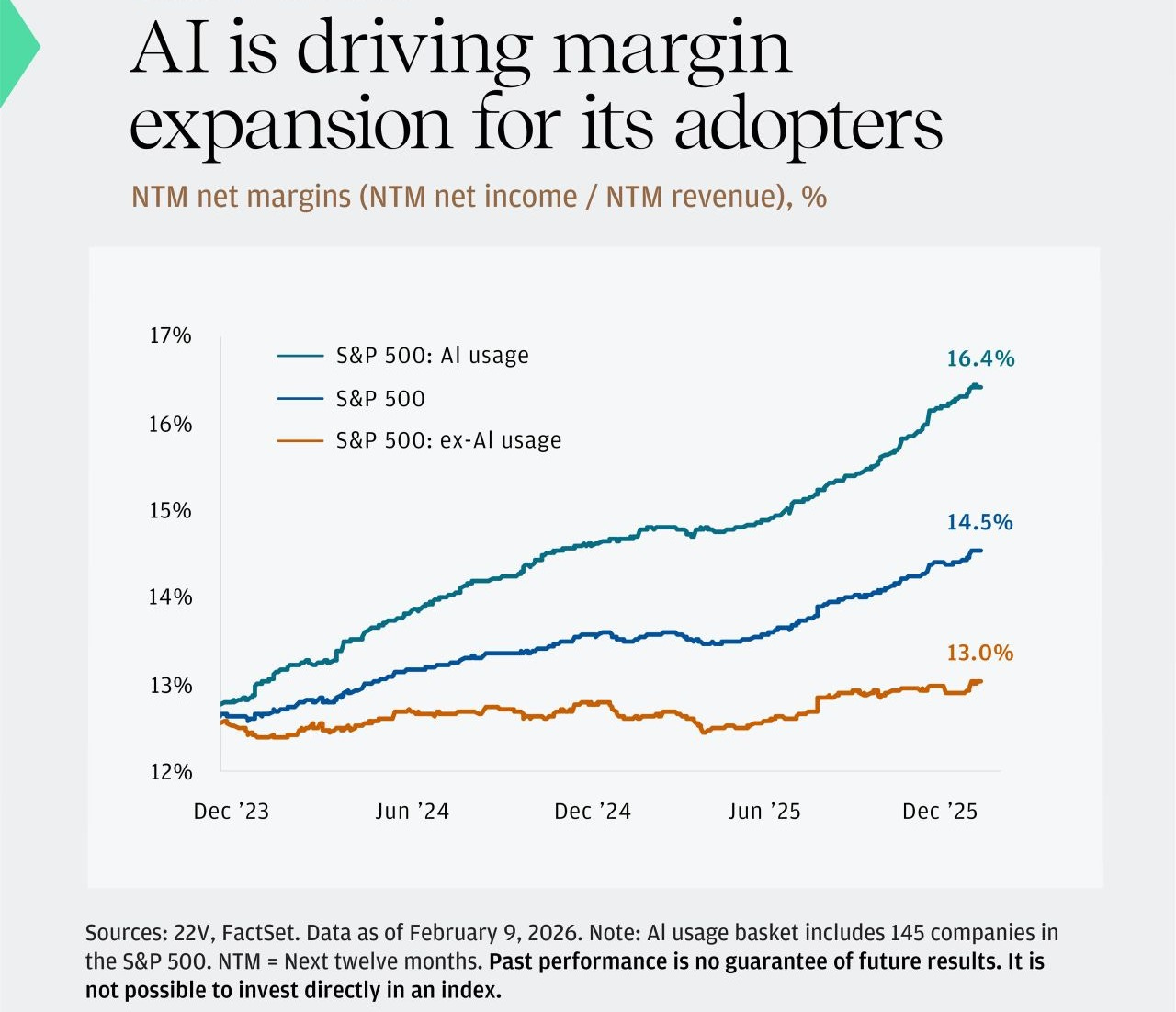
If AI is driving 2-3% of margin expansion even at this stage, we can assume that the operational efficiency it will bring to Meta will be much, much higher.
Since Meta’s net margin averaged around 30% in the pre-AI era, we can assume this to climb toward 40% after AI adoption reaches maturity.
In short, Meta:
Has substantial optionality, not obligation, in AI infrastructure.
Will benefit greatly from the decline of search and the open internet.
Will drive substantial margin expansion from AI adoption at scale.
A $1.5 trillion company could hardly have a better opportunity set for the future.
📊 Fundamental Analysis
➡️ Business Performance
It’s self-explanatory; there is nothing much to say about Meta’s fundamentals except the fact that it’s exceptional.
Revenues have grown by 14% over the past five years while net income growth averaged 11.6% in the same period.
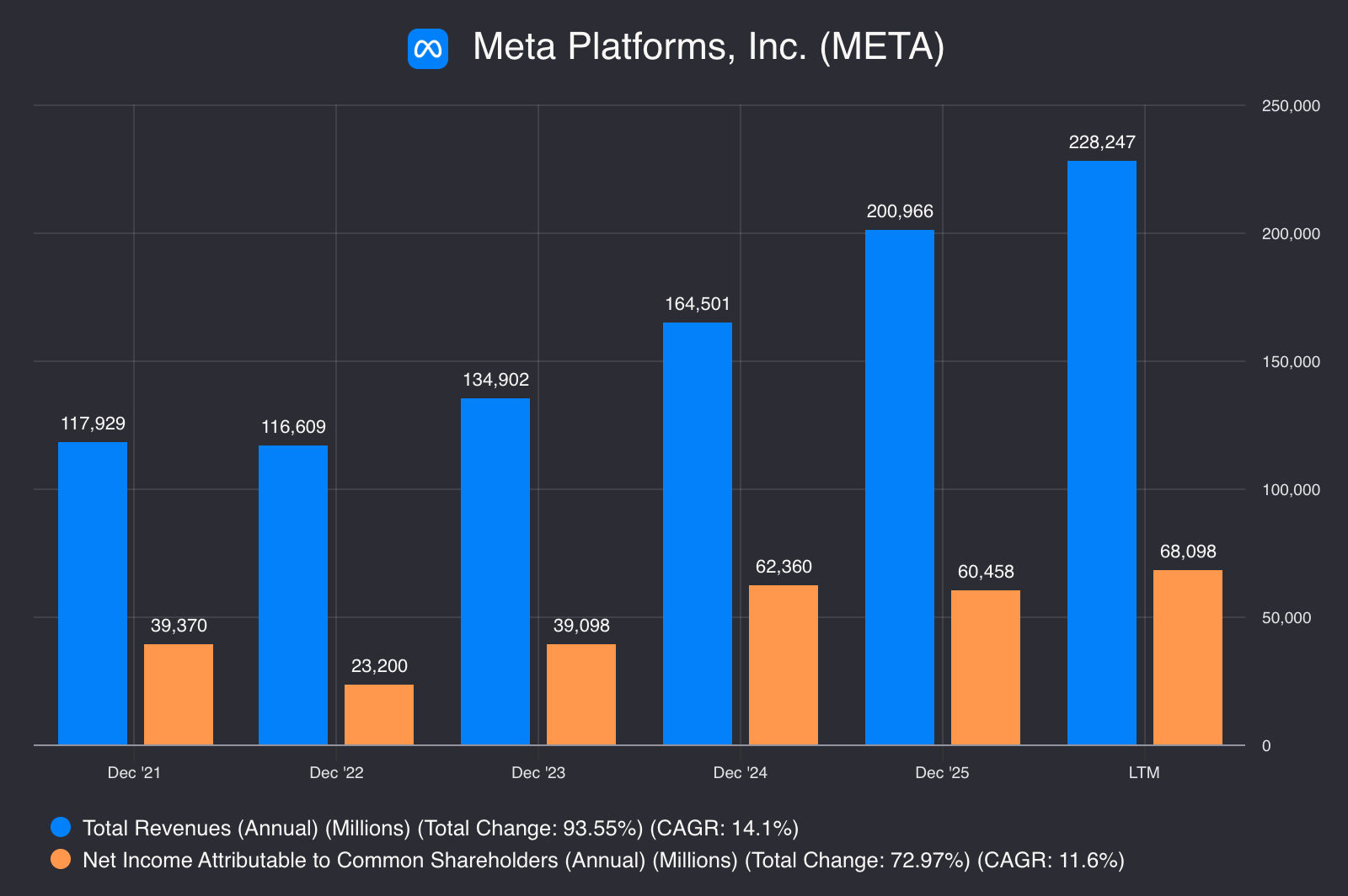
There are two points I would emphasize here.
The first one is the slower growth between 2021 and 2023.
Its sales grew only by 14% from 2021 to 2023. However, from 2023 to the trailing twelve months, growth has been 70%.
There are two reasons for this.
First, the comps were exceptionally strong entering 2021 due to exploding public and private spending during Covid 19. Plus, it was distracted by the metaverse, which generated no ROI at all. Once comps normalized and it focused on the core, growth returned in 2024.
Second, is that AI is obviously driving some sort of efficiencies, as we see that the growth kept accelerating from 2024 on.
The jump from 2023 to 2024 could be attributed to comp normalization and refocus on the core; however, it doesn’t explain the acceleration that followed. AI investments obviously kicked in here, driving more clicks, impressions, and conversions, which in turn fuelled increasing ad spend.
So, we are looking at a giant business that already had a strong growth trajectory, and that’s been enhanced by efficiency gains derived from its usage of new technologies.
That’s the best a $1.5 trillion business could deliver.
➡️ Financial Health
Rock solid.
Up until recently, it had what I call a “golden balance sheet” where total equity generously exceeds total debt and a year of EBITDA is enough to pay the whole debt.
This is how Meta operated until 2025:
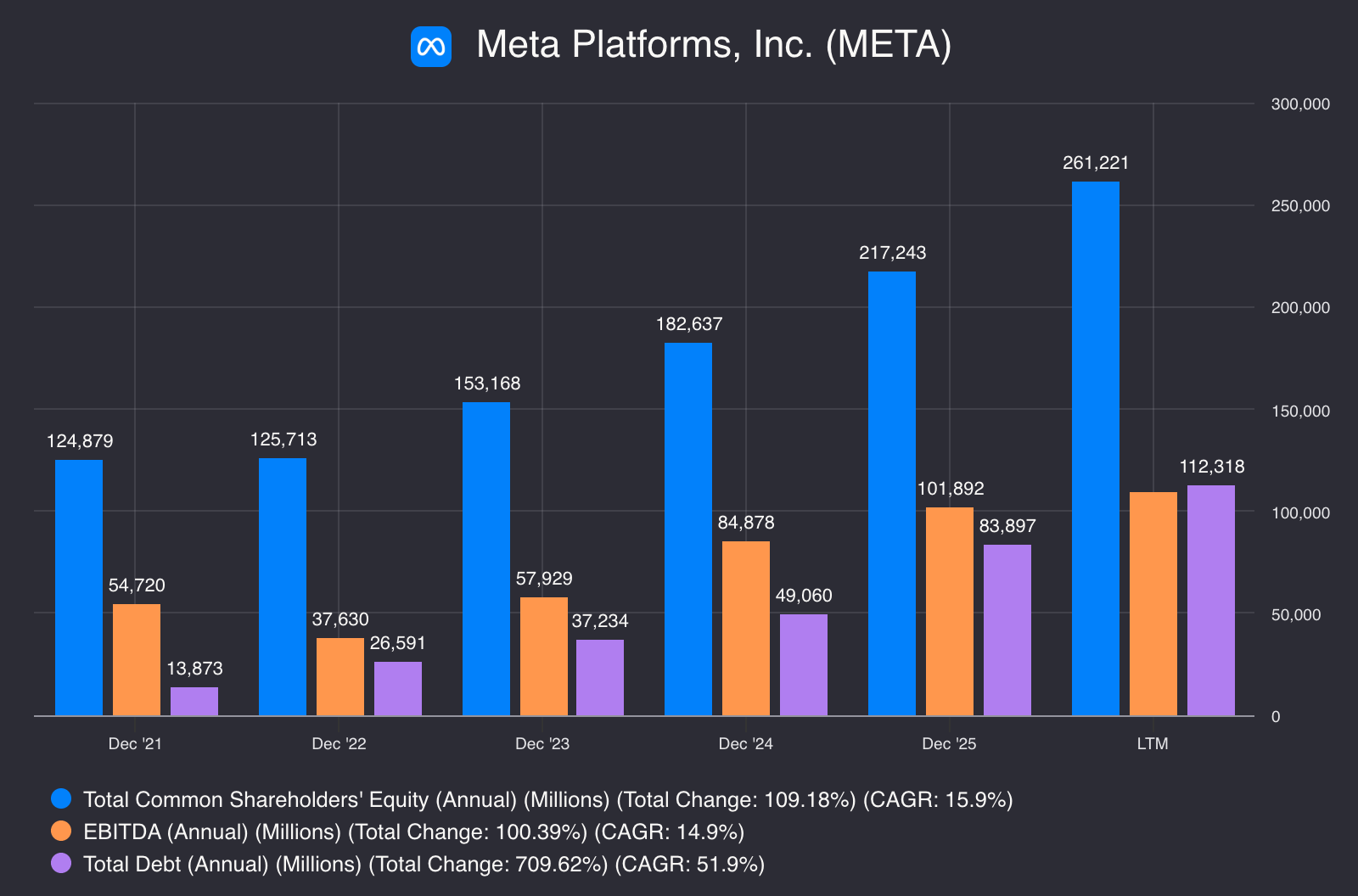
This changed only lately as debt has grown faster than EBITDA to finance the AI buildout. However, it’s still at very healthy levels. Current EBITDA is $109 billion and total debt is only $3 billion higher.
I think this is still a golden balance sheet; however, we have to be observant of where it goes from here. There is an obvious trend in place for higher leverage, and even though I think it’ll never reach levels that could endanger the business, it gives us important signals about its risk appetite, which in turn affects shareholder earnings.
For now, it still has a golden balance sheet.
➡️ Profitability & Capital Allocation
⏺️ Gross & Net Margins
This is where Meta shines, and we actually see solid proof of assumptions regarding its competitive strength and business economics.
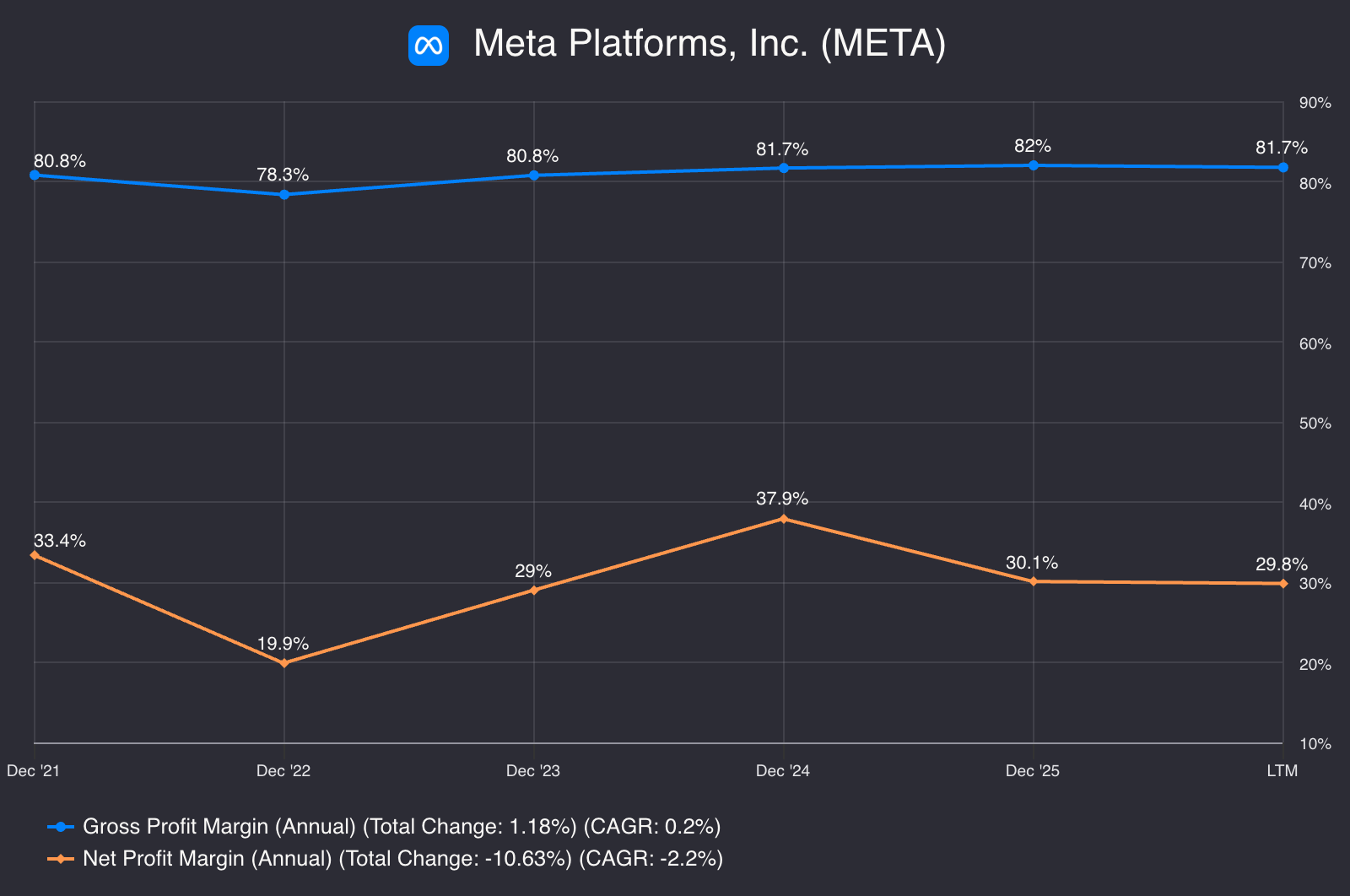
As you see, its gross margin is almost like a straight line, which shows that it’s been able to keep its price premium on cost pretty stable. This signals a business with a moat, as it obviously doesn’t feel any pricing pressure from the competitors. If it did, we would see the gross margin trend down over time, but it’s instead stable.
In net margin, however, there is a wider variance between 19.9% and 37.9%.
This is normal as we are looking at a giant business that is occasionally hit by lawsuits and the bottom line takes hits. Plus, it’s running many experiments at the same time to keep its innovation edge. These sometimes lead to higher D&A and even one-time losses.
We have to be aware that for a business like this, varying hits to the bottom line could be recurring rather than one-time. The composition of hits could change, but I think we should expect some continuity here. Thus, what makes sense is looking at the average net margin.
Its average net margin over the past five years has been 30%.
This is the number we can take as the norm, and it’s an impressive one. Variations can happen; however, if it consistently drops below this number in the next several quarters, then I would start worrying about the underlying business mechanics.
For now, it’s all good.
⏺️ Return on Invested Capital
This is a very interesting one for Meta.
Historically, its ROIC has been very strong as its core business had ample opportunities for organic growth. Thus, it could drive growth while keeping capex relatively small.
As its core started to mature and it sought new opportunities by making new investments, ROIC dropped. It hasn’t been very successful in most of those ventures and saw its ROIC tumble. Then it refocused on the core and ROIC jumped again.
However, each time, peak ROIC was lower than the previous period as the core business grew more mature:
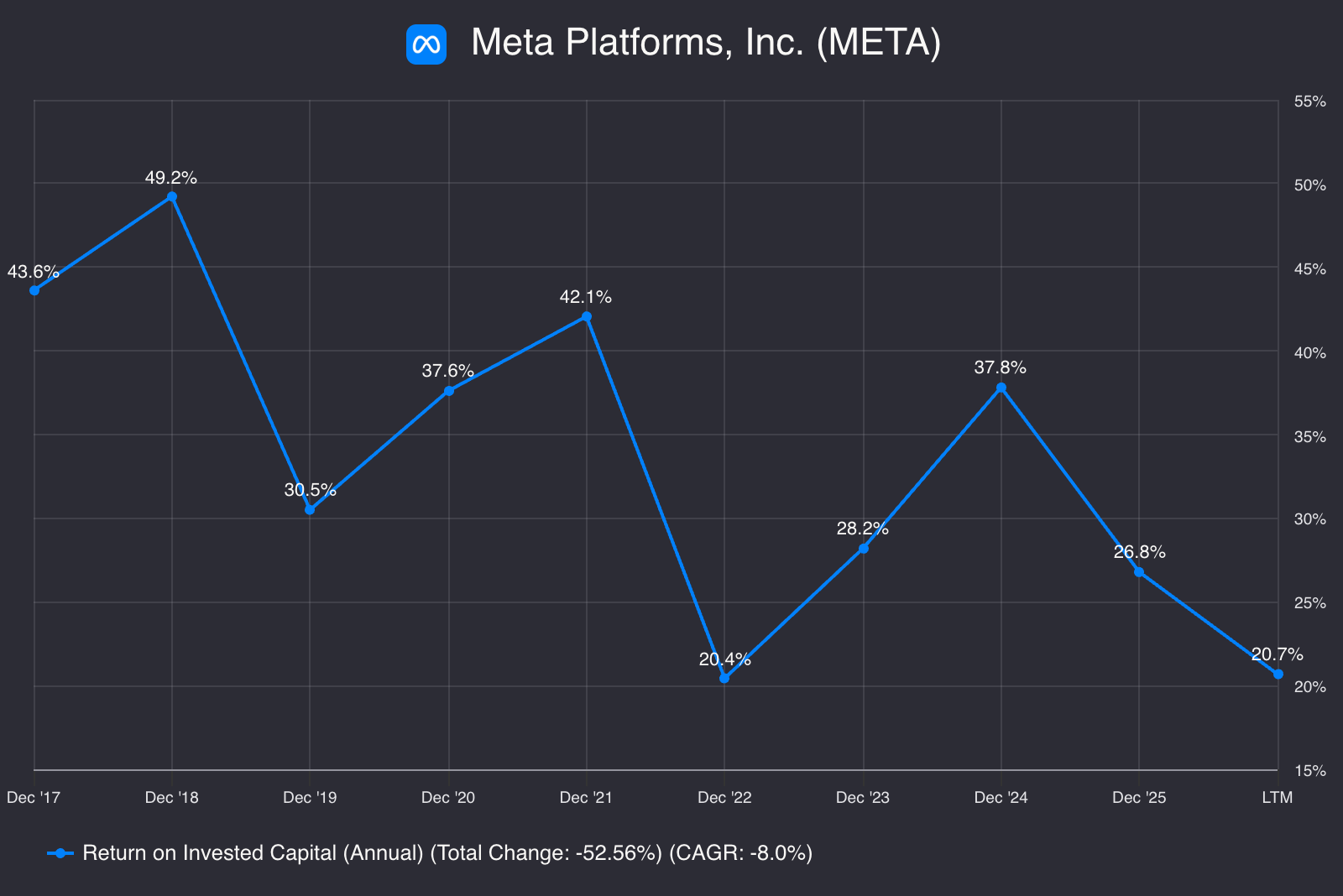
Today, we are again looking at increased spending due to AI. ROIC has naturally declined as there is a lag between capex deployment and returns.
As ROIC is now back to 2022 lows, we have to closely observe the direction from here.
If ROIC stabilizes here or inches upward while heavy capex deployment sustains, it signals adequate returns. If not, we would like to see it cut discretionary capex and limit the capacity buildout only to its internal needs.
The good news is that we can clearly expect its ROIC to return to at least 30% levels if it cuts AI deployment and refocuses on the core.
It’s currently making an experiment it could afford to make.
As a shareholder, you should tolerate this while closely observing for cracks. After all, this is a tech business and the most important thing for it is finding new markets as Microsoft and Google have done over time. Otherwise, the core business, however strong it is, will eventually slow down and the growth will plummet.
In short, we are looking at a business with exceptionally strong core operations, and it’s actively searching for new markets.
This could lead to more debt on the balance sheet and lower ROIC in the short term. However, if it works, it may extend its runway of double-digit growth for potentially decades.
This is a balanced proposition.
It could be a good or a bad offer depending on the price.
So, let’s turn to valuation.
📈 Valuation
Valuing Meta here is a bit tricky.
We have very nice visibility on earnings generated by the core business; however, the visibility on the reinvestment side is not that good, plus it’s in the investment cycle.
So, we have to account for dipping FCF and ROIC in the short term, recovery in the mid-term, and recovergence to terminal targets in the long-term.
In such situations, Aswath Damodaran suggests using the sales-to-capital ratio as the yardstick of investment quality and comparing terminal ROIC to final sales-to-capital for a sanity check.
I think this makes sense here.
So, here is how my model operates:
We start with 1x sales to capital, which is the latest figure based on Meta’s latest balance sheet and 2026 revenue consensus of $254 billion.
Operating margin dips in 2027 and then converges to 40% in the terminal period.
Effective tax rate starts at 22% and converges to 25% over time.
Cost of capital figures differ among the sources, with a range between 9% and 13%, so I take the midpoint of 11%, and then it converges to 7.7%, which is the average of all American companies.
Terminal sales-to-capital is 0.5x, which equates to 15% ROIC when calculated for a 40% operating margin and 25% tax rate.
Here is what we get:
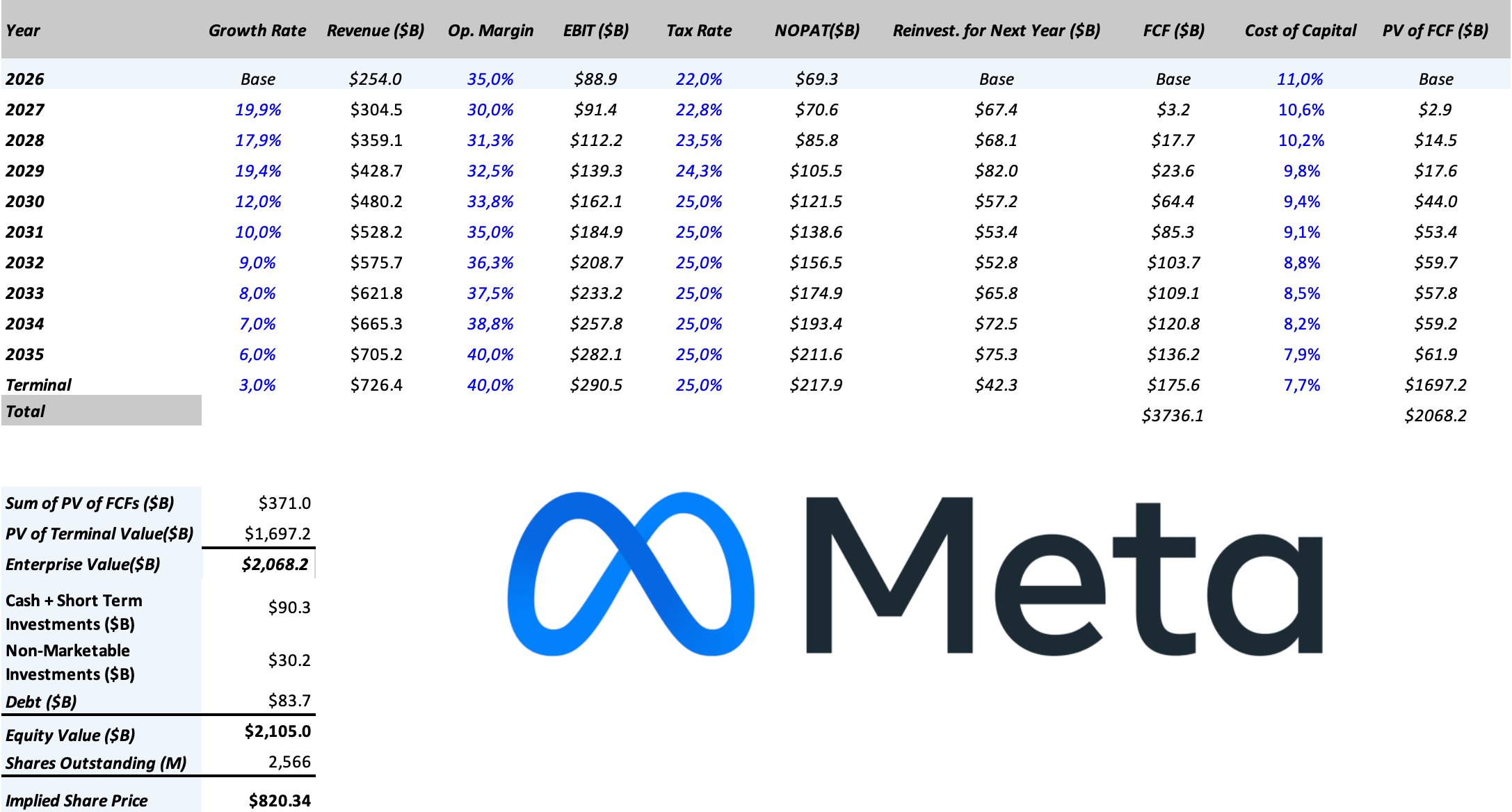
This means that the current $550 price per share implies almost a 50% discount to the fair value.
The model doesn’t account for potential legal damages, etc; however, 50% is a big enough discount that we can tolerate many troubles, mistakes, and failures.
You rarely get great businesses at this deep of a discount.
🏁 Conclusion
Meta is a great business; there is no question there.
Yet, there is no sideways in business. Great businesses can stay great by aspiring to be even greater. I know no business that has been complacent with its current state, and the markets have allowed it to stay that way for long periods of time.
Meta is aspiring to become an even more exceptional business.
It’s doing this by heavily investing in a new technology of which the limits we currently don’t know. There is a possibility that the current investments allow Meta to capitalize on an exceptional opportunity in the future that we can’t just foresee now.
Of course, this comes with risks.
It could all lead to failure easier thn it could lead to success, and the market is right to have reservations here. It would be weird if it didn’t have.
Plus, these risks are exacerbated by the legal headwinds, and it’s not helping with the sentiment either.
Despite all this, Meta also has substantial opportunities for growth. And even if we act on modest growth assumptions, we get a business that is far more valuable than its current valuation.
The discount is deep enough to compensate for many risks, headwinds, and potential failures.
This is why I’ll be increasing my position in Meta.
The current price doesn’t require us to predict what’s going to happen in the future and pick sides. It allows us to just think that many things can go wrong, and Meta may still end up way more valuable than it’s today.
And that’s actually the best form of investing.
I think Meta offers this degree of protection here if you are a long-term investor.
That’s all friends!
Thanks for reading Capitalist-Letters!
Please share your thoughts in the comments below.
👋🏽👋🏽See you in the next issue!