
It's Time To Be Bullish On Compute, Again.
The market is driven by a reflexive loop created by the AI demand. I don't see it end anytime soon.

All the best investors share a common trait—they gather many related and seemingly unrelated ideas, turn them into mental models, and draw on these to make decisions.
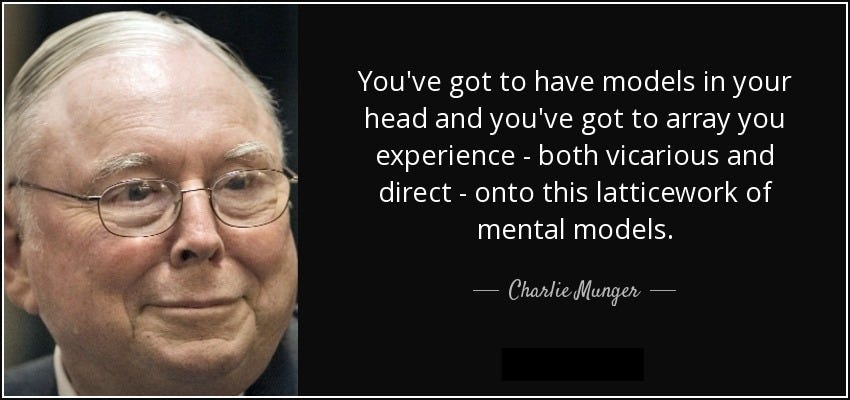
Charlie Munger calls this “latticework of mental models”:
In investing, this model can manifest itself in two ways:
Applying ideas from different disciplines in investing
Learning different investing styles and applying them according to the situation
Think about Peter Lynch.
He was a history major, so historical behavior of the markets, boom and bust cycles, correction frequencies and magnitudes, etc., were driving elements of his positioning.
Munger studied law, so his style was based on risk reduction. He didn’t optimize upside; he wanted to limit the downside and believed the upside would follow.
They were very good at ingesting useful mental models from other disciplines and applying them in markets.
Buffett, on the other hand, was very good at assimilating different investing styles and matching each to the situation that called for it.
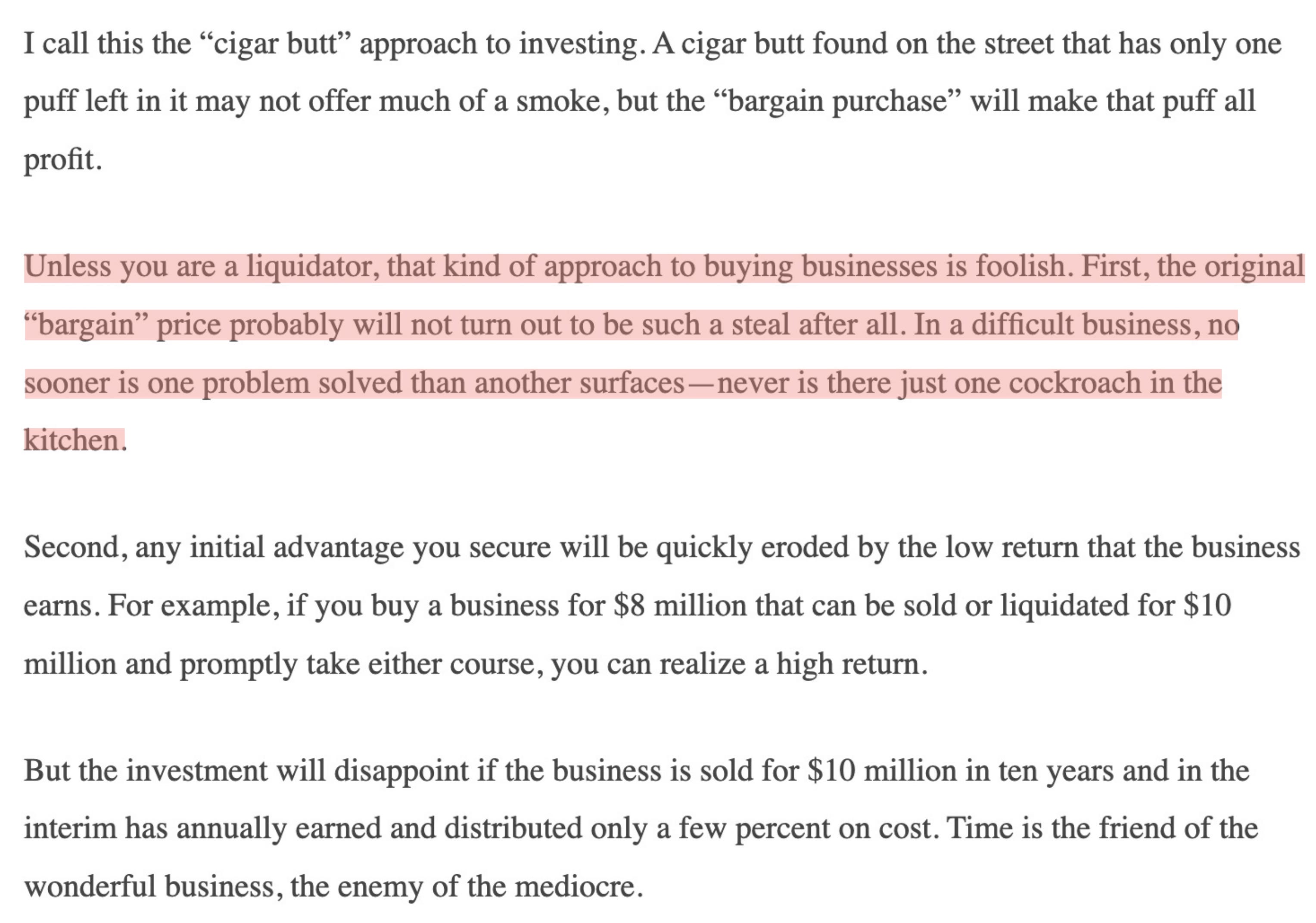
Young Buffett was managing small sums, so he focused on small companies, like GEICO. As his capital grew, he focused more on special situations and cigar butts, which he learnt from Benjamin Graham. When his capital grew even larger, he adopted a more Fisherian lens and paid fair values for exceptional companies.
He explained this transformation in the 1989 Berkshire Hathaway Annual Letter, saying that the cigar butt approach doesn’t make sense if you aren’t a liquidator. He used to shoot for liquidations, but he was no longer a liquidator, so the cigar butt approach didn’t make sense for him.
I see these as having different lenses, and success often comes from having the right lens for the particular situation you are dealing with.
The lens Buffett used as a liquidator wouldn’t work when he was building a conglomerate.
Many investors make a mistake here. They have a particular lens, which they believe is the right way to see things, and they believe they’ll succeed if they just stick with it.
I don’t think that’s true.
First, there is no single correct lens for seeing every situation.
Second, even if you discover one correct lens to see a group of situations, the alpha derived from it decays fast in today’s markets. It’s like the fast decay of quantitative signals. If a certain mental model really provides alpha, it decays very fast.
So, you should be willing to learn as much as possible, have as many lenses as possible, and array the right lens on the situation you are looking at.
Over the years, I have experienced that the best outcomes often happen when several lenses, applied to the same situation, suggest the same mode of action.
I think we are going through one of these times.
I am a fundamental investor who likes to invest in companies with durable competitive advantages and a long growth runway. In short, I would like to get improving fundamentals at a discount. That’s the main lens I use.
However, in reality, the markets are often driven by themes.
This is because beliefs can spread fast, as they don’t hit a reality wall unlike the companies driven by fundamentals. It’s easier to bid up if the promise is “this will be a trillion-dollar company in 5 years” than “it should earn 10% more this year.”
The problem with the themes is that the non-existence of the reality wall cuts both ways. What went up 10x on optimism can come down 90% on pessimism.
Thus, only rarely do themes and fundamentals converge.
Meaning, only rarely does a set of companies with rapidly improving fundamentals also make up the theme driving the market. You can also say only rarely do fundamentals catch up with a theme.
When this happens, it creates a loop where improving fundamentals drive the theme further, and that in turn affects the actions of the market participants, leading to even stronger fundamentals for those companies.
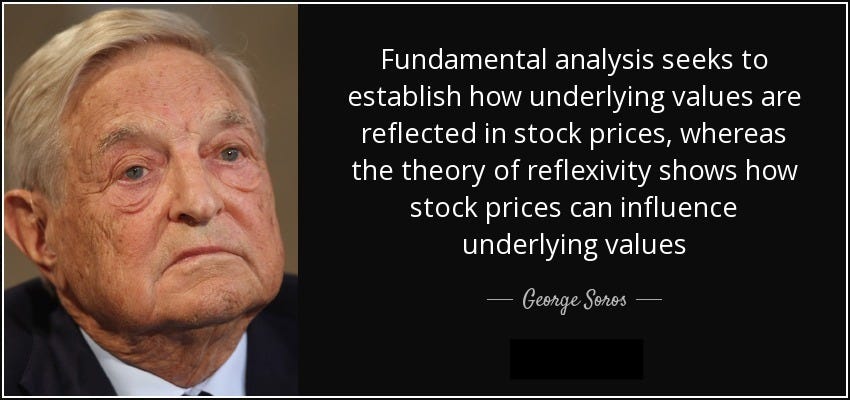
George Soros coined the term “reflexivity loop” to describe this and developed the Theory of Reflexivity to explain the dynamic. This is the lens through which we have such a convergence.
I think we now have one of these rare convergences at hand.
Companies driving the AI revolution, mainly the hyperscalers and major semiconductors, are also the ones with the strongest fundamentals. So, we can say that compute has been driving this market since 2021 in a reflexive loop.
When the market started to go down a few weeks ago and hyperscalers, semis, and neoclouds were hammered, I received many questions as to whether it was time to exit compute. As they recovered, I got the same questions again—is it time to take profits?
I think it’s still time to be bullish on compute.
Below, I’ll put on the reflexivity lens and try to explain why I think it’s time to be aggressive on the compute trade again.
So, let’s cut the intro and get to the meat.
What actually is “reflexivity”?
The reality is infinitely complex and virtually impossible to understand.
Think about the stock market.
It’s basically the sum of all transactions made every day, continuously, by millions of participants. The reality of the stock market would require knowing why each participant made each decision. This is impossible.
Instead, we count on two things:
Most participants will eventually make reasonable decisions.
Fundamentals make what’s reasonable obvious over time.
This applies in many areas of life. When we make decisions, we try to base them on reality, but what we can actually observe is the perception of reality. The distance between reality and perception can differ from situation to situation and from person to person.
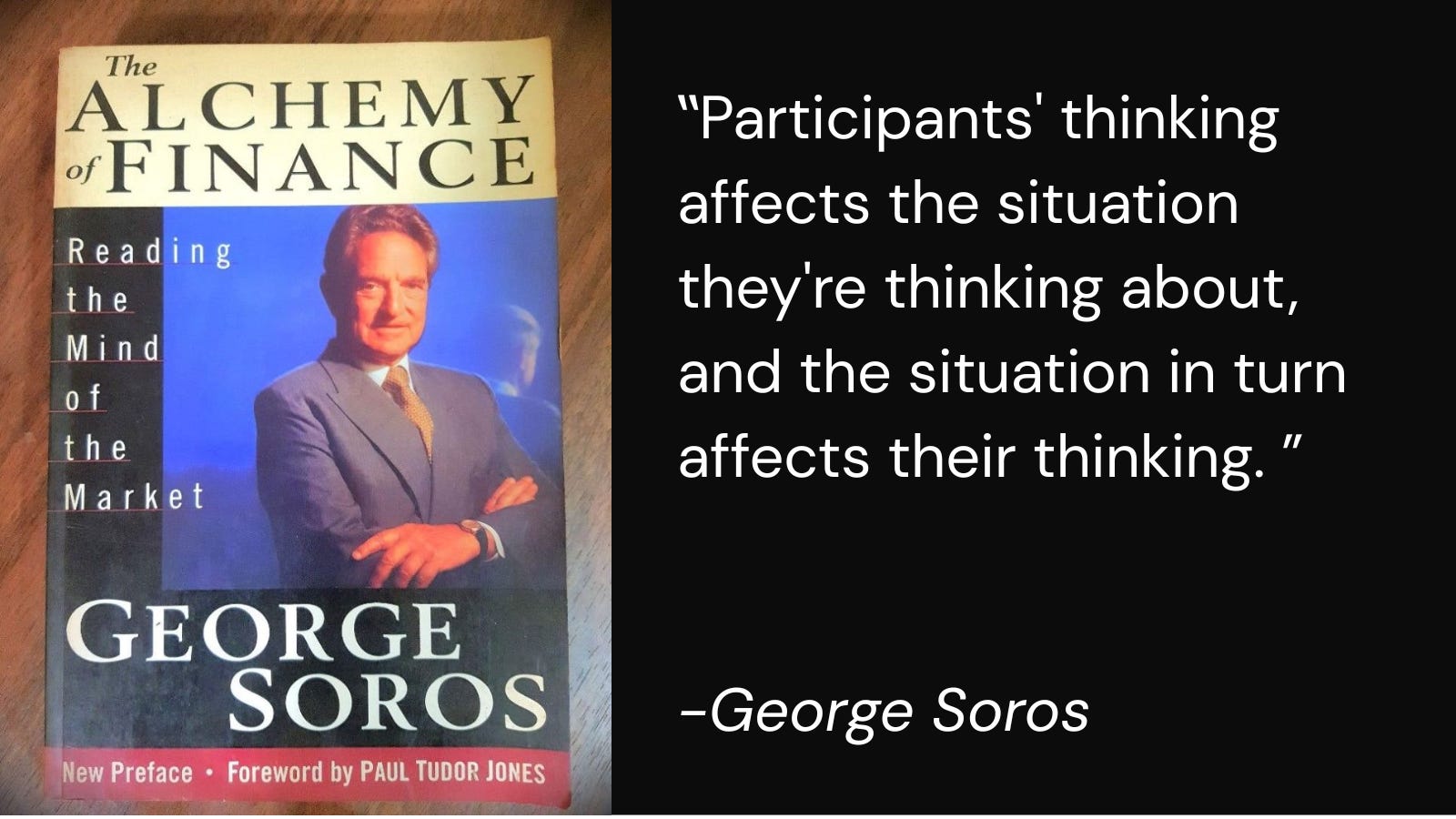
Reflexivity simply means that how the perception evolves affects the reality, and vice versa.
Soros describes this in his book Alchemy of Finance:
As perception affects the way participants think, it affects the way they act, and those actions are actually capable of altering reality. The existence of boom and bust cycles in the market actually singlehandedly validates this.
Think of an example.
Company A invests because it sees a spike in demand.
- Then the market participants ask whether that spike in demand could be continuous.
If enough of them reach that conclusion, they’ll invest in either Company A or what Company A invests in.
If they invest in what Company A invests in, Company A invests even more and faster as it rushes to secure allocation or capacity.
When Company A invests more and faster, the price of the resource goes up; investors think demand is further validated, and they invest more.
As you see, a perception can drive a real-world action, which can in turn further reinforce the perception.
This way, reflexivity can create vicious and virtuous cycles:
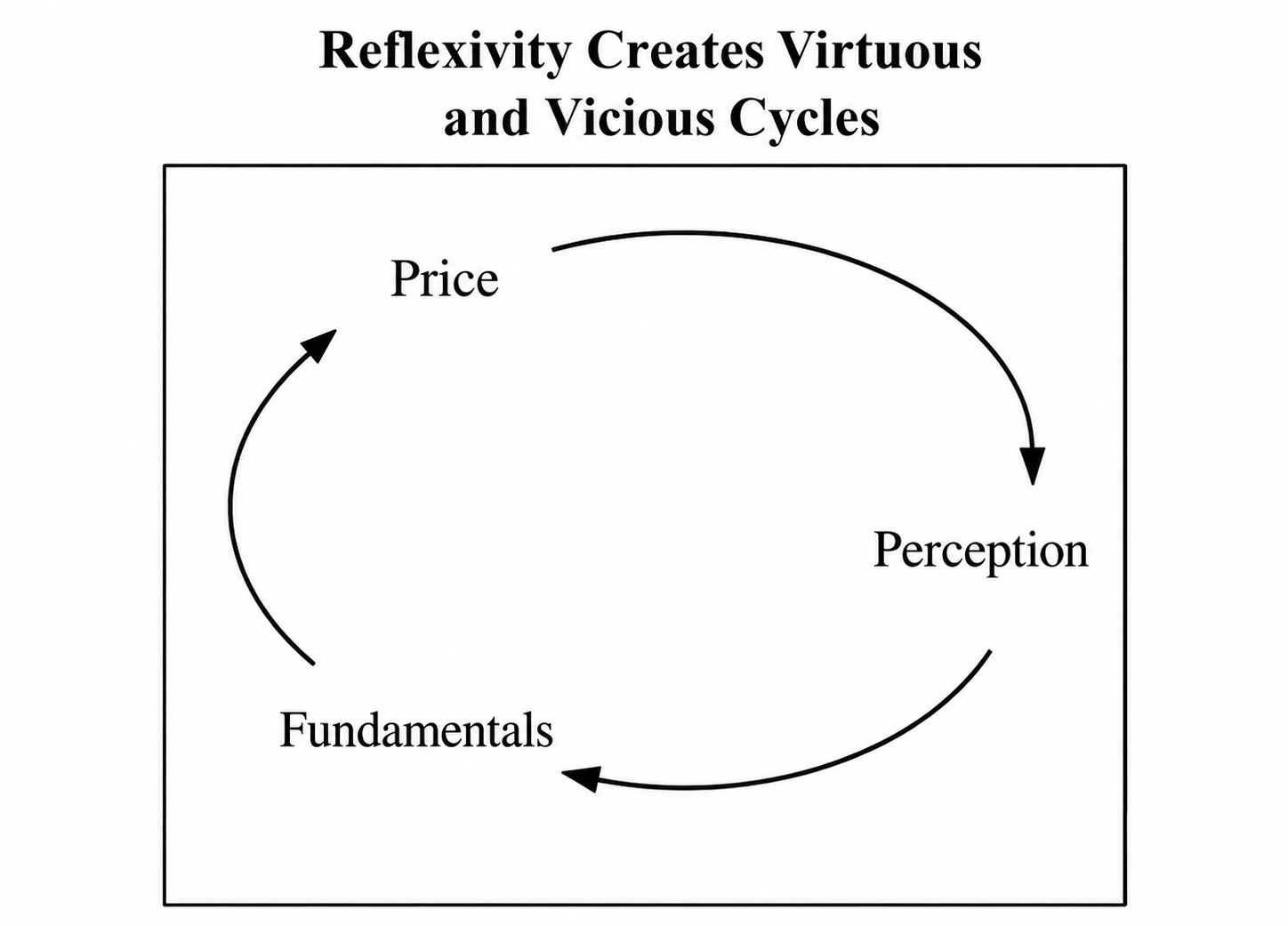
The fact that the stock market really follows boom and bust cycles validates the concept, at least for financial markets.
There are two important misconceptions about reflexivity.
First, many investors familiar with the concept think that reflexive loops can be started by pure hype. This isn’t true. Reflexive loops almost always start on facts.
The reason is simple. When the starting point itself is just hype, it’s easy to invalidate it, so a reflexive loop can’t start. This is like starting a rumor about rising gold prices. It can hardly turn into a reflexive loop because people will check it and they’ll see that it isn’t true, so they won’t take action.
However, if the price of gold is already rising, and if it meets with a prevalent rumor like a new war in the Middle East, then, when people hear the rumor and check the gold prices, they’ll really see rising prices, so they’ll take it as proof of the rumor and buy more gold, creating a reflexive loop.
The second misconception is that reflexive loops always lead to grand cycles.
As we said above, reality and perception never 100% converge. They can cross, but they don’t converge. So, 99.9% of the time what we observe is the consensus of perceptions. At any given time, consensus can be near equilibrium, or it can be far from equilibrium.
Near equilibrium, clashing perceptions even each other out, so we hardly see strong movements toward one side. When perceptions overwhelmingly accumulate on one side, however, we can see violent moves in the direction they dictate.
Naturally, for perceptions to converge overwhelmingly on one side, we need the underlying fact to be exceptionally big in its effect.
Think about before and after 9/11.
Individual terror attacks were happening even before 9/11, and so were the military operations into the countries where terrorists were hosted. But these incidents weren’t shocking enough to rally the public behind the idea. There were people in favor, and people against it, so there was near equilibrium; the status quo won.
However, 9/11 was so shocking that perceptions overwhelmingly accumulated on one side, creating public support for operations into Iraq and Afghanistan.
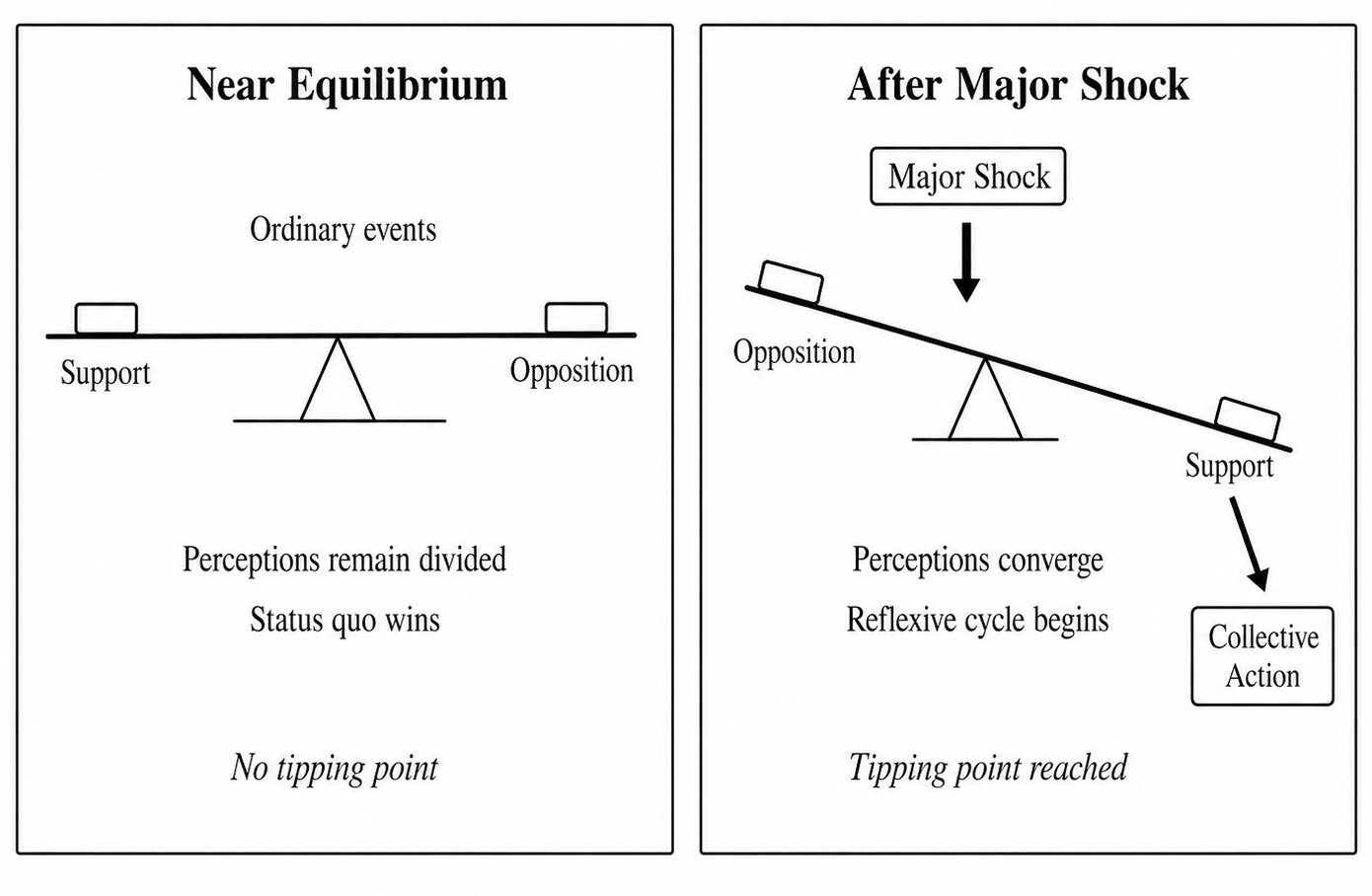
This is very much like the concept of escape velocity.
Anything launched from the world comes back to the land or settles in orbit unless it reaches the escape velocity. Once the escape velocity is reached, it can break free from the Earth’s gravity and never fall back.
Similarly, convergence of perceptions should reach the escape velocity to set a big reflexive cycle in motion and cause big boom and bust cycles.
Think about new technologies.
They are developed every day, and they may lead to some euphoria for small groups. But for them to lead a bigger euphoria that would reach escape velocity, they should be revolutionary, like the internet in the 1990s. Otherwise it won’t create a big enough convergence to create a grand cycle.
In short, unlike most people think, reflexivity isn’t the same as momentum. Reflexivity includes alignment of facts and perception, but the fact is so strong that perceptions eventually get ahead of the fact. This may happen later than expected, as perception reinforces the fact as well, so loops can sustain longer than expected.
Soros used this theory to get in and out of positions.
When implemented correctly, this is incredibly lucrative as it enables investors to ride the hype cycles while it’s still driven by the fundamentals, and jump out before the hype dies by observing the reversal signals in fundamentals.
Soros created a five-step framework to apply this theory in his investing:
Step 1: Find what’s genuinely changing? What’s the fact causing a reaction?
Step 2: What does the market think about that change? Prevailing belief?
Step 3: How does the belief change the reality? Or does it?
Step 4: What cannot continue forever? What stops the progress?
Step 5: What are the observable events signalling what can’t continue forever might have actually stopped?
Let’s map this onto the dot-com bubble.
The fundamental change was the internet. It was a reality, and a big thing leading to changes in every aspect of our lives.
The prevailing belief was that everything would run on the internet and the internet would be everywhere.
That belief changed the reality as investments in internet companies skyrocketed; as a result, the internet ecosystem and adoption actually developed faster than it would otherwise have.
Investments can’t continue forever. Money is limited, and investors deploy-harvest-deploy-harvest again. Without harvest, there would be no re-deployment.
Observable events included tech company IPOs and earnings, VC deal volume, interest rates, and the overall Nasdaq valuation.
Following this would allow an investor to get into tech stocks early and jump out before the market melted down, as you would see that only 14% of tech companies that went public around 2000 actually had some earnings.
At the time, Nasdaq was trading above 100x earnings, which meant components would need to collectively grow earnings about 52% annually for the next 5 years to return 10% to shareholders, assuming a 20x exit multiple. When targets were missed in batches in late 1999 and early 2000, you could have seen the reversal signal.
Plus, the Fed hiked interest rates in May 2000, so you could expect a decline in VC investments. In the absence of VC investments, most private companies would collapse, and public ones would also collapse as they had no earnings, and investor appetite would decline substantially.
Indeed, even if you couldn’t decide, you could wait until the end of June, see the massive drop in VC deals, and then get out while the market was still only 25% below its highs. It would drop by 78%, so you could save a lot of money even if you were late.
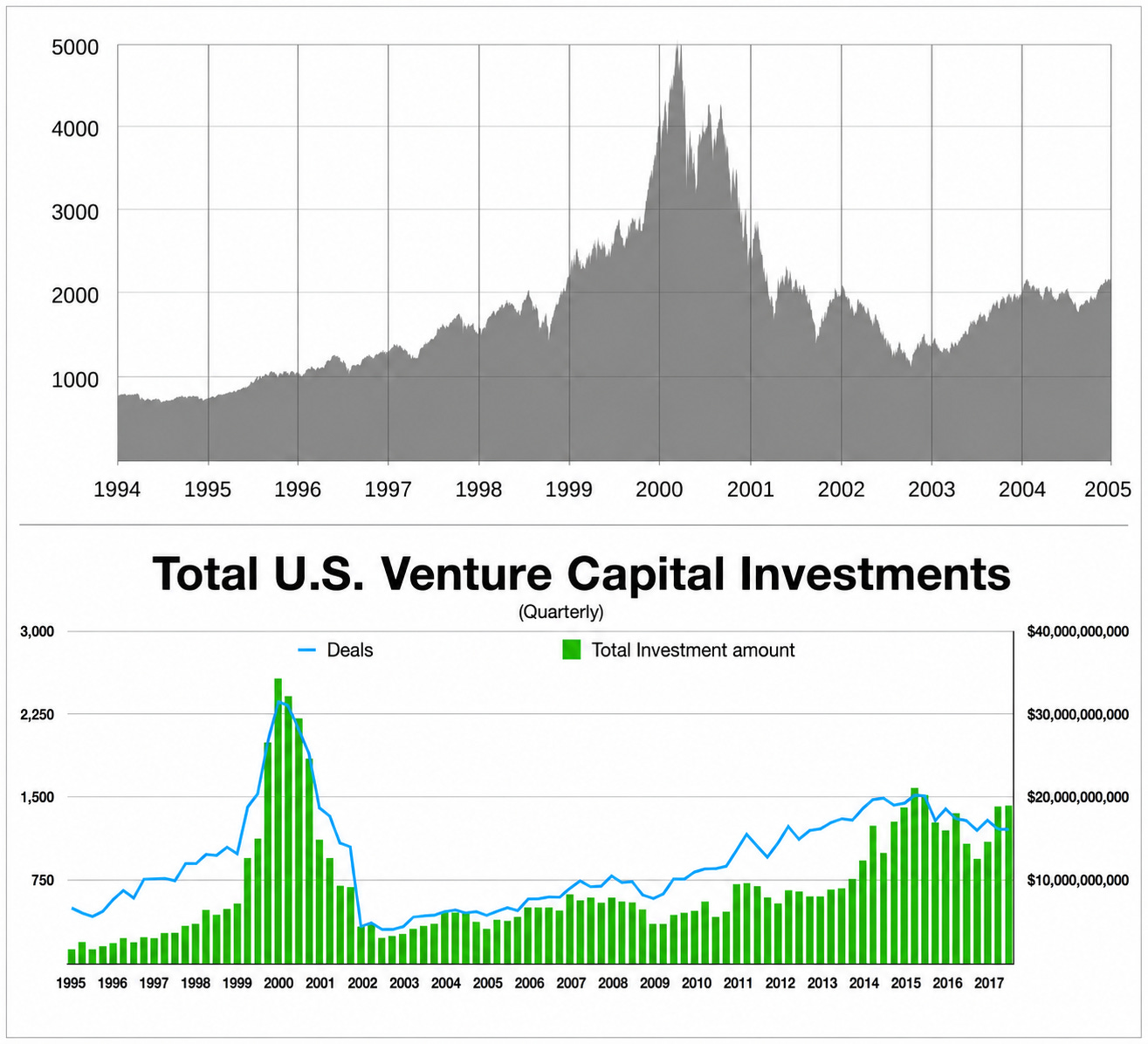
Note that this is not a guide to speculate. Obviously, the best position is being a real beneficiary from a real change, like technological transformation. And then this guides you as to how you may behave during the cycle.
Following the dot-com bubble example, you would own Amazon, not pets.com, and follow the framework to decide whether you would keep riding/double down or exit.
The key point is observing for the reversal signals.
If the downward price movement is just a minor correction/drawdown and the factual drivers of the reflexive loop are intact, it’s an opportunity to double down. If not, it’s probably the time to consider selling.
An example is the Russian Ruble panic led to a 19% intra-year decline, but the fundamentals driving the dot-com boom that started in 1995 were intact, and the markets quickly recovered. Nasdaq finished the year at all-time highs, gaining 39%, and then it went straight to the 2000 peak.
So, let’s put on the reflexivity lens and map the reflexive loop onto the AI trade.
AI: Reflexive Loop Leading To A Grand Cycle
To understand whether the AI trade is actually in a reflexive loop and whether it’s time to be cautious or bullish, we have to follow Soro’s framework for the AI trade.
1. What’s the genuine change? Facts?
It’s, of course, AI.
In the early days, when ChatGPT was first launched in late 2022, you couldn’t be sure whether it was just hype, a passing phase, or something genuinely transforming.
There were two reasons for that.
The first one was the questions about adoption. In the early days, the market wasn’t sure whether the adoption would be fast enough. We now have a clear answer for this.
AI is literally the fastest adopted technology in human history:
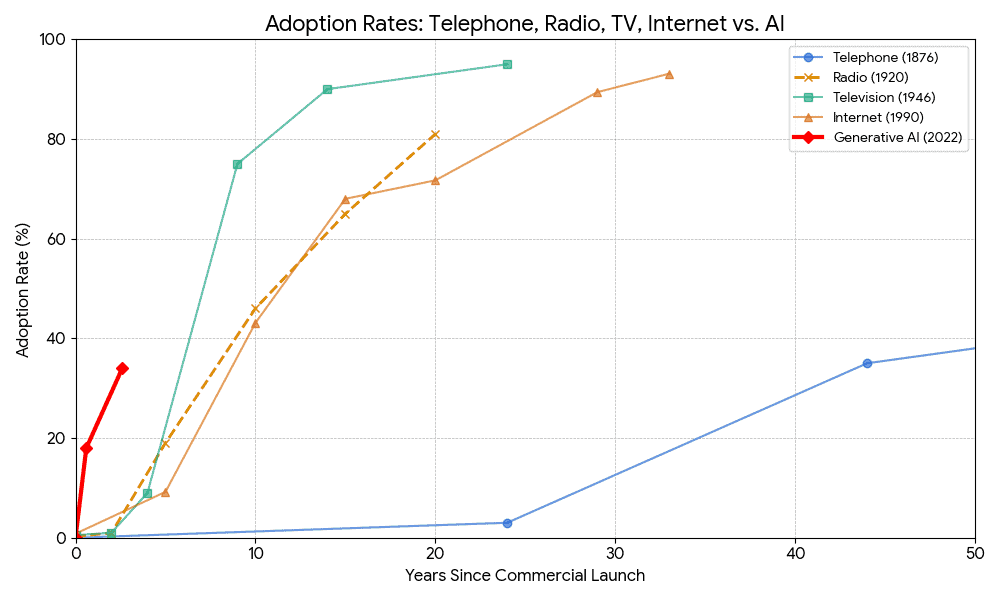
Indeed, ChatGPT reached 800 million users just after 3 years from its launch. For reference, this took almost 13 years for the internet, which was the fastest-adopted general-purpose technology before AI. In terms of adoption, AI proved to be something major.
The second concern was the capability progression.
This is directly related to the durability of adoption and the fundamental change it’ll drive. If the capability progression didn’t satisfy user expectations, users could stop using the technology and adoption could reverse; thus, it wouldn’t fulfill its promises.
This also proved to be an unfounded concern as AI model capabilities have progressed rapidly since their introduction:
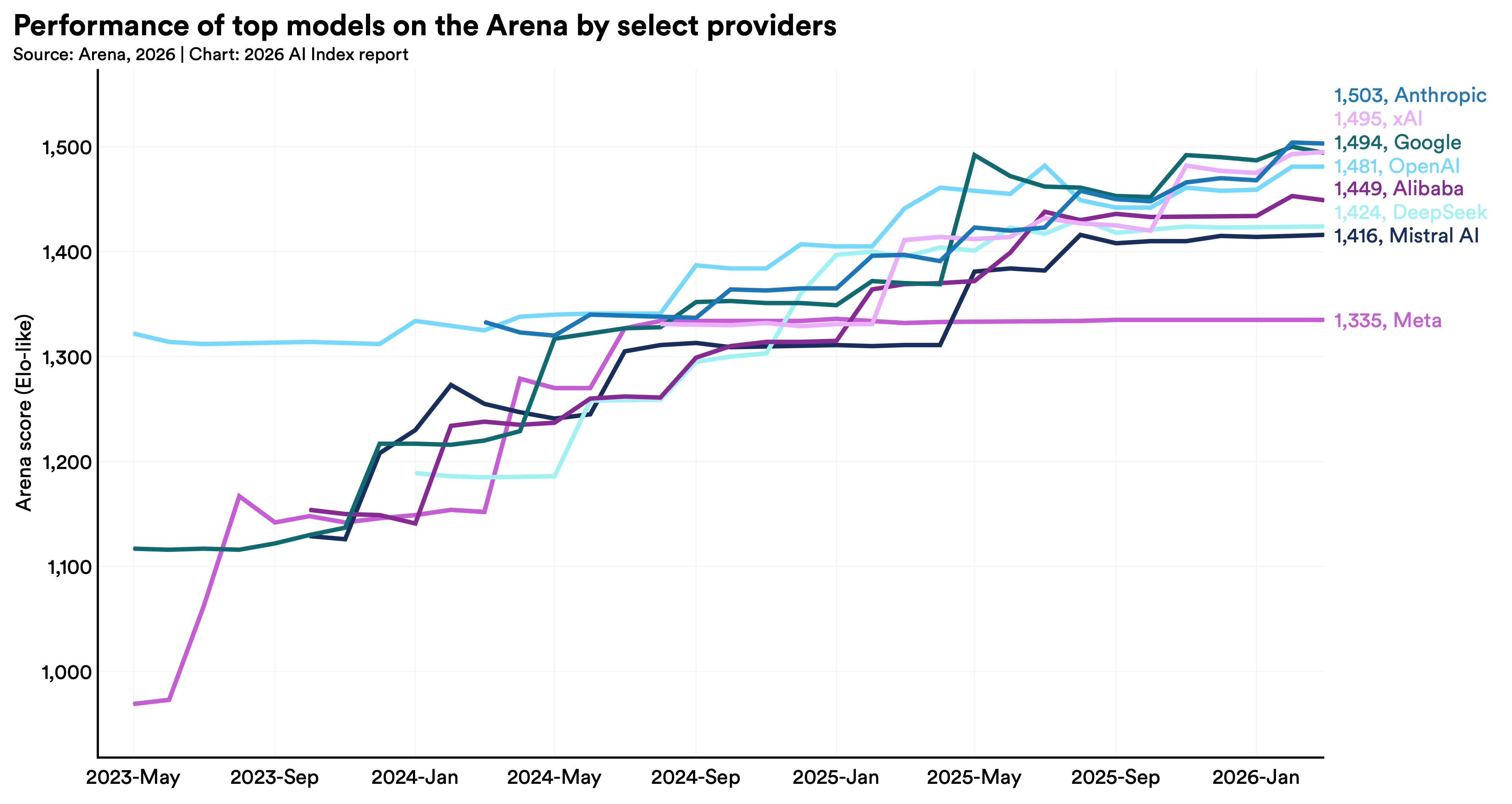
So, we can say that AI has proved to be a real transformative force. In terms of adoption, it has already reached escape velocity, and it’s driving substantial changes in how the work is done for the adopters. This will only accelerate and open up new possibilities and use cases we can’t foresee now, which brings us to the expectations.
2. What does the market think about it? Prevailing belief?
The market largely thinks that AI will change everything, literally.
It’s impossible to observe the conviction levels of each participant; what’s important is where the people at the frontiers of technology and markets stand, as they are the ones who shape public opinion.
Just take a look at what a few of those figures have said about AI:
Marc Andreessen: “This is the biggest technological revolution of my life. This is clearly bigger than the internet. The comps on this are things like the microprocessor, the steam engine, and electricity.”
Sundar Pichai: “AI is one of the most important things humanity is working on. It is as profound as electricity or fire.”
Satya Nadella: “AI is bigger than PC and mobile. The age of LLMs is the greatest leveler in terms of going up the learning curve.”
Elon Musk: “By 2030 or 2031, AI will be smarter than all of humanity collectively. And we’ll have more AI-powered robots than humans, creating the age of abundance.”
Mark Zuckerberg: “AI will accelerate the development of humanity at a pace never seen before.”
Jeff Bezos: “AI is going to change every industry and the benefits to humanity from AI will be gigantic.”
As you can see, we have great optimism about the potential of AI among the leading figures. As a result, we have an overwhelming optimism about the potential of AI and what it’ll achieve.
For the purposes of reflexive loops, overwhelming convergence of perceptions only matters when they drive actions in real life, so that it further reinforces the perception in turn.
We are seeing AI optimism drive real action.
3. How does the belief change the reality? Or does it?
This is perhaps the easiest step to understand, as AI optimism has been driving strong collective action. We see this in the form of skyrocketing capital expenditures (capex) of the mega-cap tech companies.
Capex estimates have been revised up several times since the launch of ChatGPT, and we are now looking at capex numbers that would be unimaginable a few years ago.
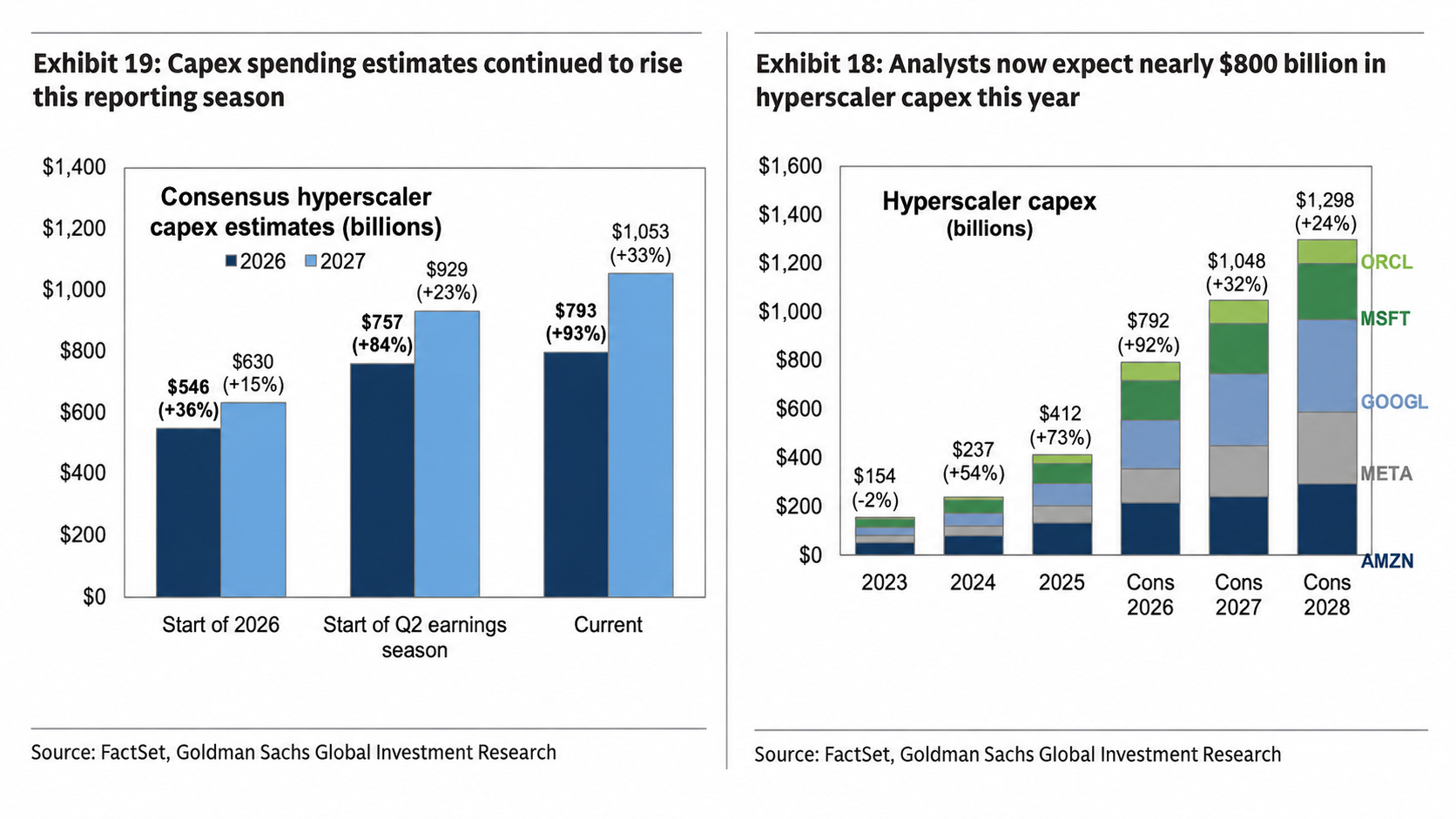
Estimates are being revised up in real time. As you see above, the revised numbers at. the beginning of this year had to be revised up again at the end of Q2.
So, we are clearly seeing that the fundamental development and adoption of AI, combined with the overwhelming optimism, drive substantial real-life actions in the form of skyrocketing capex. This, in turn, further reinforces the optimism and drives even more real-life action in the form of compute demand and corresponding capex.
We have a reflexive loop.
4. What cannot continue forever? What stops the loop?
The obvious answer is also the capex, as hyperscalers are limited by their cash flows and ability to raise debt without over-leveraging their balance sheets.
So far, hyperscalers have largely tapped into their free cash flows to fund the AI capex. However, have almost fully depleted this source. Amazon and Google already posted negative free cash flow for the last quarter, while Meta and Microsoft saw their free cash flows erode substantially.
Estimates based on the capex projections at the beginning of the year showed that their FCF would dip in 2027, but wouldn’t go negative.
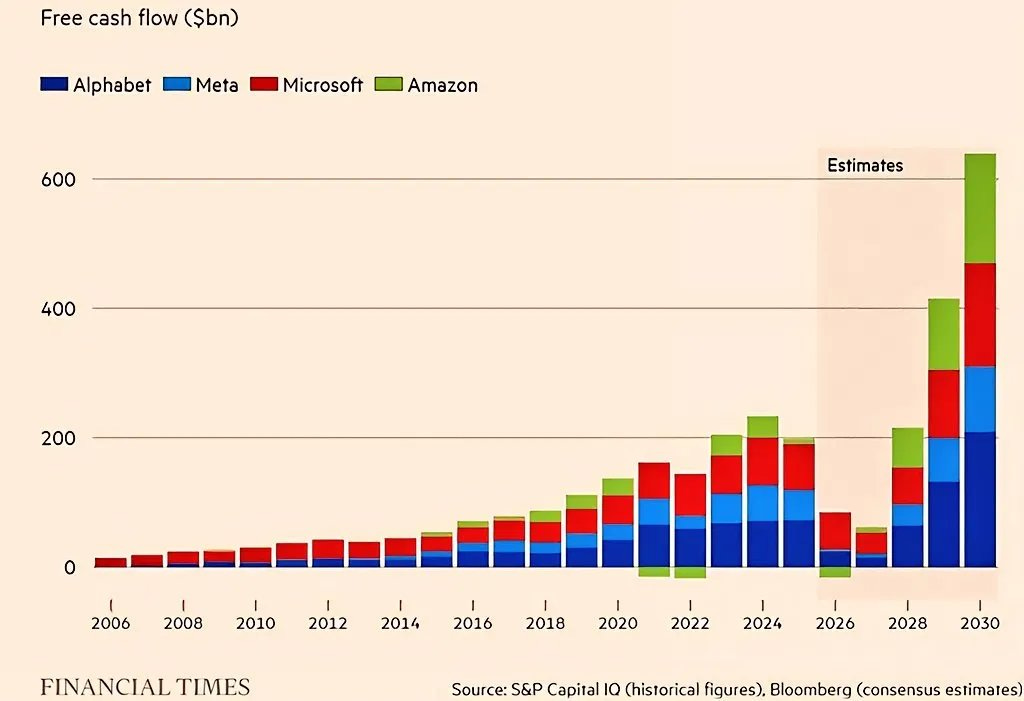
Given that the capex projections have been substantially revised upward, I think we may see their FCF go negative in 2027. This will curb their ability to raise capex at the same pace post-2027 as now.
They can tap into debt markets to keep capex growth, but if they don’t see ROI post-2027, they won’t have any incentive to leverage themselves. Plus, note that all hyperscalers except Microsoft have already raised some debt to fund the AI capex.
Investors don’t like leverage contingent on speculative returns, as we see with the depressed valuations of Oracle and Coreweave. So, I don’t think they would be eager to use much debt.
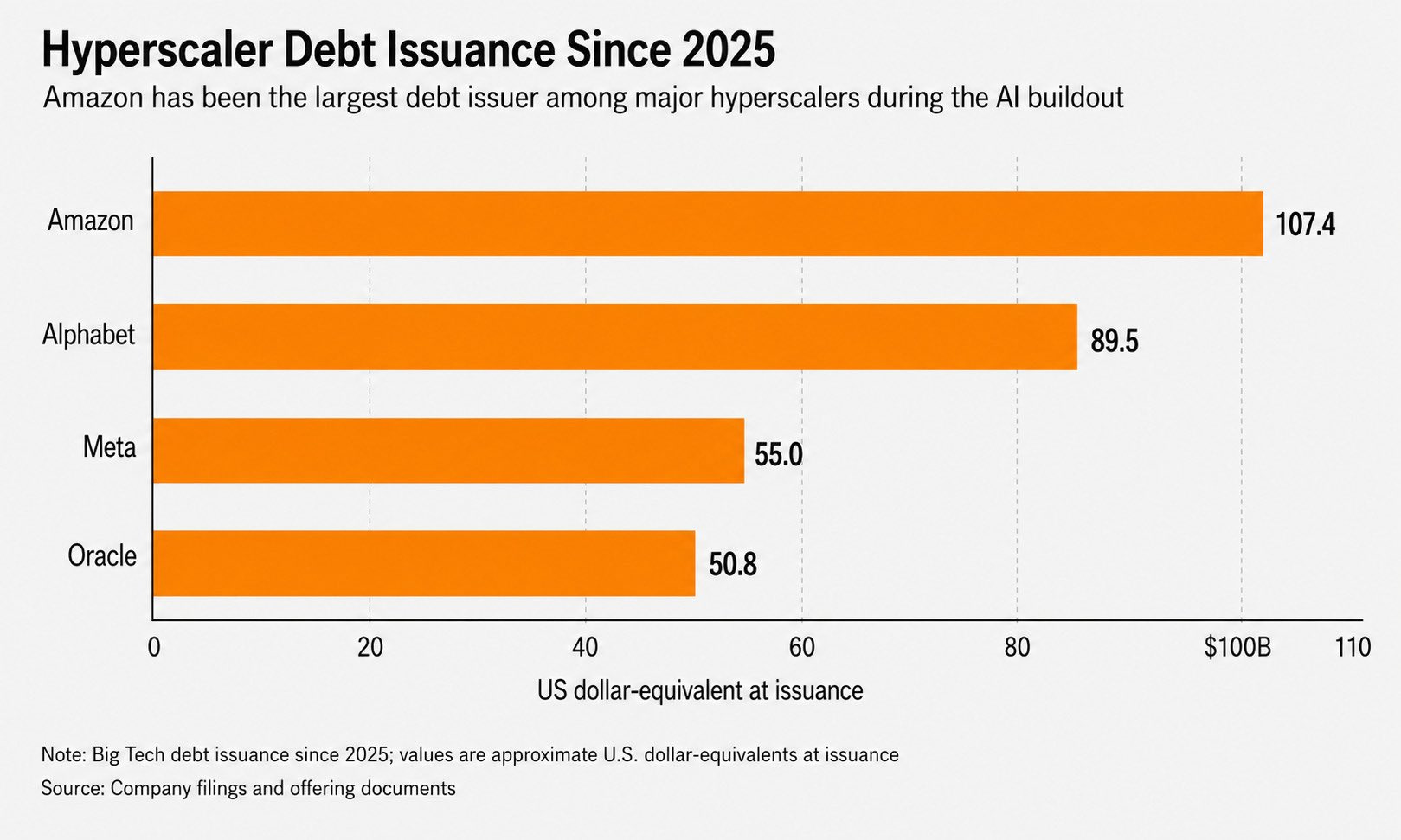
So, logically, there is only one way capex won’t collapse post-2027/2028: Hyperscalers see solid ROI.
As outside investors, it’s hard for us to know the numbers, but we can observe signals.
5. Signals that may indicate a break in fundamental drivers.
The most important signal is, of course, the compute demand.
As long as the compute demand remains intact, hyperscalers will hold pricing power and can manipulate the market in a way that they can achieve their hurdle rates.
It’s, of course, hard to see the demand directly. There are few useful indicators.
The first one is GPU rental rates.
These won’t go up or down in a straight line; what’s important is keeping an eye on broader trends. Price can go below or above the last month; however, if it goes below, let’s say the last year’s average, then we may be looking at a structural weakness.
Of course, what drives compute demand currently is the big AI labs, as they control most of the market. So, the combined ARR growth rate of OpenAI and Anthropic also provides important signals.
Overall token demand is also an important signal as it’s what underlies the AI lab revenues. We can also observe token pricing of competing labs, especially those trying to get a market share. If even these companies have to increase the token price, then we are likely looking at strong structural demand.
Following this framework from fundamental drivers up to the signals is important because it gives us clues about how to react to market fluctuations, as the markets don’t go up or down in a straight line even during grand cycles driven by reflexive loops.
So, as we established how AI reflexivity loops drive the cycle, let’s try to understand where we currently are in the cycle, and what’s a more reasonable mode of action.
Reversals and Tests: Where is the AI Trade Now?
Price fluctuations always exist in the market, upside and downside.
When there is a positive reflexive loop in the market driving prices upward, corrections trigger market participants to revisit their assumptions. Based on what they see, they either stay in the market or get out.
So, every correction, or a downswing in price, is a test.
When market participants revisit their assumptions and look at the fundamental drivers behind them in a decline, there are two potential actions:
If they see broken fundamentals, they join the selling. As selling accelerates, other people take a deeper long; they also see broken drivers, and selling accelerates even further. This breaks the previous reflexive loop and starts what Soros calls a “reversal”, a new loop in the opposite direction.
If they see that the fundamental drivers are intact, they may see lower prices as an opportunity to grow their exposure, so they buy. Prices bounce back up after a successful test, and the reflexive loop continues upward.
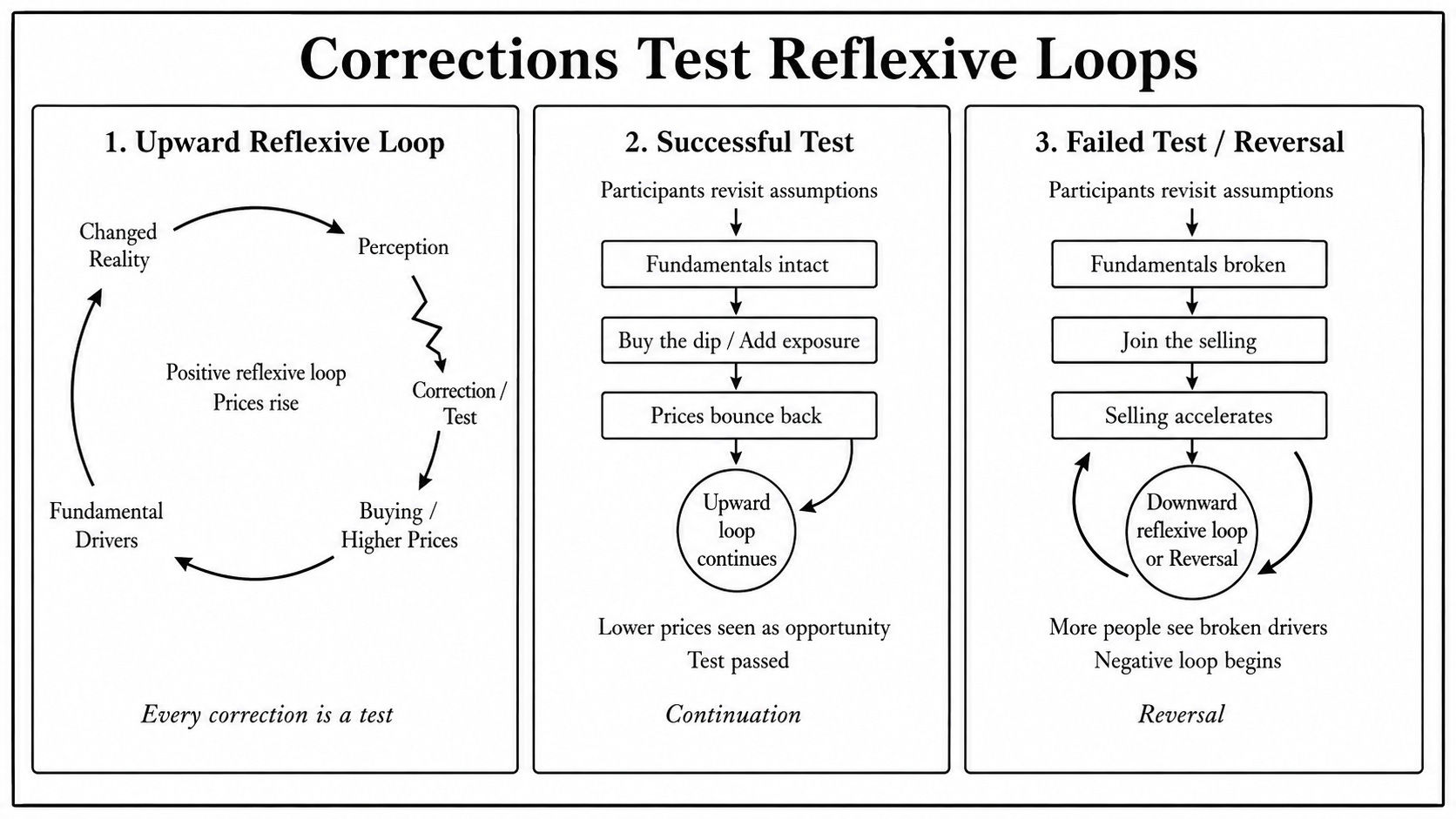
So, in a decline, we look at signals provided in step 5 to understand whether what can’t continue forever (step 4) still has more room to continue, or the music has already stopped.
Though it bounced strongly since then, Nasdaq officially entered the correction territory last week, and many people panic-sold compute stocks, including hyperscalers and neo-clouds. Many of these companies still trade at attractive prices, like Coreweave. They could be offering opportunities if the AI rally fires up again.
So, let’s put on the reflexivity lens and try to understand whether we are looking at a successful test or a reversal. We’ll look at the indicators given at step 5 and try to understand if fundamental drivers are intact, so what can’t continue forever can continue a little more.
To start with, token demand looks intact.
Goldman Sachs predicts that AI agent token demand will grow 24x over the next 5 years, from 5.6 quadrillion tokens this year to almost 120 quadrillion tokens in 2030.
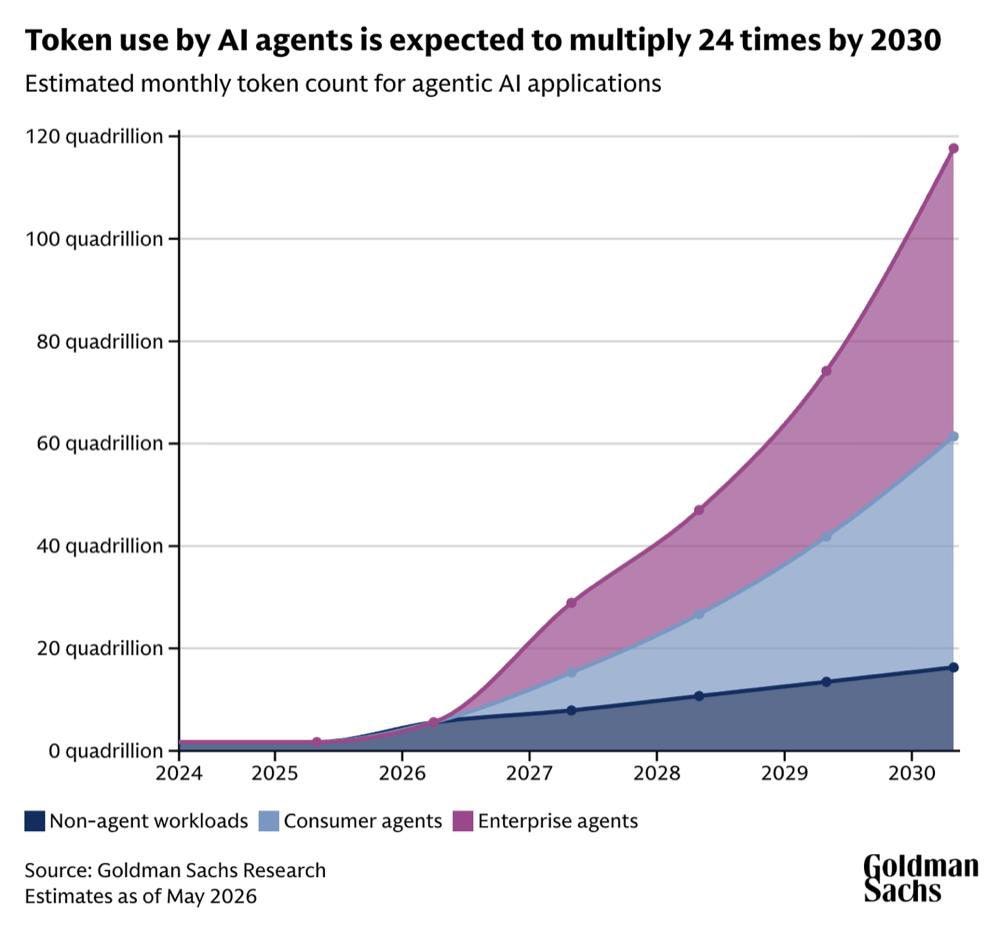
If we had just this prediction, I would recommend taking it with a lot of skepticism. However, we have actually seen token demand skyrocket over the past few years. For reference, regular token demand has grown 17,000x in four years. From 2.2 trillion in Q1 2022 to 38 quadrillion in Q1 2026.
Given that we are just in the early innings of AI adoption, it’s plausible to see the abovementioned growth rates over the next few years.
Second, we see that even smaller AI labs trying to take market share are raising their token prices. DeepSeek recently announced that it would raise token prices:
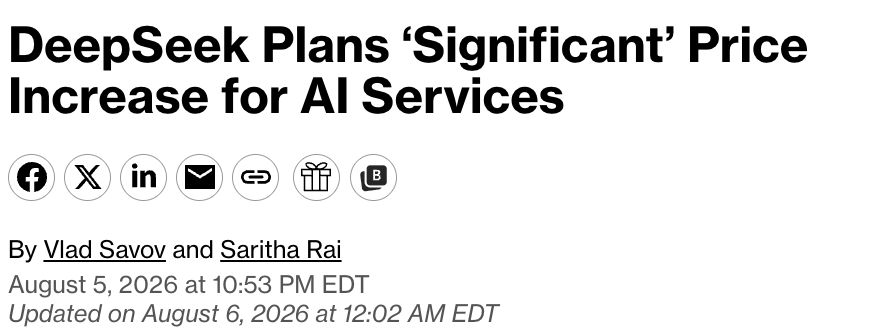
If the demand weren’t strong, DeepSeek wouldn’t be able to even suggest such a price increase, as its whole strategy is based on offering comparable intelligence at substantially lower prices.
Third, increasing GPU rental also validates strong demand.
Rental prices for even 6-year-old A100 GPUs have increased more than 20% year-to-date.
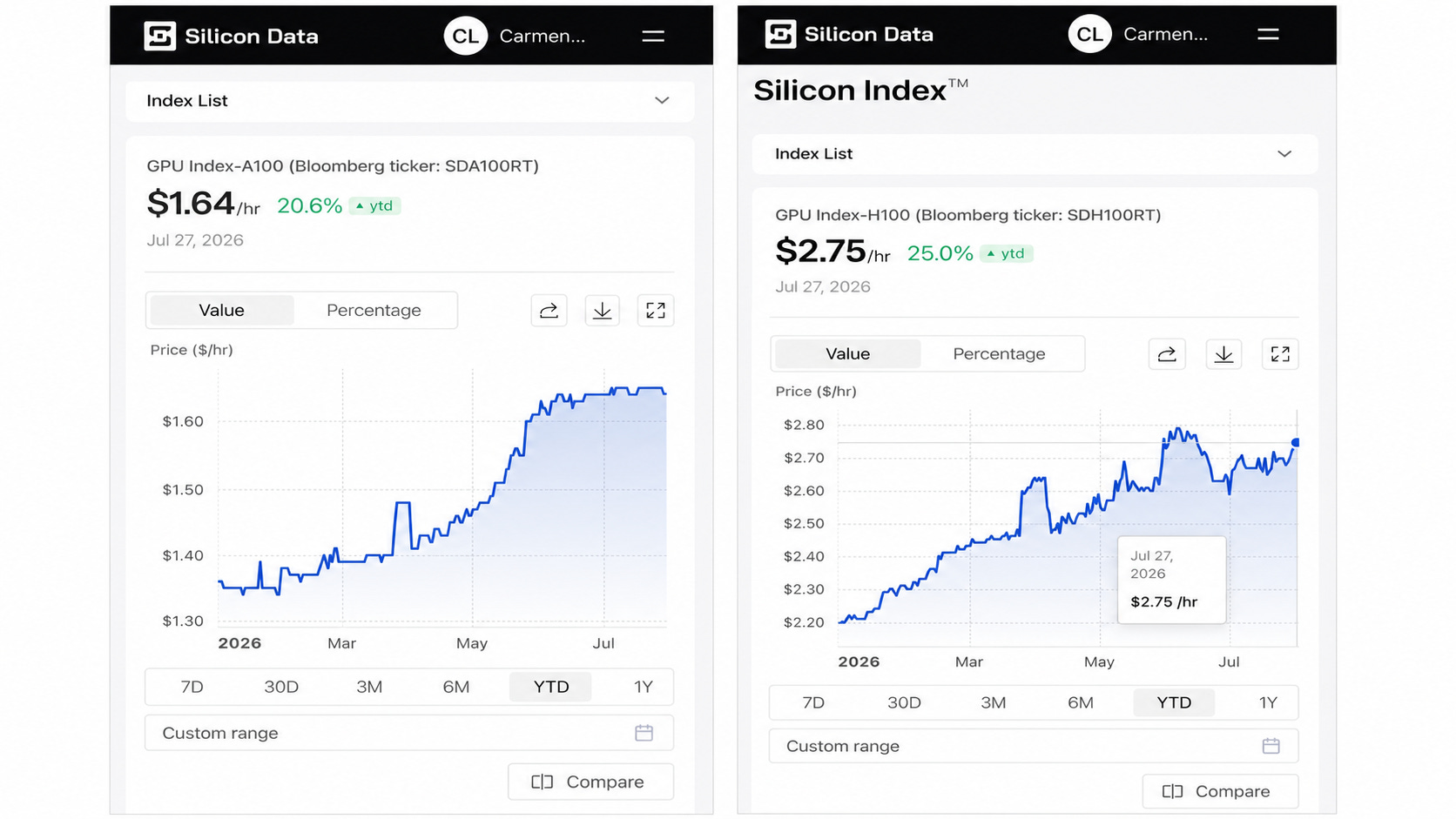
If the demand wasn’t strong, we wouldn’t see this level of price increases. This is important because it’s a direct indicator of willingness to pay of AI model providers, which is an extension of end-customers’ willingness to pay.
Fourth, we are also seeing the combined ARR of OpenAI and Anthropic keep growing at a pretty healthy rate.
Based on unofficial numbers, their combined ARR has increased from $30 billion levels at the beginning of this year to above $110 billion in July:
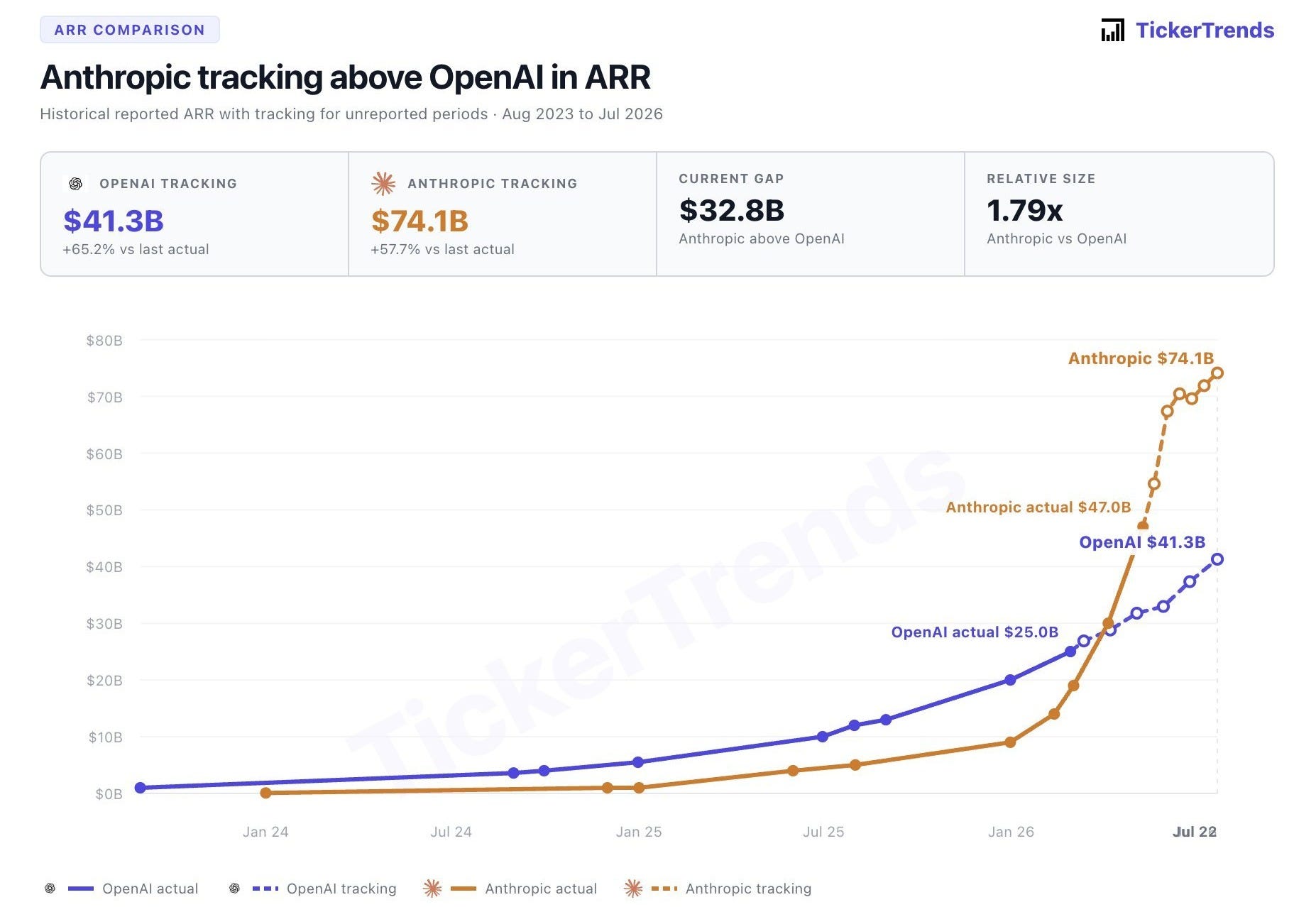
This is real money, not like Pets.com of the 2000s. A counter-argument could be that they are burning money to generate all that growth. That would have been correct up until recently, but Anthropic has reportedly turned to positive operating income, so they aren’t in the same league as the money burners of the dot-com bubble.
Last but not least, we have started to see early reports relating to hyperscalers’ ROI on AI capex.
Morgan Stanley came up with a report recently indicating that hyperscaler ROI on AI capex ranges between 25% and 46%:
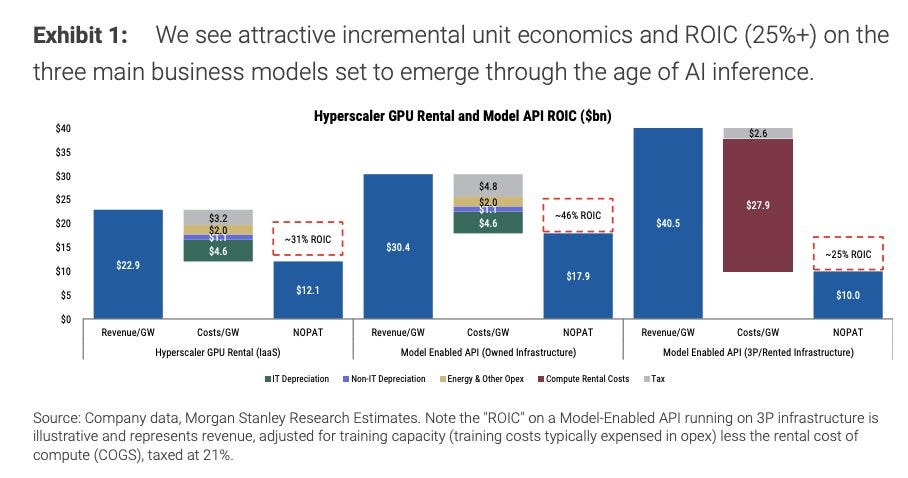
On top of this, we got the hyperscaler earnings over the past two weeks, and they obviously hinted that ROIC has started to flow.
Microsoft highlighted up to 40% efficiency gains in AI inference throughput, and the margins obviously stopped compressing. Management guided for stable margins over the next few quarters, meaning AI capex isn’t digging a hole in earnings due to negative ROI.
Amazon was even more bullish as Andy Jassy said: “Servers and networking equipment break even in under 3 years, AI margins track slightly ahead of core CPU evolution, and the resulting free cash flow and ROIC are very compelling.”
In short, all the indicators are pointing to strong compute demand and compelling returns on AI infrastructure investments.
Thus, I don’t expect capex to collapse anytime soon and signal to the market that AI is just not working, triggering a reversal. We will likely see a slowdown in capex growth post-2027, but it’ll still grow together with the incremental demand. As incremental token demand will remain strong, so will the incremental compute demand.
Thus, I think we are more likely looking at a successful test than a reversal. All the core drivers of the loop look intact, and I think the loop will get even stronger as we see further data points relating to these drivers going forward.
So, I think it’s time to be bullish on compute again, not bearish.
Conclusion
Markets are often driven by reflexive loops, especially years-long rallies and bear markets. This is natural as people are free to bid and ask what they want, and if they overwhelmingly converge on one side, we have strong moves in that direction.
However, what most people miss is that such strong movements rarely happen purely on hype because pure hype is easy to invalidate. We often need real fundamental change. Impressed by this reality, people’s perceptions converge and take the prices ahead of what the reality might justify, working almost like a magnifying glass.
If the fundamental improvement and perceptions progress in the same direction for some more time, it creates a reflexive loop where perception drives the reality and it in turn reinforces the perception.
In these cases, as investors who enter positions because of their fundamental value, we have to be careful when these loops could break, as we may lose fast if the loop really breaks, as prices often rapidly move below what’s justified, driven by the turning perception. In the opposite case, we may also end up with buying opportunities.
To tell a test of fundamental drivers from a real reversal, we have to closely observe the signals relating to these drivers.
Applying this to the current drawdown in compute-related stocks, like NeoClouds, I think we are more likely looking at a test rather than a sheer reversal, as all the signals about the fundamental drivers remain intact:
Frontier lab revenues are growing.
Token consumption is skyrocketing.
Even smaller labs are increasing prices.
The overall trend in GPU rentals is upward.
Hyperscalers are hinting at solid returns on capex.
So, I think we are still far away from a reversal.
All this analysis clearly tells us to remain bullish about compute. This may or may not work, of course; nothing is guaranteed, but that’s the best strategy I can currently see.
Including hyperscalers, almost 30% of my portfolio is compute, and I remain long.
If I see reversal signals, meaning deterioration of the core drivers, I won’t hesitate to swiftly change positioning, but I don’t see it currently, and the horizon also looks clear.
Hope this helps.