
Finishing May: Our Portfolio Outperforms S&P 500 by 30%, Here Is What We Own!
Portfolio is now up 58% over the last twelve months against 28% of the S&P 500!

💥Our portfolio is outperforming the market by 30%!
Portfolio is now up 58% over the last twelve months against 28% of the S&P 500!
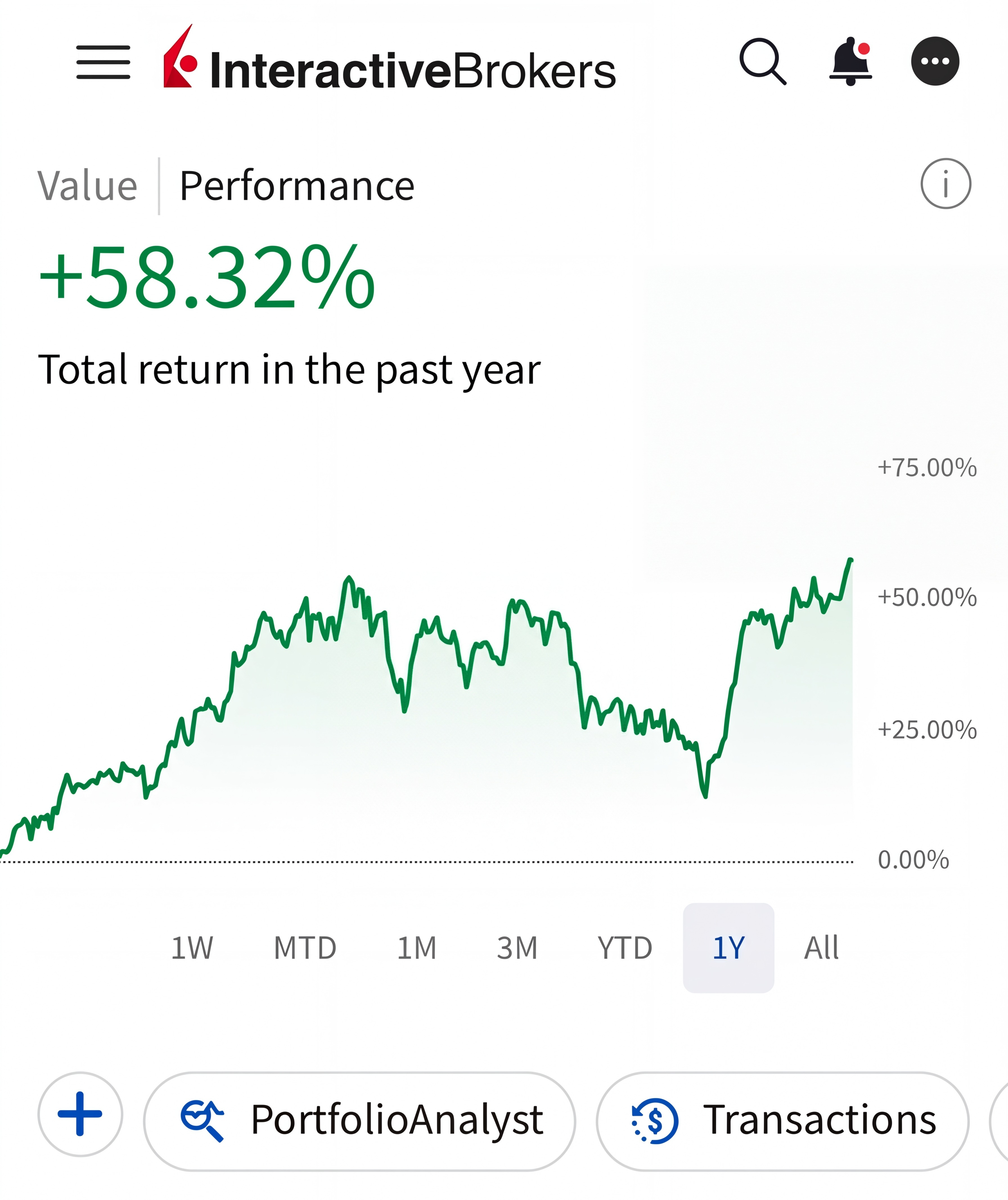
I’ll be straightforward—it’s been an amazing month for our portfolio.
One position we entered last year has officially become a 10-bagger, while another position we took around the same time has returned 5x so far, and all this happened in just 14 months.
One position we took earlier this year is already up by 75%, and another one is up 30%. A position I took just last month is also up by 25%. This is supported by strong performance from our existing positions. One position in particular, which had been down for a long time, has recovered substantially, removing a long-standing drag.
Result? YTD performance has reached 21% and annual performance 58%.
No leverage, no chasing so-called bottleneck themes, no position bigger than 15%.
Pure stock picking alpha.
I am very proud of and happy with this. Obviously, this is an incredible performance as we are on the course to outperform the market by wide margins for the 5th consecutive year.
However, what’s more important than the returns themselves is that our strategy continues to work as intended. This is our main long-term asset.
If you have been following this publication for a while, you know that I frequently touch on the concept of base effects. It’s because I see it as the main challenge to consistent outperformance.
The mechanic is simple.
When positions find or exceed their fair value, two things happen:
Portfolio goes higher, obviously.
Downside risk surpasses upside potential.
This is because fair value exerts a gravitational pull on stocks. The more overvalued they become, the stronger this pull is.
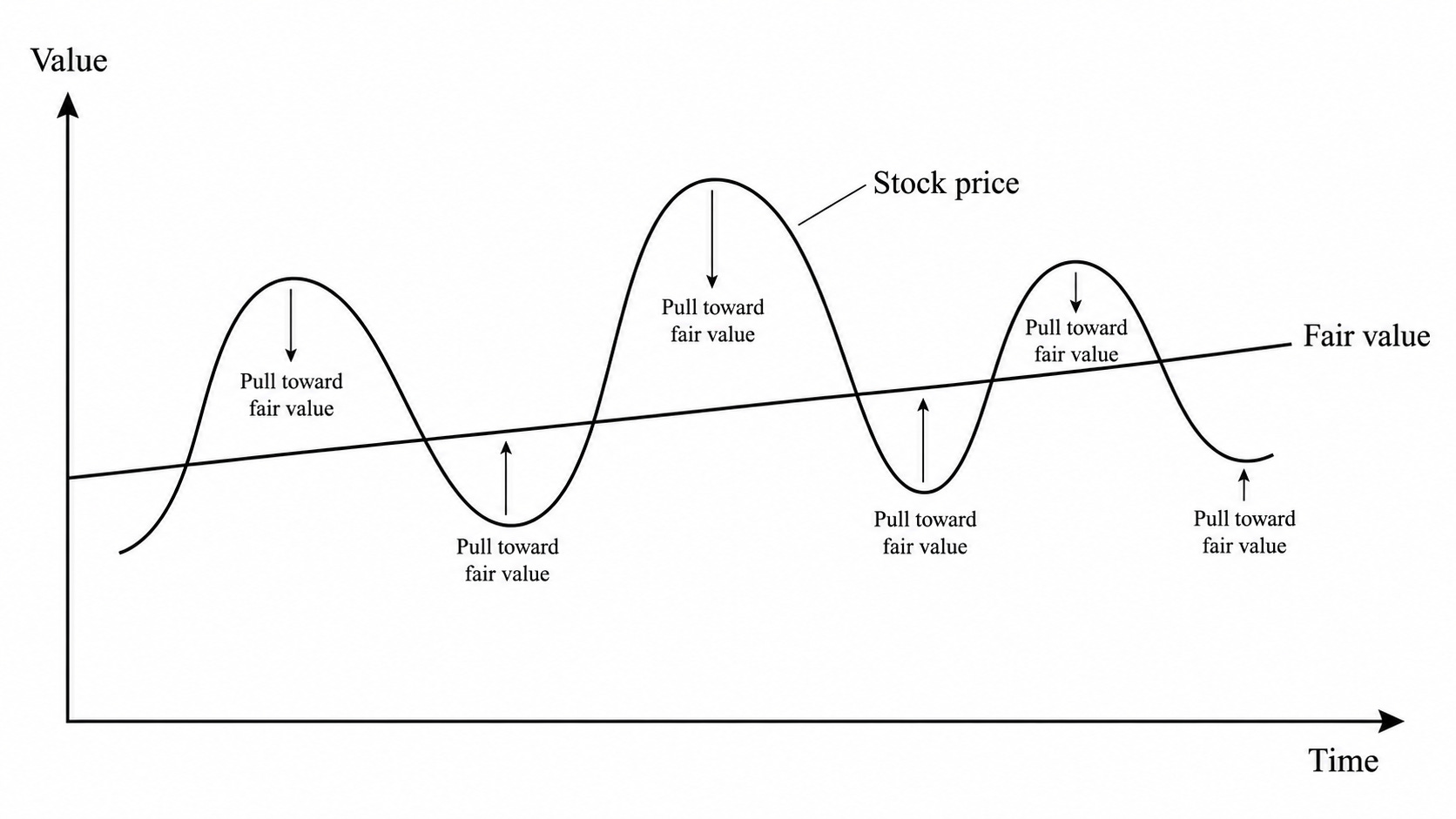
As a result, when positions in the portfolio hit or exceed fair value, they create a very high base of performance, which is hard to exceed with existing positions due to that gravitational pull.
At that point, you have two options—sell or stay.
Most investors decide to sell. For us, selling has a high threshold because of two reasons:
Great businesses surprise on the upside (and we only own great businesses).
Proceeds should be put in a new position, which exposes us to a new risk.
Thus, we don’t easily sell due to overvaluation. We make valuation-based exit decisions only if a position becomes egregiously overvalued. At fair value, we always keep, and we may trim between overvalued and egregiously overvalued.
Once we exit or trim a position due to overvaluation, we need to redeploy that capital into something with more upside potential than downside risk, so that capital can exceed its prior high watermark—and, over time, so can the whole portfolio.
That’s obvious, and the urge to beat the base effects is natural to investors. What’s not obvious is that they want to keep performance in a straight line, which leads them to reallocate capital to positive momentum stocks. Yet, due to that positive momentum, upside is often already shrunk for those stocks, and downside is already stretched.
We don’t do that. We make our reallocation decisions purely based on the raw upside potential and downside risk, not momentum.
We seek and find high-quality & high-potential businesses ignored by the market for this reason or that. Investors generally pass on these businesses as they don’t believe they can generate quick returns within 1-2 months. This allows us to create meaningful alpha by taking a bit longer view.
Among those prospects, we are willing to invest in only those with long-term durability, as it’s what limits the downside. Then, we pick the ones with the highest upside potential so that we can consistently get above-market returns from the positions even after short-term opportunity costs.
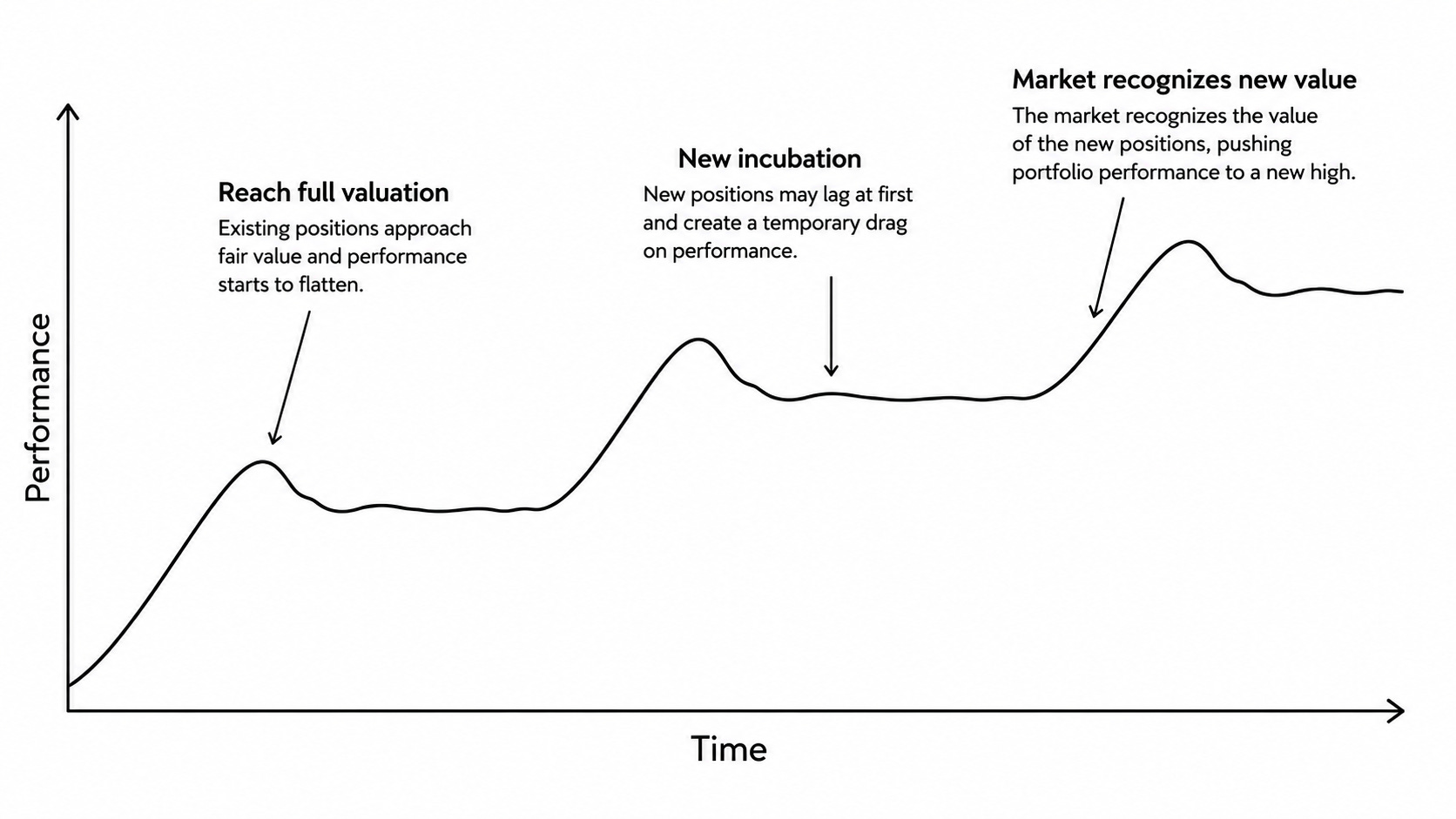
I call this period when their performance is below the opportunity cost “incubation period.” When they are in this period, they tend to lag the rest of the portfolio, or even create some degree of drag, while existing positions carry the performance.
Over time, existing positions flatline as they reach their full valuation, the market recognizes the true value of new positions, bumps them up, and they come out of incubation, driving the performance upward again. We repeat this process by exiting/trimming positions that reached full valuation and incubating new positions in their stead.
Thus, when zoomed out, our portfolio cycle resembles the following (excluding systemic drawdowns):
AMD is a recent good example of this.
We bought it earlier last year for around $100 per share. At the time, its data center segment had missed expectations, and the market dumped it. We thought it would be temporary, as customers would inevitably diversify away from Nvidia and AMD, which were priced as they would never get another percentage of market share in data center GPUs.
It first declined to $80 levels before turning up. This was the incubation period. Once it delivered on its targets and announced GPU deals with major AI labs and hyperscalers, the market recognized the potential. It is now a 5x position for us.
This is the strategy we deploy with discipline to beat the base effects and generate consistent outperformance, and it has worked incredibly well for us so far:
💥Our portfolio is outperforming the market by 30%!
The following transactions took place in our portfolio in May:
Trimmed 2 positions.
Opened 2 new positions.
As our portfolio has widely outperformed the market, many of our positions have either reached or are about to reach their full value. Thus, we’ll have to exit/trim these positions and put the proceeds in new opportunities.
In the previous updates, I had provided my outlook for each company in the portfolio. Below, I’ll provide an outlook for our new positions, share overall portfolio commentary/strategy going forward, and also talk about the particular trades I am planning, i.e., stocks I am thinking to exit/trim, and those I want to buy.
Let’s dive in!
🚨Our portfolio is proprietary to the members supporting the publication🚨
Members get portfolio updates every month!
Here is a 25% discount to celebrate new readers!
Valid only until Monday!
📊Here Is Our Full Portfolio!
As of today, we have 20 holdings in our portfolio.