
Finishing March: Our Portfolio Outperforms S&P 500 by 10%, Here is What We Own!
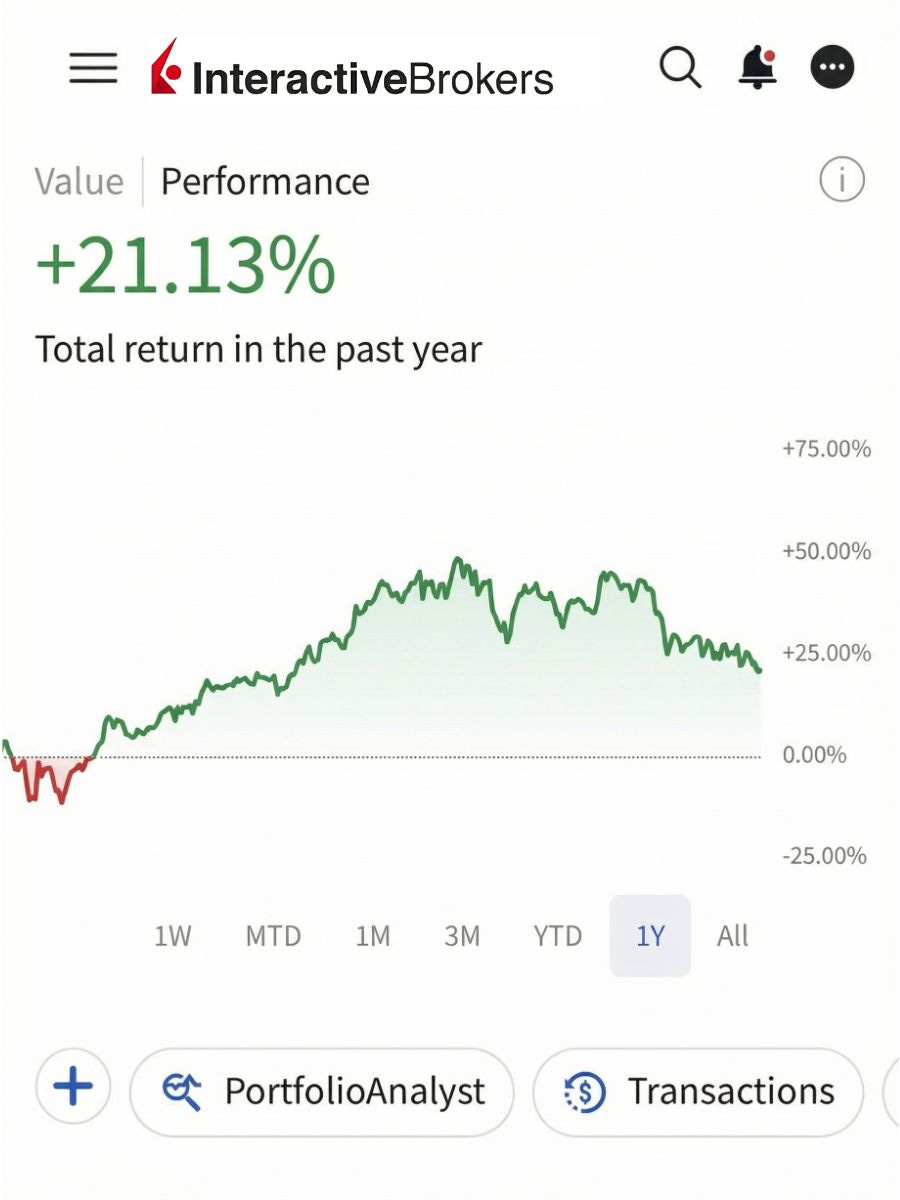
Our portfolio is now up 21% in the last twelve months against 11% of S&P 500. Here is our updated portfolio.

💥Our portfolio is outperforming the market by 10%!
Portfolio is now up 21% in the last twelve months against 11% of the S&P 500!
“It’s not going to be an easy year.” — This was how I started the last portfolio update.
I started it this way because it was the theme that I had been emphasizing in several updates before it, and in all the trade updates I had posted before.
In February, we started to see the early weaknesses, and this month the downtrend accelerated as the Iran War weighed on the sentiment. I 100% believe that it would be something else if it weren’t this war, and weak sentiment would find a way to manifest itself. This is because it stemmed from an undeniable fact—the market was expensive.
Because of the elevated market, we stopped allocating fresh capital, did very little buying, and funded almost all the buys by exiting or trimming some other positions.
In short:
We thought the market was expensive.
We wanted it to come down to deploy capital.
We thought it would come down sooner or later and increase our cash position.
This is exactly what we are having today—the market is going down.
This wasn’t market timing, as we don’t get out of the market to get in at some other time. It’s just plain positioning based on where we feel we are in the market cycle.
As Howard Marks says, it’s very hard to tell where we are unless we are close to extremes. If we turn back to late 2025, we could see that we were near the upper end:
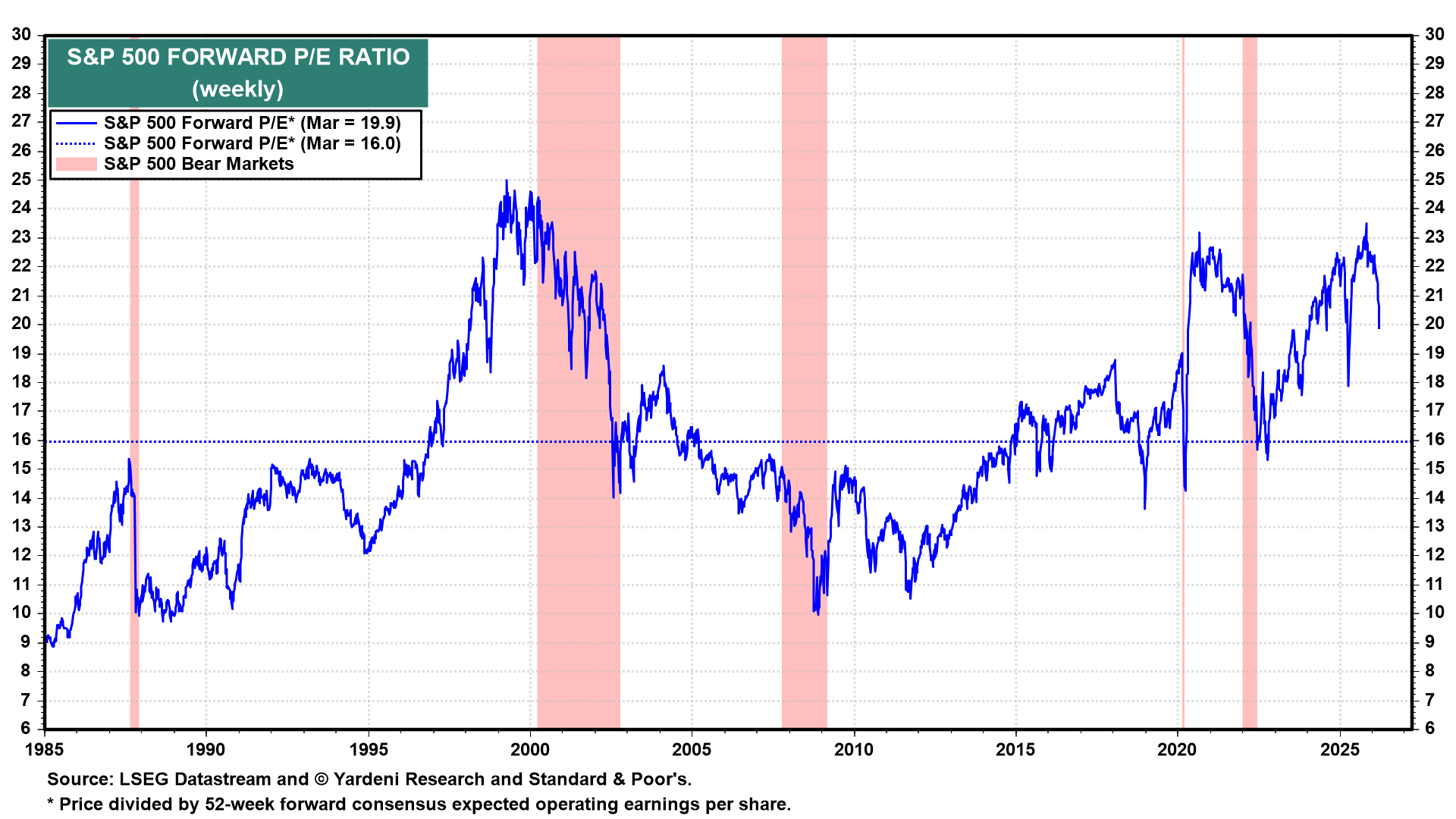
Just before the new year, the market was trading at around 23.5x forward earnings, a nearly 50% premium to the 40-year average of 16.
It’s impossible to say when the market will peak and start to decline. However, you could easily say we would likely go down in the medium-term, as whenever the market passed above 20x forward earnings, a correction followed in the medium-term. You could position accordingly by increasing cash position and cutting exposure.
This is exactly what we did, so I am very happy that the market is coming down.
Yet, I see people are feeling the exact opposite. Most people are panicking, feel disappointed, and discouraged from further participating in the market. They started questioning themselves, their positions, and their knowledge.
This is the ultimate worst attitude you can have.
Let me tell you this—even the best investors go down with the market.
One of the biggest dangers I currently see is that people are fabricating portfolios on Substack and Twitter, and those portfolios always go up, somehow.
Don’t fall into this trap.
Some of them are outright lies, and this is very dangerous. I see people posting updates monthly, no granular transaction updates, and somehow they did some transactions within the month, they worked well, and they went up in a down market.
Obvious question—why aren’t you getting a loan and betting it all on your always-up strategy instead of posting your alpha on Twitter or Substack and making it known?
Some others, macro and thematic funds, are creating imaginary indices and baskets, trading this and that, cutting this and doubling down on that, and it all works out.
Well, everybody can become a billionaire with paper trading. Where is the money?
The same question persists—why aren’t you betting it all instead of giving away your alpha?
Because they aren’t real and are not honest. Best investors, best portfolios also go down, and they almost always go down with the market.
The quality of a stock is independent of the stock price. The quality can be undeniable, and it may still go down. If you hold it, you go down as well. Yet, that’s still the best thing you can do. That shouldn’t bother you at all.
Amazon’s quality is undeniable. It’s down ytd. If you are holding it, you are down. And it’s fine. We are down by 13% YTD, and it’s fine. We don’t trade; we want to own the high-quality businesses forever. We manage risk not by trading in and out of them but by adjusting our posture between defensive and aggressive, and by position sizing.
You’ll never make it unless you make your peace with a down market.
Take a look at this, I am obsessed with this picture lately:
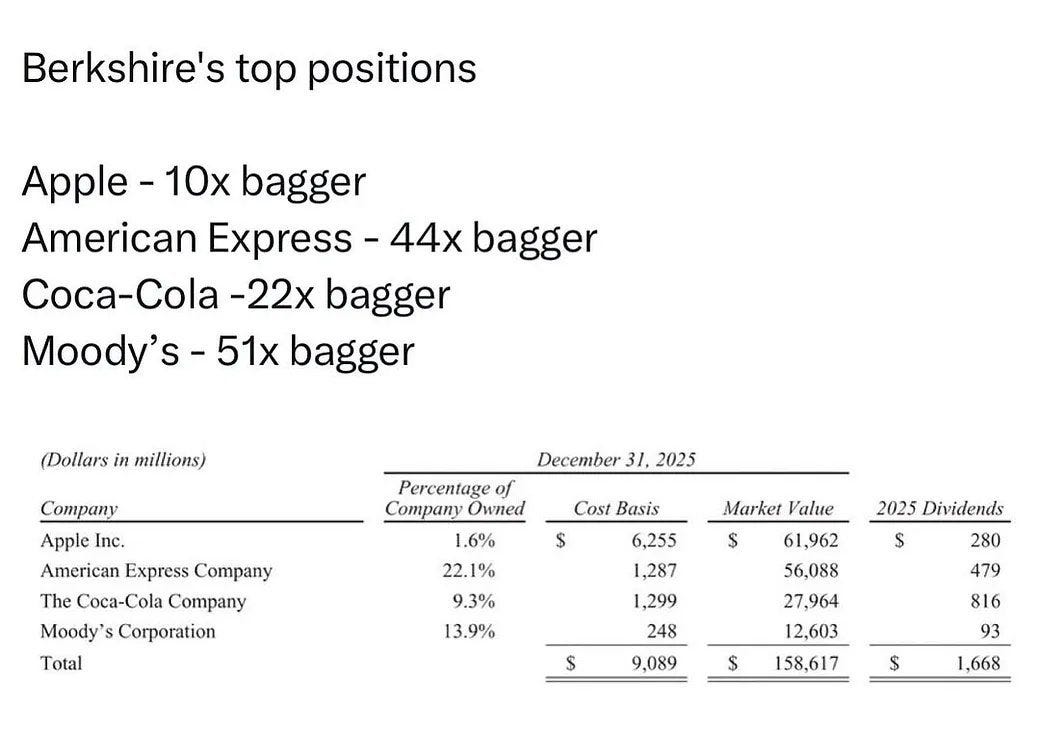
As of December 31 last year, Buffett was up 44x on his American Express position.
Let’s take a closer look at this, shall we?
Buffett started building his current American Express position in 1990-1991. At the time, the stock traded between $5-$10 per share, adjusted for the splits. Given that his position was 44x bagger as of December 31, his average split-adjusted price is $8.40, meaning he bought some shares at higher prices, possibly above $10.
In June 2007, the stock was trading at a split-adjusted price of $65. His early shares were now at least a 6x-7x bagger for him, potentially higher. What happened then?
It collapsed by 85%. Not 10, 20, 30.. It’s freaking 85%:
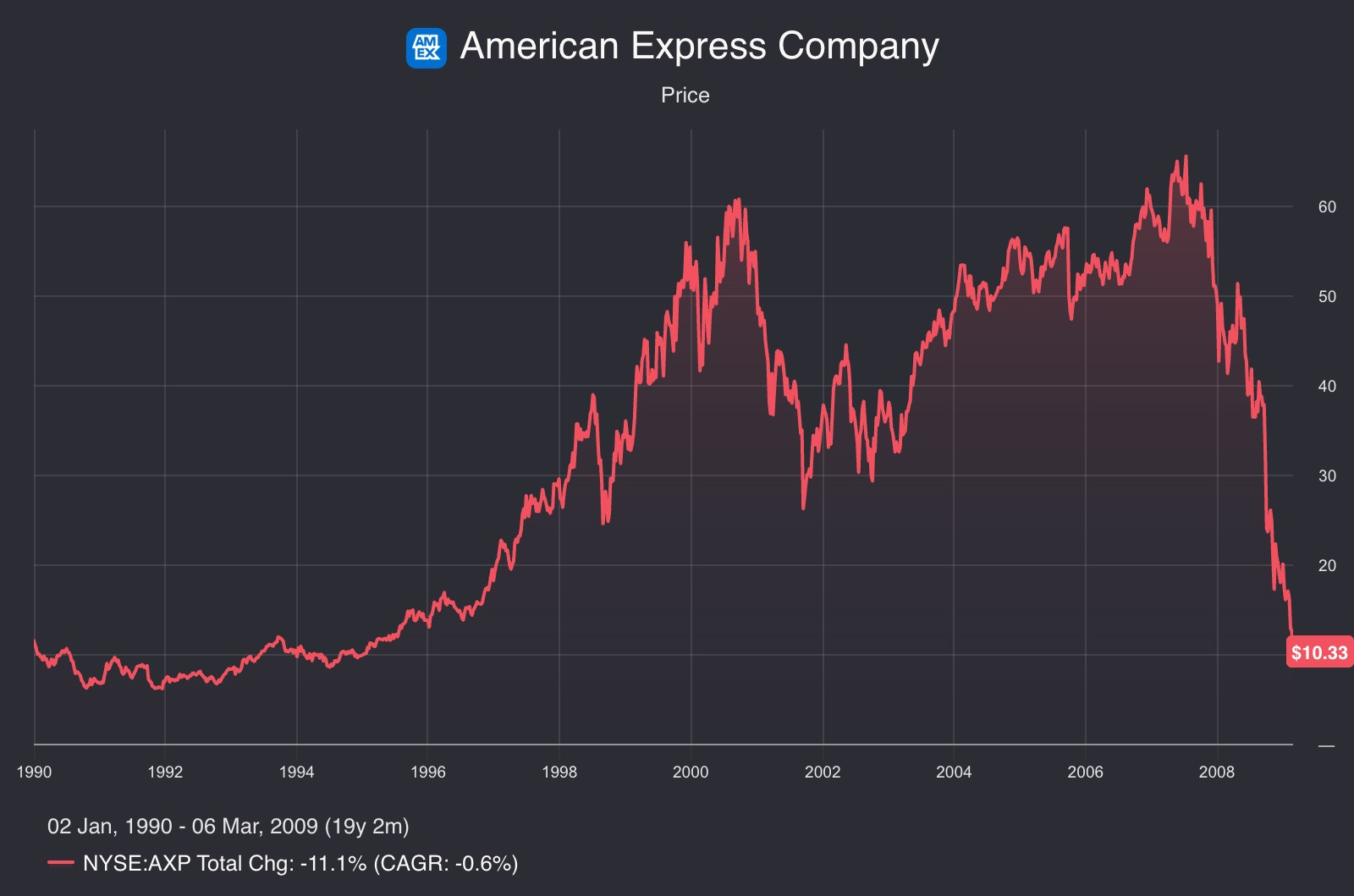
It was almost 20 years after he started building the position, and some of his early shares were underwater. What did he do? He didn’t sell a SINGLE share.
And this was his second biggest position going into 2007, only Coca-Cola was bigger than American Express in his portfolio. Imagine what this did to his portfolio?
The best investors go down, and they are exceptionally good at detaching themselves from the stock price. What’s important is buying and holding exceptional businesses at attractive valuations; the market price is and should be irrelevant to you.
He is not the only one. Look at Bill Ackman:
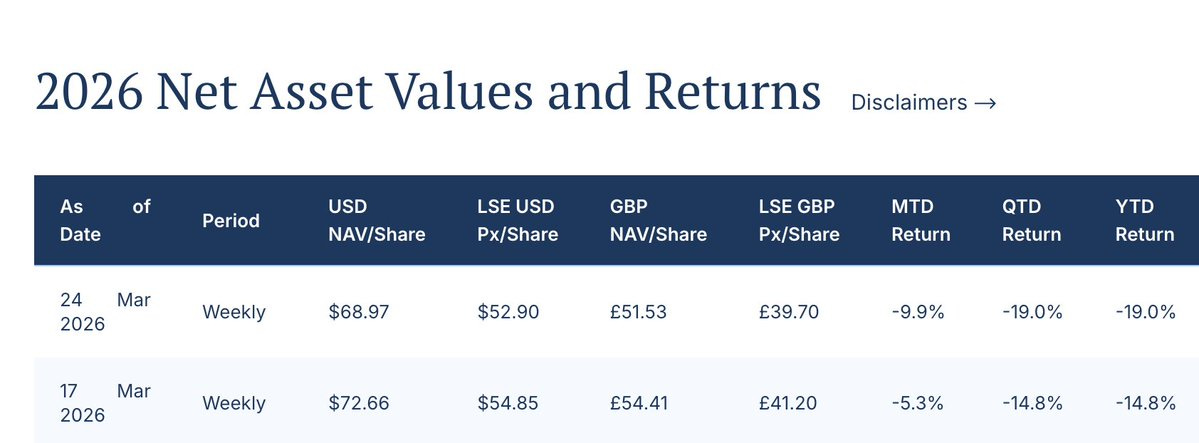
He is probably down by over 20% YTD. What does this mean? Does this mean he is useless? No.
Like him or not, Ackman is a good investor with a long-term track record of delivering above-average returns.
He owns a lot of Uber, Amazon, Meta, and Brookfield. All these stocks are down by 10-20% YTD, so his fund is down by a similar amount. What message should he get from this? He should no longer hold these? It was a mistake to pick them?
If these were the type of messages Buffett got from a stock price, he would never be up by 43x on his American Express position.
Good investors pick good businesses.
Good stocks can still go down when people sell for who knows what reason.
Thus, a good investor goes down.
What then happens is that when the sentiment changes, good holdings go up way more than the broader market, thanks to their business development. This is what certifies a good investor, and it takes a long time for this cycle to complete.
In short, don’t get disappointed in the market or in yourself, and don’t be pushed to follow those who seemingly always go up. It’s a scam, and I guarantee you it’s the worst thing you can do for your portfolio.
What you should do is simple:
Own good business.
Build a cash position when the market cycle is near highs.
When the market starts going down, be chill. Go down with your good businesses.
When prices are right, buy more of the good businesses and increase your stake.
When the sentiment changes and the market recovers, you’ll be way better off.
The hallmark of a good investor is being able to hold onto their quality businesses without getting their conviction shaken and buy more when the time is right.
So, don’t be disappointed, and use this as an opportunity to do three things:
Test your conviction.
Buy more of the businesses you like.
Unfollow those who are UNABLE to go down as they are 100% scammers & liars.
If you are holding good businesses bought at attractive prices, I guarantee you it’ll work out very well over time. This is what we have always done here and keep doing regardless of what the market does.
💥Our portfolio is now up 21% in the last twelve months against 11% of the S&P 500!
In the previous updates, I provided my outlook for each company in the portfolio. In this update, I’ll also provide an overall commentary about what I expect from the portfolio and the market going forward.
I’ll also talk about the stock that I’ll be giving a priority to buy and why.
Let’s dive in!
🚨Our portfolio is proprietary to the members supporting the publication🚨
Members get portfolio updates every month.
Here is a 25% discount to celebrate our new readers!
Valid only until tomorrow!
📊Here Is Our Full Portfolio!
As of today, we have 18 holdings in our portfolio.
8 of these positions can be considered foundational.