
Buying This Fast Growing Small-Cap Company With 2x Potential!
Recurring revenue business, growing at an exceptional rate. Nobody watches it. The stock can make 2x in the next few quarters and 4x over the next 3-4 years.


How do you beat Michael Jordan?
Joel Greenblatt used to ask this question to open his Special Situations class he taught at Columbia Business School between 2002 and 2006.
The expected answer was simple—you play something other than basketball.
You have to play something where you have an edge. In basketball, you aren’t winning.
The same applies to investing.
If you want to win in the market, you have to fish in a pond where you have an edge.
Think of the giant investment firms, hedge funds, equity research institutions, and investment banks as Michael Jordans of the industry. To make money, you have to win against them. That’s only possible by fishing in a different pond than them.
These businesses usually fish in the world of large caps, as small companies don’t move the needle for them.
This doesn’t mean that you can make money in large caps. You can, but it’s easiest in times of a market crash, where exceptional businesses are sold off due to panic, despite no problems in their fundamentals. This is when you can buy them cheap enough to make substantial money.
Conversely, in good times, it’s extremely hard to make money on large caps. As all these bigger institutions split the hair to see if there is any upside left in large caps, which often leads to them being fully priced.
However, these big players often totally ignore small-caps as they don’t move the needle for them. This is the pond where smaller investors can have a real edge.
This is what every smart investor does when they start.
Look below at Warren Buffett’s portfolio in 1951. His biggest position, GEICO, was a $7 million company at the time, which would be $91 million in today’s dollars. He didn’t own any large-cap equities.
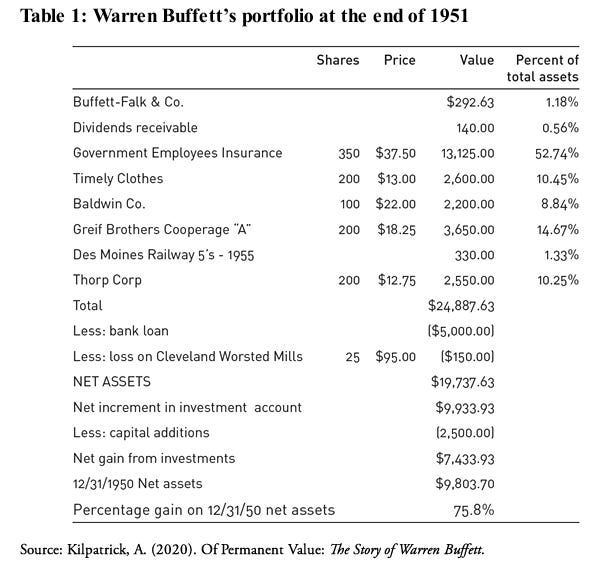
If you want to have a definitive edge, small caps are the way.
We too have increasingly turned to small-caps since the beginning of this year, as the broader market has remained largely overvalued and large-cap opportunities are rare.
We have done very well in small caps. We have bought 3 small-caps this year, and we literally have a 100% hit rate. Our average return from these positions is 45%.
There are a few reasons pushing me to fish more in global small-caps:
Concentration in the US market has peaked; unraveling of these positions could have a catastrophic impact on the market.
Macro risks are accumulating; 82% of the surveyed banks expect an interest rate hike in September.
Margin debt is at all-time highs, which may lead to more than a justified correction if a bearish trend takes over.
In this environment, global small and micro caps are perfect for investment:
They provide diversification away from US market risk.
They are less liquid, limiting the portfolio variance.
They are cheap as capital is focused on the US.
Thus, I have long been looking for another hit in the small-cap realm. I have finally found one.
Take a look at this:
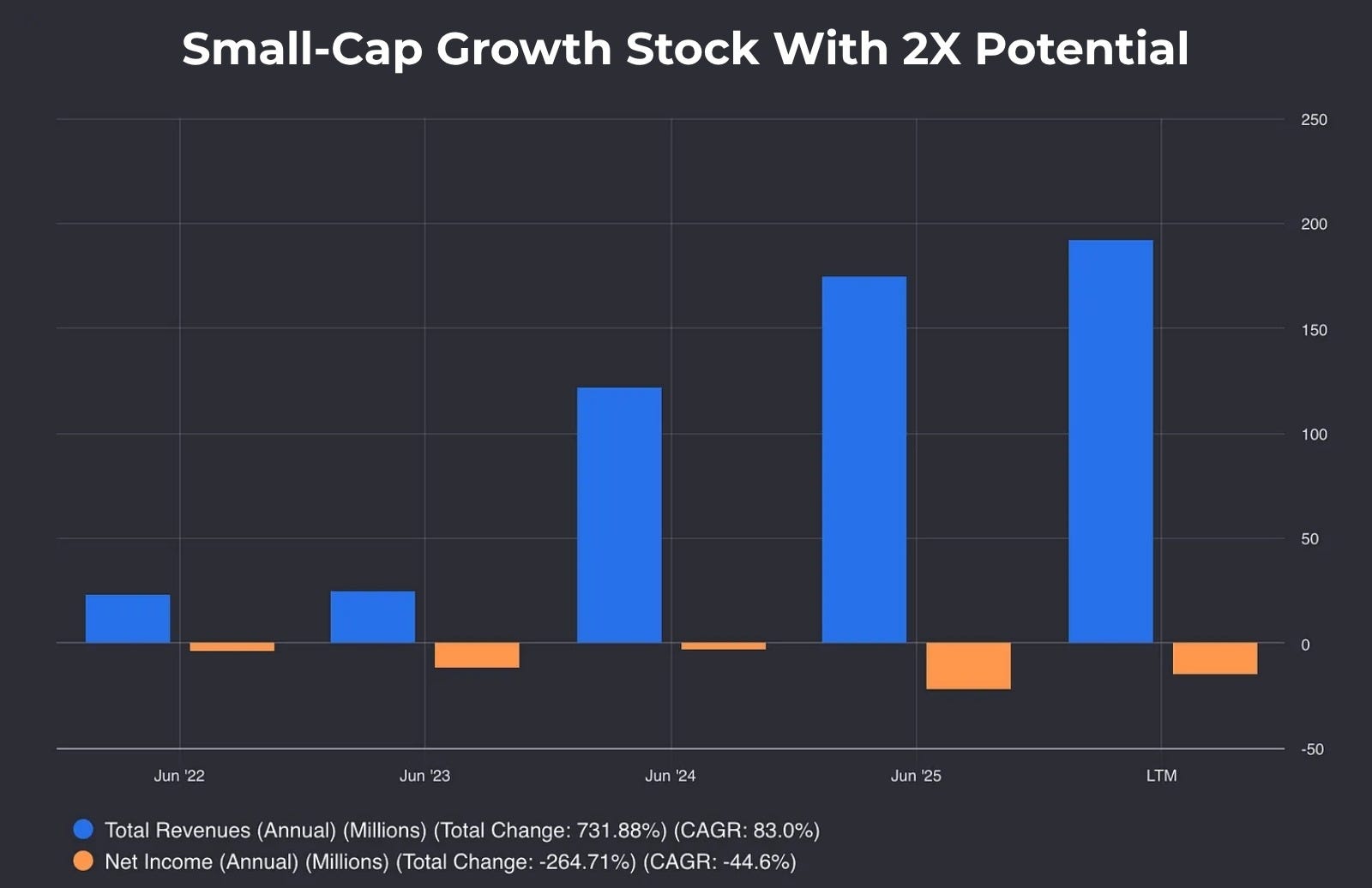
Growth has taken off since a successful business model pivot in 2023.
Earnings are expected to inflect and turn positive this year.
It has just started its international expansion.
What’s even better? It’s trading at just 7x NTM earnings.
Yes, 7x, despite an excellent management track record, 40% annual expected growth through 2028, and a recurring revenue business.
Market cap below $180 million. Management sees it over $500 million in the next three years. As it achieves inflection this year, re-rating to 13-14x alone will provide a 100% return in just a few quarters.
One of the best setups I have seen in a long time. I am a buyer.
So, let’s cut the introduction and dive deep into this amazing gem!
🏭 Understanding The Business
If I were to describe a perfect business, there would be two ingredients.
First would be recurring revenue.
Something like a subscription model. If you have recurring revenue, you don’t need to find new customers to sell your product every time. That makes growth easier.
Second would be a defensive product/service.
If the offering is defensive in nature, churn would be lower; thus, the number of new customers you need to find to grow the business would be lower as well.
This business has both.